


For U.S. CPA firms, 2025 brings sharper cost pressures, tighter deadlines, and rising compliance demands. Offshore accounting is no longer just a back-office option; it is a strategic lever to stay competitive.
By tapping into skilled offshore teams, firms cut recruitment and training costs while ensuring work is delivered on time and aligned with U.S. standards. Offshore support also frees in-house staff to focus on advisory services and client growth instead of routine tasks.
Busy audit periods and complex reporting can strain CPA firms. The right offshore partner helps ease pressure, ensuring smoother operations, reliable compliance, and room to grow.
Offshore accounting refers to the practice of delegating accounting tasks to qualified professionals located outside the United States. For CPA firms, it means gaining access to skilled teams that can manage:
Unlike general outsourcing, which often involves domestic providers, offshore accounting specifically utilizes international teams. This distinction is critical for U.S. CPA firms seeking not just cost savings but also efficiency gains.
With offshore accounting, firms benefit from extended service hours, consistent adherence to U.S. standards, and the ability to meet client deadlines with greater confidence.
Understanding what offshore accounting is lays the foundation for why it has become more critical than ever for CPA firms in today’s environment.
Also Read: Financial Reporting Best Practices Guide
CPA firms are entering 2025 with mounting pressure from every direction. Rising salaries, ongoing staff shortages, and complex compliance requirements are straining internal teams. Offshore accounting is no longer a nice-to-have; it is becoming a core strategy for firms that want to stay profitable, meet client expectations, and remain audit-ready.
To see why offshore support matters now more than ever, it’s important to first look at the challenges CPA firms are facing:
These pressures are reshaping how CPA firms operate. Offshore support provides a practical way to:
要するに、オフショア会計はCPA(米国公認会計士)事務所が2025年の最も困難な課題に取り組むための力を与え、持続可能な成長に向けた体制を整えるものです。なぜオフショアサポートが重要なのかを理解することは、それが実務にもたらす具体的な利点を検討するための第一歩となります。
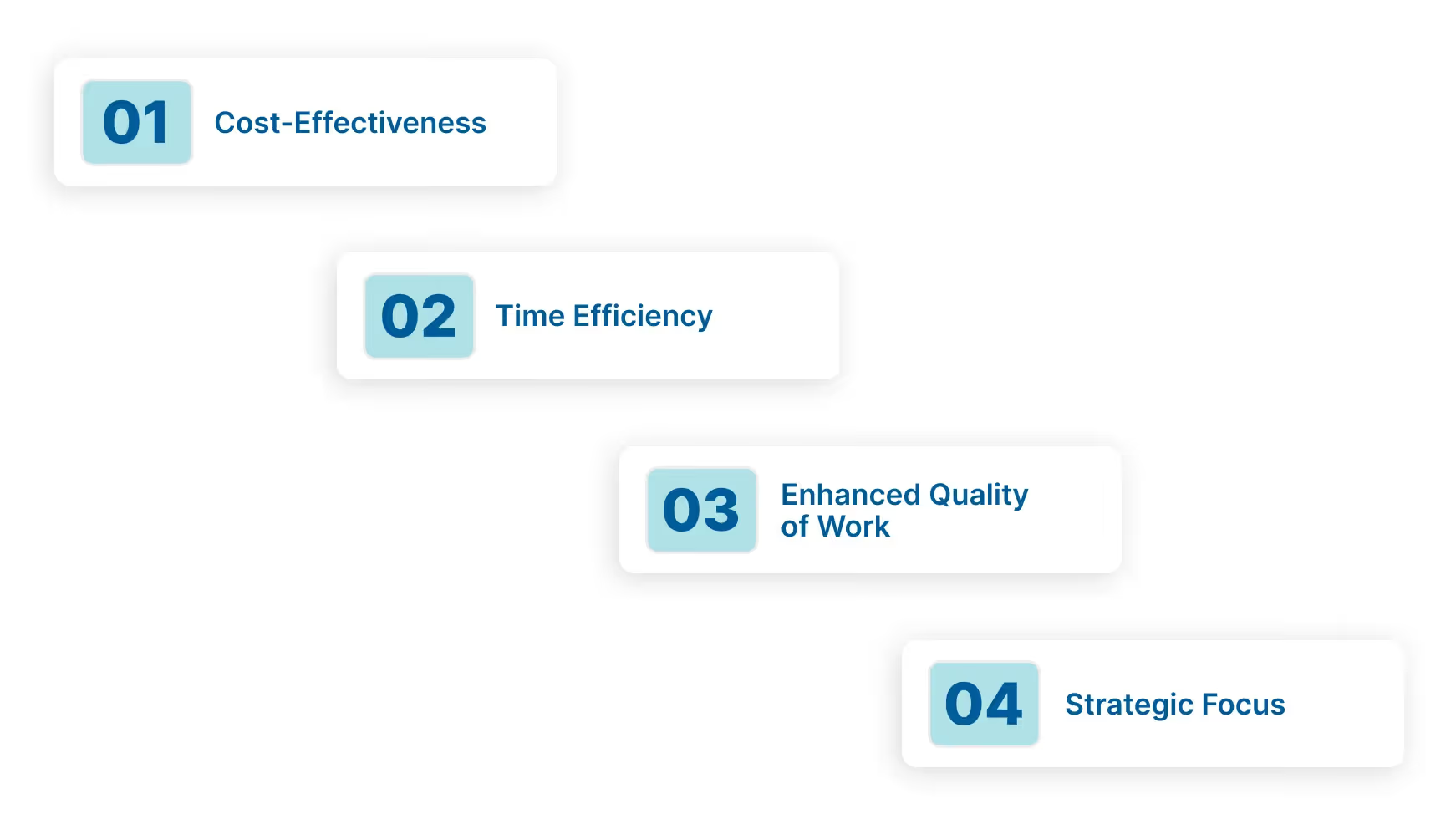
オフショア会計の核心は、CPA事務所にもたらされる測定可能な利点にあります。単なるコスト削減にとどまらず、事務所の時間管理、品質提供、そして成長の追求のあり方を根本から変えるものです。リソースを大量に消費する業務を戦略的にオフショアへ移行することで、CPA事務所は高まるクライアントの要求に応える余力を確保し、同時にコンプライアンスと収益性を強化できます。
社内チームの構築と維持には多大なコストがかかります。採用、給与、福利厚生、継続的なトレーニングはすべて利益を圧迫します。オフショア会計は、同様のオーバーヘッドをかけることなく熟練した専門家を活用できるため、この状況を一変させます。
この財務的な柔軟性により、人材確保やコンプライアンスコストが高騰する市場環境下でも、CPA事務所は競争力を維持することが可能になります。
時間は事務所にとって最も貴重な資産となっています。オフショアサポートを活用すれば、社内チームに過度な負担をかけることなく、業務のターンアラウンドを加速させ、厳しい納期を遵守することができます。
オフショアの専門家が日常的な監査・会計業務を引き受けることで、現地のスタッフはアドバイザリーサービスや複雑な分析により多くのエネルギーを注げるようになります。さらに、時差を利用することで24時間体制の業務サイクルが実現します。米国のオフィスが閉まっている間も、オフショアチームがプロジェクトを前進させ続けます。
その結果、単に報告が早くなるだけでなく、クライアントに対して予定より早く成果物を提供できるようになり、これがクライアントの信頼を強固にする強みとなります。
品質に対する懸念は当然ですが、米国会計基準(US GAAP)の知識と監査ツールを備えたオフショアプロバイダーは、一貫して高い水準の成果を提供します。オフショアチームは米国のコンプライアンスフレームワークに従い、高度なテクノロジーを駆使して報告や文書作成の正確性を担保します。
CPA事務所にとって、これは直前の修正作業の減少、監査対応力の強化、コンプライアンスリスクの低減を意味します。社内の監督体制とオフショアの実行力を組み合わせることで、事務所は正確性と効率性の両方を高める強固な牽制システムを構築できます。
オフショア会計の最大の長期的メリットは、CPA事務所が真の成長要因に集中できる自由を得られることです。時間のかかる業務を外部委託することで、社内の専門家は以下のような業務に専念できるようになります。
このトランザクション(事務的)な業務から戦略的なクライアントサポートへの移行は、事務所の評判を高めるだけでなく、収益性も向上させます。メリットを理解することは不可欠ですが、事務所が懸念しがちな課題を認識し、それに対処することも同様に重要です。
コスト高騰や人材不足に先手を打ちましょう。VJM GlobalのVJM Globalのオフショア会計サポートをご活用ください。課題が事務所に影響を及ぼす前に、効率性と収益性を強化しましょう。
あわせて読みたい:企業結合におけるASC 805評価の理解
Even with clear advantages, CPA firms often pause to consider potential challenges before adopting offshore accounting. Addressing these points directly helps firms move forward with confidence, especially when working with the right partner.
A frequent concern is whether offshore work will match the standards of in-house teams. In practice, offshore professionals trained in U.S. GAAP and audit procedures consistently deliver reliable results. Leading firms also run rigorous review cycles that mirror internal processes and ensure accuracy and compliance at every stage.
Protecting sensitive client information is non-negotiable for CPA firms. The reality is that top offshore providers operate within strict data privacy frameworks, using encryption, access controls, and regular audits to safeguard information. Many align directly with U.S. compliance requirements, giving firms the assurance that client trust is never compromised.
Distance can raise questions about coordination, yet today’s cloud platforms and collaboration tools have largely removed this barrier. Leading firms schedule regular check-ins, share real-time updates, and use secure platforms to manage documents and workflows. The result is a smooth process that often feels no different from working with in-house colleagues.
Another consideration is how clients might view offshore support. Firms that address this openly often find that clients appreciate the efficiency, faster turnaround, and consistent quality that offshore support enables. By presenting it as a way to deliver higher value, firms strengthen client relationships rather than risk them.
When managed with proper safeguards, these concerns become opportunities to demonstrate to clients the reliability and professionalism of offshore accounting. By resolving these considerations, CPA firms can clearly see the types of tasks that can be handled more efficiently offshore.
Addressing these concerns upfront clears the path for CPA firms to explore which specific tasks can be confidently delegated offshore.
[Infographic Prompt : Essential Accounting Tasks to Offshore for Maximum Impact]
Not every accounting function needs to stay in-house. By identifying the right tasks to offshore, CPA firms can free up local teams for high-value work while ensuring accuracy and compliance. Offshore teams are well equipped to manage routine yet essential processes that consume time and resources.
Understanding what work can be delegated offshore naturally raises the question of how to find a provider who can meet U.S. compliance and quality expectations.
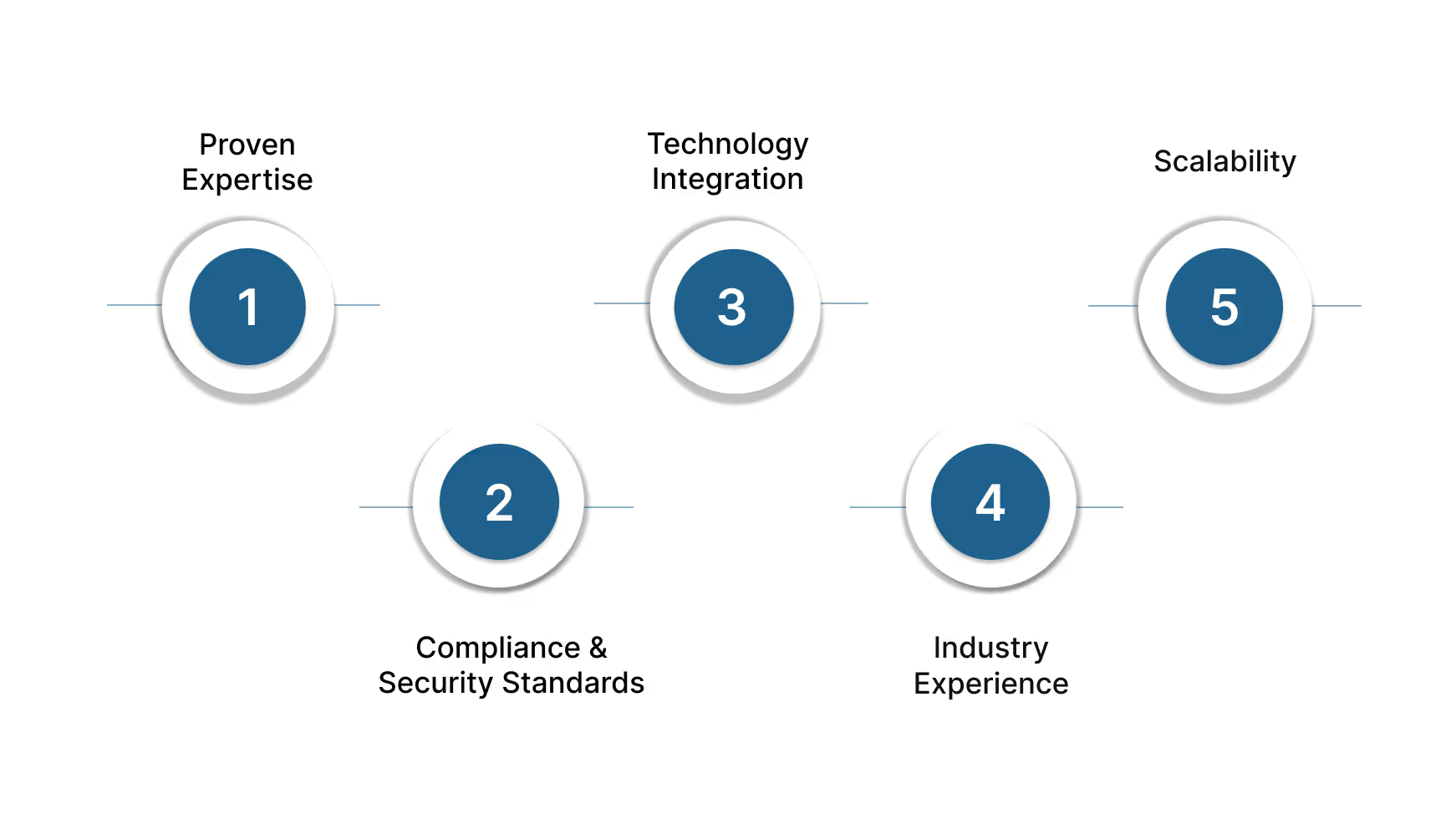
Selecting the right offshore partner is just as important as deciding to offshore in the first place. The wrong choice can add risk, but the right partner becomes a seamless extension of the firm. CPA practices should focus on a few essential criteria to ensure long-term success.
The right offshore partner will reduce costs and improve compliance, security, and productivity, allowing CPA firms to focus more on advisory and client growth.
For U.S. CPA firms, success with offshore accounting depends on choosing a partner that combines technical expertise with a deep understanding of compliance. VJM Global is built to serve this exact need, providing end-to-end support tailored to the realities of U.S. practices.
VJM Global enables U.S. CPA firms to reduce costs, maintain compliance, and scale confidently with offshore teams that serve as valid extensions of their practices. With proven expertise, strong security frameworks, and flexible engagement models, VJM Global transforms offshore accounting from a cost-saving tactic into a strategic advantage.
Offshore accounting services involve delegating tasks such as bookkeeping, tax preparation, and audit support to qualified teams outside the United States, ensuring that the work meets U.S. compliance standards.
Yes. Trusted providers follow strict data privacy regulations, use encryption, and run regular security audits to protect sensitive financial information.
They reduce expenses tied to recruitment, salaries, and training. Firms gain access to skilled professionals at lower costs, preserving margins without sacrificing quality.
Commonly offshored tasks include bookkeeping, payroll, accounts payable/receivable, tax preparation, compliance reporting, and audit documentation.
A phased roadmap allows smooth adoption. Assessment and planning typically take 1-2 months, followed by a 2-3 month pilot phase, with full rollout completed in 3-6 months.

.avif)


