
Para muchos empresarios extranjeros, lo difícil no es crear una empresa en Singapur. El registro es sencillo y suele completarse en cuestión de días. El verdadero desafío surge tras la constitución: mantenerse al día con las obligaciones anuales de presentación de informes y cumplimiento normativo ante la Autoridad Reguladora de Contabilidad y Sociedades (ACRA) y la Autoridad Tributaria de Singapur (IRAS).
Es en estos requisitos recurrentes donde se cometen errores costosos. El cese de actividades empresariales en Singapur alcanzó las 60.445 en 2025, el nivel más alto registrado desde 2017. Muchos de estos cierres se deben a plazos incumplidos, acumulación de multas e inhabilitación de directores.
El entorno normativo de Singapur se aplica de forma activa. Las sanciones aumentan rápidamente y los directores pueden enfrentarse a responsabilidad personal por el incumplimiento persistente.
Este artículo cubre los requisitos anuales clave de presentación y cumplimiento que las empresas extranjeras deben cumplir en Singapur. Aprenderá qué esperan la ACRA y la IRAS, cómo difieren las obligaciones entre sucursales de empresas extranjeras y filiales constituidas localmente, y qué plazos son fundamentales para evitar medidas coercitivas.
La presentación anual y el cumplimiento en Singapur se refieren a las obligaciones legales recurrentes impuestas por la ACRA y la IRAS que todas las empresas registradas deben cumplir cada ejercicio fiscal, independientemente de la propiedad extranjera o la ubicación de la entidad matriz.
El entorno normativo de Singapur está altamente estructurado y se aplica de forma activa. El incumplimiento conlleva costes reales. Según las directrices publicadas por la ACRA, las sanciones incluyen:
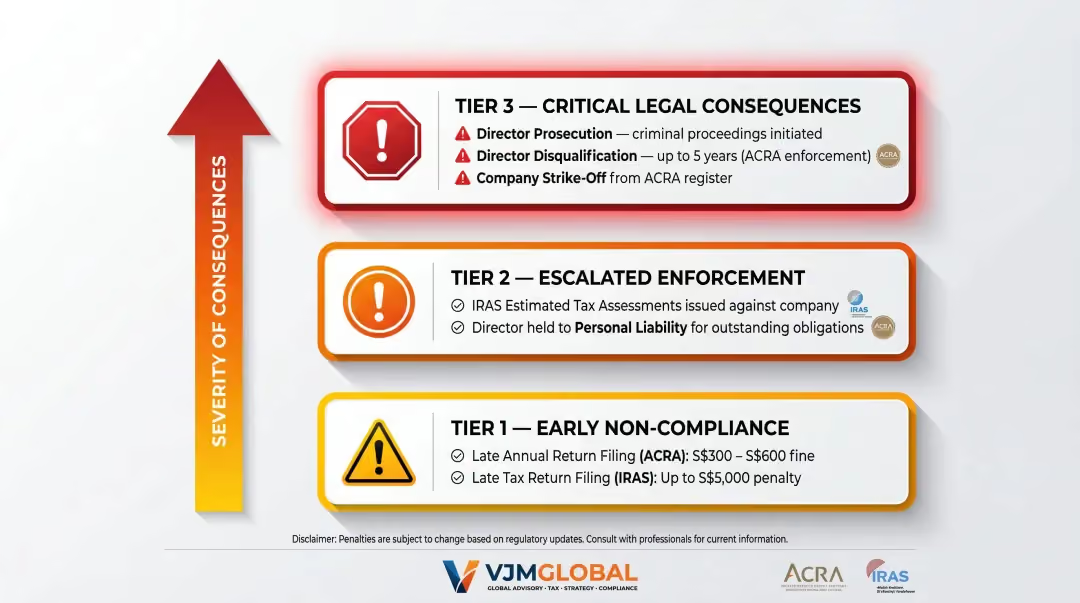
El IRAS añade un nivel de riesgo adicional. Cuando las declaraciones no se presentan a tiempo, el IRAS emite evaluaciones fiscales estimadas, generalmente fijadas por encima del impuesto real adeudado. Los directores enfrentan responsabilidad personal por el incumplimiento de los plazos, y las medidas coercitivas persiguen a las personas en sus futuros cargos directivos.
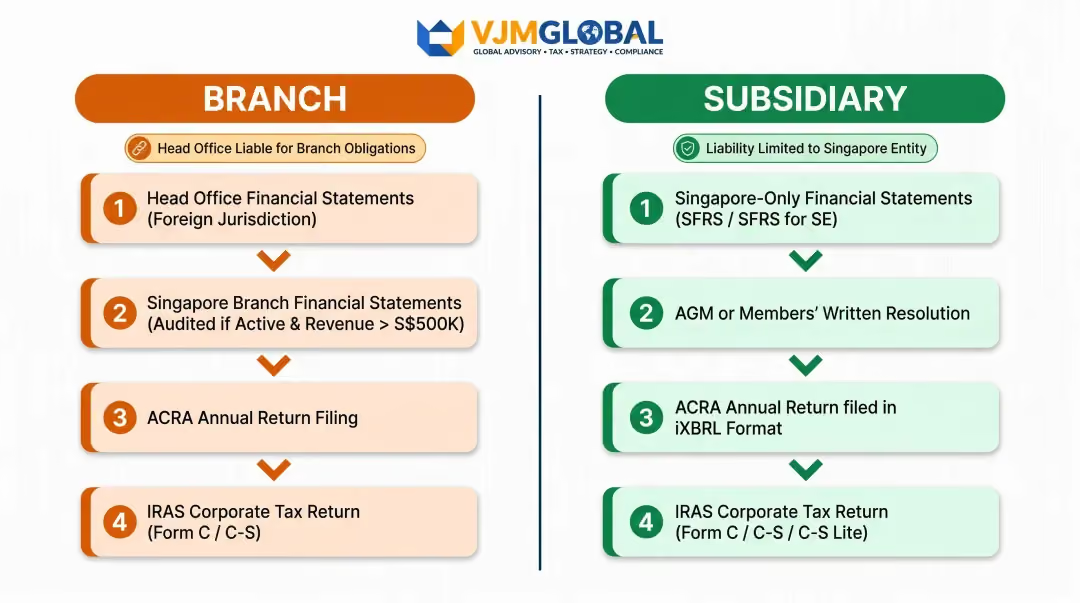
Las empresas extranjeras en Singapur se dividen en dos categorías, y esta distinción determina directamente los requisitos de cumplimiento:
Las filiales siguen las normas estándar de las empresas de Singapur. Las sucursales conllevan una carga de información más pesada: según la Sección 373 de la Ley de Sociedades de 1967, deben presentar estados financieros tanto de la sucursal en Singapur como de la oficina central en el extranjero, lo que a menudo requiere la traducción de documentos y trabajo de auditoría adicional.
Todas las empresas constituidas en Singapur, incluidas las filiales de propiedad extranjera, deben celebrar una AGM dentro de 6 meses posteriores al cierre del ejercicio financiero (FYE), a menos que todos los accionistas acuerden por escrito prescindir de la AGM. Las empresas que cotizan en bolsa tienen un plazo más corto de 4 meses tras el cierre del ejercicio.
Durante la AGM, los directores presentan los estados financieros que cumplen con las Normas de Información Financiera de Singapur (SFRS). Los componentes requeridos incluyen:
Las empresas privadas pueden aprobar resoluciones mediante circulación por escrito en lugar de celebrar una reunión física, conforme a las secciones 184A a 184F de la Ley de Sociedades. La resolución debe llegar a todos los miembros con derecho a voto, y la mayoría requerida debe confirmar su acuerdo por escrito en un plazo de 28 días.
Incluso cuando se prescinde de las juntas generales anuales (AGM), los estados financieros deben prepararse y enviarse a todos los miembros en un plazo de 5 meses tras el cierre del ejercicio fiscal.
No celebrar una AGM dentro del plazo requerido conlleva multas según la Ley de Sociedades y la posible inhabilitación de los directores.
Tras la AGM (o una vez finalizados los estados financieros si la empresa está exenta de AGM), la Declaración Anual debe presentarse ante ACRA en un plazo de 7 meses desde el cierre del ejercicio fiscal a través del portal BizFile+. Las empresas que cotizan en bolsa tienen 5 meses; las empresas con registros de sucursales en el extranjero tienen plazos extendidos (8 meses para las no cotizadas, 6 meses para las cotizadas).
La Declaración Anual debe incluir:
Las multas por presentación tardía comienzan en 300 $ y pueden ascender hasta un máximo de 600 $. El incumplimiento puede derivar en medidas coercitivas, acuerdos extrajudiciales y procesos judiciales. Todas las empresas registradas como "activas" deben presentar una declaración anual, incluso si están inactivas o han recibido una exención fiscal de IRAS.
La presentación de la Declaración Anual está directamente vinculada a los requisitos de formato. La mayoría de las empresas deben presentar sus estados financieros en formato iXBRL (Inline eXtensible Business Reporting Language), lo que permite a ACRA procesar electrónicamente los datos financieros estructurados.
Exenciones de la presentación en XBRL:
Las empresas extranjeras que operan a través de filiales deben confirmar con su secretario corporativo local qué formato de presentación se aplica, ya que la elegibilidad para la exención depende del tamaño y la estructura de la empresa al momento de cada presentación anual.
Singapur grava a las empresas sobre la base del año anterior a una tasa fija del 17% de los ingresos imponibles. Esto se aplica tanto a empresas locales como extranjeras.
Las empresas nuevas se benefician de la Exención Fiscal para Empresas Emergentes (SUTE) durante los tres primeros años de evaluación (YA) consecutivos:
Las empresas que no soliciten la SUTE reciben la Exención Fiscal Parcial (PTE):
1. Ingresos imponibles estimados (ECI)
Presentado dentro de 3 meses después del cierre del ejercicio fiscal, a menos que la empresa cumpla los requisitos para una exención. La exención se aplica cuando se cumplen ambas condiciones:
2. Declaración de impuestos corporativos
El Formulario C, el Formulario C-S o el Formulario C-S (Lite) deben presentarse antes del 30 de noviembre del año fiscal a través del portal myTax. Ya no se aceptan declaraciones en papel. Esto se aplica a todas las empresas, incluidas aquellas que no realizaron actividades comerciales o que incurrieron en pérdidas.
Consecuencias de la presentación tardía:
Más allá de las declaraciones de impuestos directos, las empresas extranjeras con transacciones entre partes relacionadas —con empresas matrices, filiales o entidades hermanas en el extranjero— enfrentan obligaciones de precios de transferencia cuando:
Todas las transacciones deben seguir el principio de plena competencia: los precios deben reflejar lo que partes independientes cobrarían en circunstancias similares.
Riesgos por incumplimiento:
Las empresas con transacciones transfronterizas entre partes relacionadas —especialmente aquellas con entidades matrices o filiales en India, EE. UU., Reino Unido o Australia— deben asegurarse de tener la documentación preparada antes de que el IRAS la solicite, no después.
El registro en el GST es obligatorio una vez que el volumen de negocios imponible anual supera los $1 millón, ya sea:
También es posible realizar un registro voluntario.
Una vez registradas, las empresas deben:
La presentación tardía o la falta de pago conlleva sanciones económicas y la posible suspensión del registro de GST.
Independientemente del GST, los pagos a empresas o personas físicas no residentes pueden estar sujetos a la retención de impuestos de Singapur. Las categorías comunes incluyen:

Los convenios para evitar la doble imposición (CDI) aplicables pueden reducir estas tasas. Verifique la disponibilidad de beneficios por tratado antes de procesar cada tipo de pago.
Las grandes empresas multinacionales con ingresos consolidados del grupo superiores a 750 millones de EUR pueden estar sujetas al Impuesto Complementario para Empresas Multinacionales (MTT) y al Impuesto Complementario Nacional (DTT) de Singapur bajo las reglas GloBE.
Las normas se aplican a los ejercicios fiscales que comiencen a partir del 1 de enero de 2025 y tienen como objetivo una tasa impositiva efectiva mínima del 15% sobre los beneficios insuficientemente gravados. Los grupos afectados deben evaluar su exposición con antelación, ya que las sanciones por incumplimiento se aplican incluso desde el primer año. Consulte la guía del IRAS sobre los impuestos complementarios del Pilar 2 para conocer los detalles de presentación.
La estructura bajo la cual opere determina directamente sus obligaciones de información financiera según la Sección 373 de la Ley de Sociedades de 1967.
A diferencia de las filiales, las sucursales deben presentar dos juegos de estados financieros ante ACRA:
El formato de los estados financieros de la oficina central depende de si la matriz cotiza en bolsa y de las normas contables que utilice. Las empresas cotizadas deben cumplir con los requisitos de formato alineados con las normas de cotización. Las empresas no cotizadas que utilicen las NIIF o normas equivalentes pueden presentarlos en el formato utilizado en su jurisdicción de origen.
Las sucursales activas deben presentar estados financieros auditados de la sucursal.
Las sucursales inactivas pueden presentar estados financieros no auditados. Según la Sección 205B de la Ley de Sociedades, una sucursal se considera inactiva durante cualquier período en el que no se produzca ninguna transacción contable. Las acciones administrativas rutinarias no cuentan; específicamente se excluyen:
Si su sucursal califica como inactiva, las exenciones de auditoría pueden reducir significativamente su carga de cumplimiento, lo que nos lleva a las opciones de exención formal disponibles bajo la Sección 373.
ACRA puede conceder exenciones de ciertos requisitos de presentación:
Sección 373(12): Exención total de la presentación de los estados financieros de la sucursal en Singapur (se siguen requiriendo los estados financieros de la oficina central)
Sección 373(13A): Exención de los requisitos de auditoría y/o de los requisitos de forma y contenido para los estados financieros de sucursales
Envíe las solicitudes a través de BizFile+ General Lodgement con una tasa no reembolsable de 200 SGD.
Las empresas extranjeras también pueden solicitar una prórroga de 60 días para presentar los estados financieros a través de BizFile+.
Muchos directores extranjeros asumen que el cumplimiento se limita principalmente a la declaración de impuestos. En realidad, las presentaciones ante la ACRA (junta general anual, declaración anual, estados financieros) tienen plazos distintos y conllevan sanciones independientes.
Incumplir los plazos de la ACRA, incluso cuando las declaraciones de impuestos están al día, puede dar lugar a la eliminación de la empresa del registro. El cumplimiento es un proceso multifacético y sujeto a plazos específicos, no un evento anual único.
Muchas empresas matrices mantienen funciones contables centralizadas fuera de Singapur y no proporcionan a los directores y secretarios locales acceso oportuno a los registros contables específicos de Singapur.
Esto genera cuellos de botella al momento de realizar las presentaciones y expone a los directores locales a responsabilidad personal por el incumplimiento de los plazos. Dos obligaciones específicas suelen tomar a las empresas por sorpresa:
Las empresas extranjeras con ingresos bajos o nulos a menudo creen que no tienen obligaciones de cumplimiento. Esto es falso.
Incluso si una empresa de Singapur está inactiva o no tiene ingresos:
Todas las empresas registradas como "activas" deben presentar una declaración anual, incluso si están inactivas, en estado latente o si han recibido una exención fiscal del IRAS. Más allá de las declaraciones ante el IRAS y la ACRA, las empresas que poseen licencias operativas en sectores regulados (finanzas, educación, servicios de alimentación) deben realizar un seguimiento y renovar dichas licencias por separado. El estado de inactividad no suspende estas obligaciones específicas del sector.
Cualquier empresa extranjera que desee realizar operaciones comerciales en Singapur debe registrarse ante la ACRA. Las opciones incluyen registrarse como sucursal, constituir una filial o establecer una oficina de representación (la cual no puede generar ingresos). Se debe contratar a un proveedor de servicios corporativos para completar el proceso de registro.
Las "pequeñas empresas" están exentas de auditoría legal si cumplen al menos 2 de los 3 criterios: ingresos anuales que no superen los 10 millones de S$, activos totales que no superen los 10 millones de S$ y un máximo de 50 empleados. Aun así, deben preparar estados financieros que cumplan con las normas SFRS. Las sucursales de empresas extranjeras inactivas pueden presentar estados financieros de sucursal no auditados.
Singapur utiliza las normas SFRS y SFRS(I), ambas sustancialmente alineadas con las NIIF, siendo las SFRS(I) idénticas a las Normas de Contabilidad NIIF. Las sucursales de empresas extranjeras pueden presentar los estados financieros de su oficina central preparados bajo las NIIF o normas equivalentes, dependiendo de su jurisdicción de origen y su estatus de cotización.
Las presentaciones fuera de plazo conllevan sanciones económicas crecientes por parte de ACRA e IRAS. El incumplimiento persistente puede derivar en el procesamiento de los directores de la empresa, su inhabilitación por un periodo de hasta cinco años y la eliminación de la empresa del registro. Asimismo, IRAS puede emitir evaluaciones fiscales estimadas que suelen ser superiores al impuesto real adeudado.
Una sucursal es una extensión directa de la empresa matriz extranjera (la cual asume toda la responsabilidad), mientras que una filial es una entidad jurídica independiente constituida en Singapur. Las sucursales deben presentar estados financieros tanto de su oficina central como de sus operaciones en Singapur; las filiales siguen las normas de cumplimiento estándar para empresas locales.
Sí. Todas las empresas en Singapur deben presentar declaraciones anuales de impuestos corporativos ante IRAS; es necesario presentar una declaración sin actividad (nil return) cuando no hay ingresos imponibles. Las obligaciones de presentación ante ACRA (declaración anual, estados financieros) siguen siendo obligatorias independientemente de los ingresos.