
Las empresas de Singapur que se expanden a la India se enfrentan a un obstáculo normativo inmediato: el año fiscal de la India va del 1 de abril al 31 de marzo, y no sigue el año natural de enero a diciembre que utilizan la mayoría de las empresas singapurenses. Esa diferencia genera una fricción real en el cumplimiento normativo, que va más allá de una simple molestia de programación.
Las empresas de Singapur que se expanden a la India se enfrentan a un obstáculo normativo inmediato: el año financiero de la India va del 1 de abril al 31 de marzo, no del calendario de enero a diciembre que utilizan la mayoría de las empresas de Singapur. Esa brecha crea una fricción real en el cumplimiento, no solo un inconveniente de programación.
Esta guía detalla las normas del periodo contable de la India, cómo se comparan con el marco normativo de Singapur y lo que su equipo financiero necesita para gestionar la realidad de la doble contabilidad desde el primer día.
El año fiscal de la India (también llamado ejercicio fiscal o año contable) es un periodo de 12 meses que comienza el 1 de abril y termina el 31 de marzo del año natural siguiente. Por ejemplo, el ejercicio fiscal 2025-26 va del 1 de abril de 2025 al 31 de marzo de 2026.
Resumen: Lo que las empresas de Singapur deben saber
El año financiero de la India va del 1 de abril al 31 de marzo, por mandato legal de la Ley de Sociedades de 2013 y la Ley del Impuesto sobre la Renta de 1961Singapur permite cierres de año flexibles (aunque la mayoría utiliza de enero a diciembre), lo que crea una brecha de hasta 9 meses en la presentación de informes con las filiales indiasLas empresas extranjeras no pueden elegir libremente un año financiero diferente en la India: el periodo de abril a marzo es obligatorio para la mayoría de las entidades registradasLa desalineación crea ciclos de doble informe, brechas de conciliación y calendarios de cumplimiento separados que requieren un calendario de cumplimiento dualPlazos clave: impuesto anticipado (15 de junio, 15 de septiembre, 15 de diciembre, 15 de marzo), declaración del impuesto de sociedades (31 de octubre), presentaciones de la Junta General Anual (dentro de los 6 meses posteriores al cierre del año)
Explicación del año financiero de la India: el ciclo de abril a marzo
El año financiero de la India (también llamado año fiscal o año contable) es un periodo de 12 meses que comienza el 1 de abril y termina el 31 de marzo del año natural siguiente. Por ejemplo, el año fiscal 2025-26 va del 1 de abril de 2025 al 31 de marzo de 2026.
Este ciclo es obligatorio por ley según la Sección 2(41) de la Ley de Sociedades de 2013, que define el "año financiero" como el periodo que termina el 31 de marzo de cada año. La Ley del Impuesto sobre la Renta de 1961 refuerza esto a través de sus definiciones de "Año Anterior" y "Año de Evaluación".
Puntos clave sobre las excepciones:
El sistema fiscal de la India utiliza dos conceptos distintos que suelen confundir a los equipos financieros de Singapur:
Los ajustes de tasas, las normas de depreciación y los requisitos de cumplimiento anunciados en el presupuesto suelen entrar en vigor a partir del 1 de abril. Para las empresas de Singapur, esto significa que un anuncio presupuestario en febrero puede alterar su exposición fiscal en la India, sus supuestos de precios de transferencia o sus plazos de presentación con apenas seis semanas de antelación. Vale la pena incluir un paso de seguimiento presupuestario en su calendario del primer trimestre.
AspectoSingapur: Flexible (las empresas eligen cualquier periodo de 12 meses) / India: Obligatorio del 1 de abril al 31 de marzoCierre de ejercicio más comúnSingapur: 31 de diciembre (muchas empresas) / India: 31 de marzo (todas las empresas registradas)Tasa del impuesto de sociedadesSingapur: Tasa fija del 17% / India: 22%-30% para empresas nacionales; 40% para empresas extranjerasCiclo de presentación del GSTSingapur: Trimestral (Formulario GST F5) / India: GSTR-3B mensual; conciliación trimestral/anualCoincide con el año naturalSingapur: Opcional (elección de la empresa) / India: No, finaliza el 31 de marzo
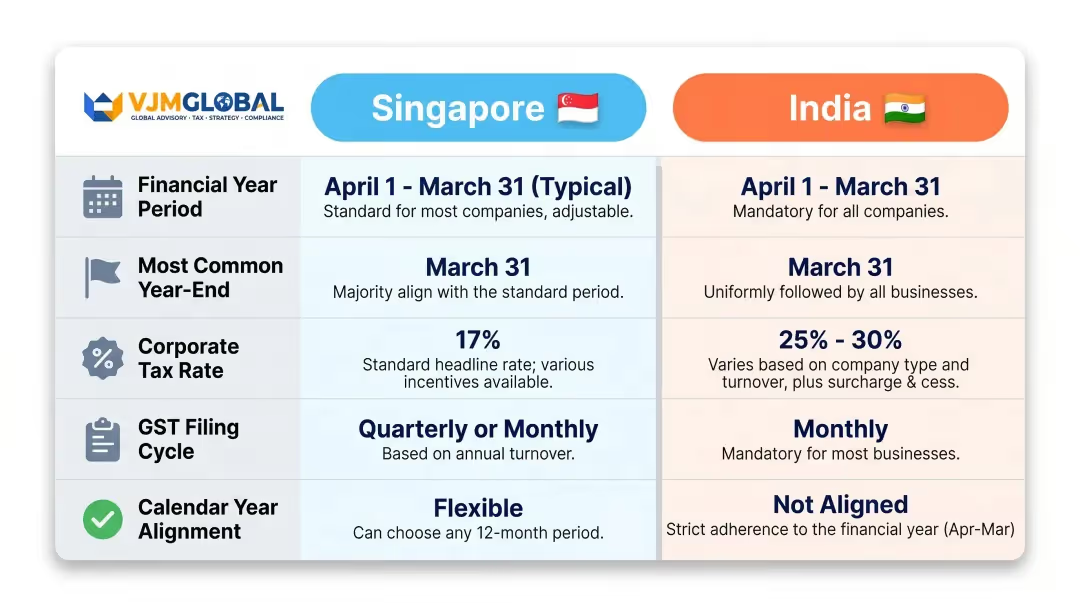
Para las empresas matrices de Singapur con filiales en la India, esa diferencia en las fechas de cierre del ejercicio genera verdaderos desafíos de consolidación y presentación de informes, y no solo de carácter administrativo.
Una sociedad holding de Singapur que cierra sus libros el 31 de diciembre debe consolidar una filial india que solo cierra el 31 de marzo, lo que crea una brecha de tres meses en la presentación de informes.
Según las normas NIIF 10 y SFRS(I) 10 (Normas de Información Financiera de Singapur - Internacional), esta brecha de tres meses es el máximo permitido a efectos de consolidación. Las empresas suelen gestionar esto mediante:
Independientemente del enfoque utilizado, las políticas contables deben ser coherentes en ambas entidades, y cualquier transacción importante que ocurra entre los dos cierres de ejercicio debe identificarse y ajustarse en las cuentas consolidadas.
Singapur no tiene un concepto separado de "Año de Evaluación". Los ingresos se evalúan en el año en que se obtienen. En la India, la distinción entre Año Anterior/Año de Evaluación significa que una empresa que obtiene ingresos en el ejercicio 2025-26 solo ve su evaluación fiscal en el año de evaluación 2026-27.
Los equipos financieros de Singapur que revisan las provisiones fiscales de la India en las cuentas intercompañía deben tener en cuenta este desfase; no hacerlo puede provocar que las obligaciones fiscales se atribuyan erróneamente al periodo equivocado, distorsionando tanto las provisiones como las conciliaciones intercompañía.
Las declaraciones de GST de Singapur suelen presentarse trimestralmente. El GST de la India requiere:
El calendario del GST indio no sigue estrictamente el año financiero; las declaraciones abarcan meses naturales, lo que crea obligaciones de cumplimiento durante todo el año que las empresas de Singapur deben cubrir de forma continua.
La frecuencia de las declaraciones de GST en la India también tiene un efecto dominó en la documentación de precios de transferencia, ya que las facturas intercompañía que alimentan esas declaraciones deben tener precios consistentes durante todo el año.
Cuando las entidades de Singapur realizan transacciones con filiales indias, la documentación de precios de transferencia en la India debe cubrir el año financiero de abril a marzo. La documentación de precios de transferencia de Singapur sigue el año financiero de Singapur.
Las empresas de Singapur deben asegurarse de que sus políticas de precios de transferencia y su documentación cubran ambos periodos y estén conciliadas, especialmente cuando los precios o los márgenes cambian durante el año. El Formulario 3CEB (el informe de auditoría de precios de transferencia de la India) debe presentarse antes del 31 de octubre del año de evaluación y cubre el año fiscal indio.
Si el impuesto total a pagar durante el año supera las 10 000 INR, las empresas deben pagar el impuesto anticipado en cuatro cuotas trimestrales:
CuotaFecha de vencimiento% acumulado de la obligación tributaria1.ª15 de junio15%2.ª15 de septiembre45%3.ª15 de diciembre75%4.ª15 de marzo100%
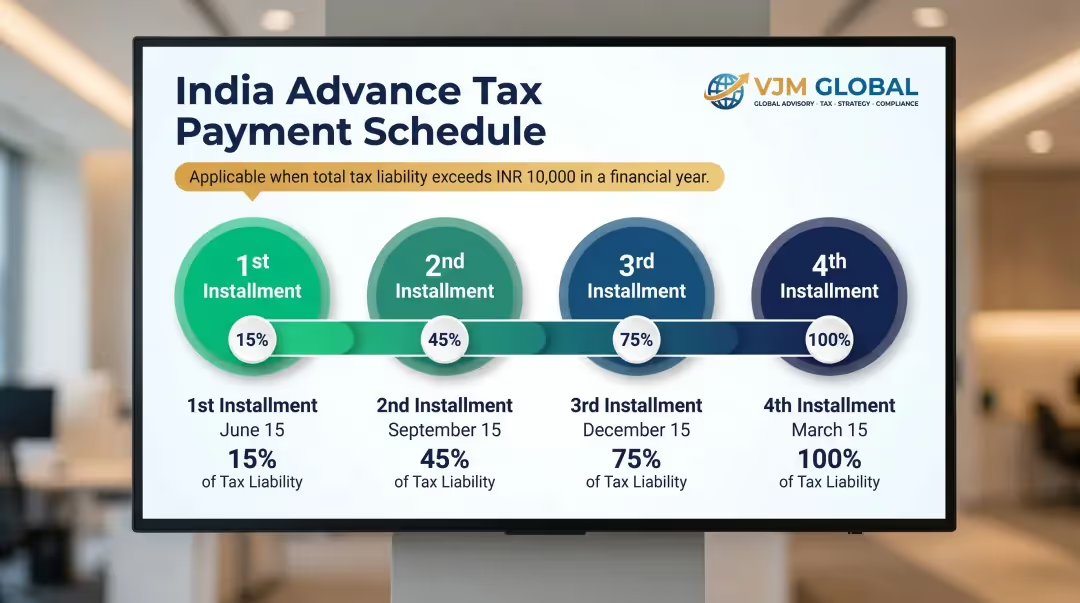
El incumplimiento de estos pagos conlleva un interés del 1% mensual según las secciones 234B y 234C de la Ley del Impuesto sobre la Renta. Esto difiere del modelo de impuesto tras la evaluación de Singapur y toma por sorpresa a muchas empresas singapurenses cuando comienzan a operar en la India.
Plazos de presentación de las declaraciones trimestrales de TDS:
TrimestrePeriodoFecha de vencimiento de la declaración de TDST1Abr-Jun31 de julioT2Jul-Sep31 de octubreT3Oct-Dic31 de eneroT4Ene-Mar31 de mayo
Los formularios aplicables incluyen el Formulario 24Q (TDS sobre salarios), el Formulario 26Q (pagos no salariales) y el Formulario 27Q (pagos a no residentes).
Las filiales indias deben presentar declaraciones anuales, estados financieros y resoluciones de la junta directiva ante el Ministerio de Asuntos Corporativos:
La presentación tardía de los formularios AOC-4 y MGT-7 conlleva una multa de 100 INR por día sin límite máximo, además de sanciones adicionales bajo la Sección 450 por infracciones continuas.
Para las empresas de Singapur que operan a través de una sucursal u oficina de enlace (no una filial constituida):
Otra dimensión de cumplimiento que merece la pena señalar: la India realiza ahora las evaluaciones fiscales de forma digital, sin audiencias presenciales. Las empresas de Singapur deben:
Los estados financieros independientes de la filial india abarcan de abril a marzo, mientras que las cuentas consolidadas del grupo de la matriz en Singapur suelen abarcar de enero a diciembre. Este desajuste no es exclusivo de la India —el Reino Unido y Australia también utilizan ejercicios fiscales que no coinciden con el año natural—, pero requiere procesos internos estructurados.
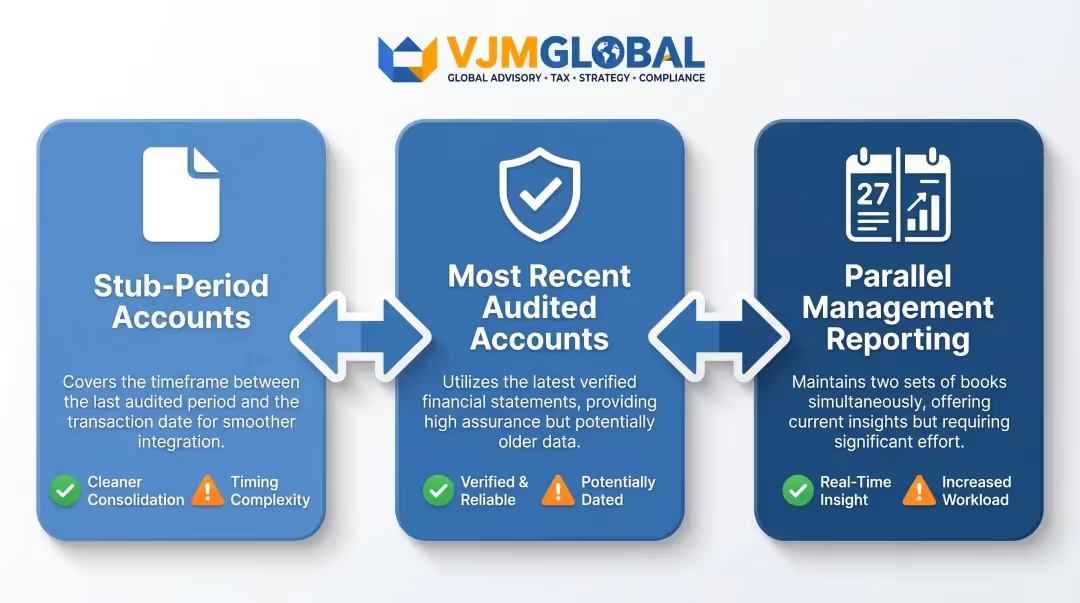
Los auditores del grupo en Singapur exigirán que se revele la diferencia en el ejercicio financiero en las cuentas consolidadas, y este mismo desajuste se traslada a su ciclo de planificación.
Cuando una empresa de Singapur elabora su presupuesto sobre la base de enero-diciembre, el plan de la filial india abarca dos ejercicios fiscales indios: enero-marzo cierra un ejercicio y abril-diciembre abre el siguiente. Los equipos directivos indios planifican y reciben incentivos basados en el ciclo de abril-marzo, lo que puede desincronizar las prioridades locales con los objetivos del grupo.
Gestione esta brecha de forma deliberada mediante:
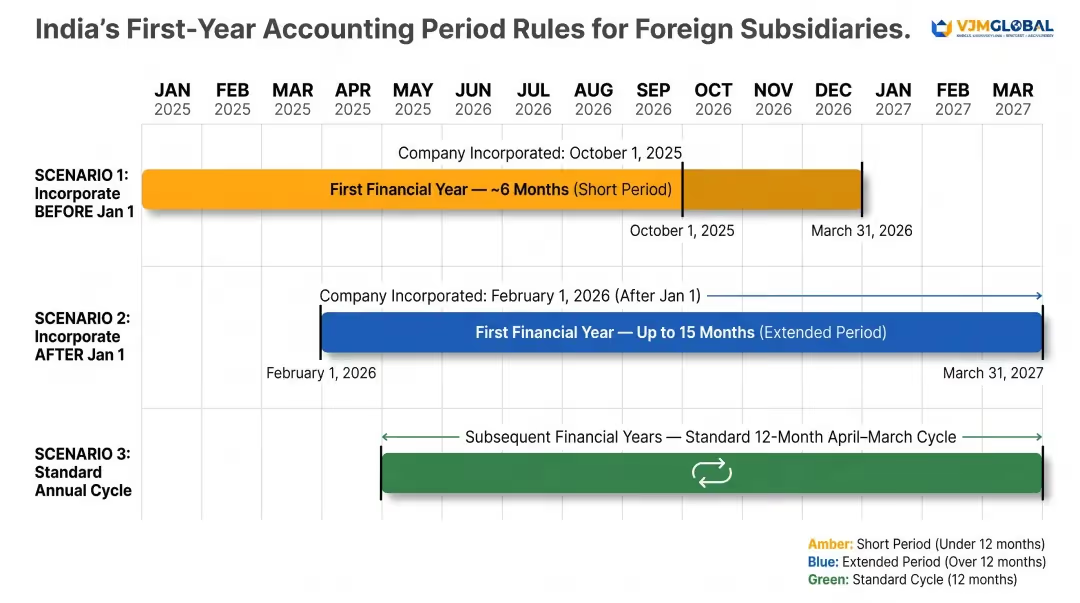
Cuando una empresa extranjera constituye una filial en la India, el primer ejercicio financiero puede ser inferior o superior a 12 meses, pero debe finalizar el 31 de marzo.
Según la Sección 2(41) de la Ley de Sociedades de 2013:
Esto significa que el primer conjunto de cuentas auditadas de la India puede cubrir menos de 12 meses, lo cual debe comunicarse claramente a las partes interesadas de la empresa matriz en Singapur.
Las empresas extranjeras que operan a través de oficinas de enlace o de proyectos (entidades no constituidas en sociedad) tienen requisitos de contabilidad y presentación de informes independientes según las normativas de FEMA y el RBI:
La sección 2(41) establece una excepción limitada: las empresas que sean holdings, subsidiarias o asociadas de entidades constituidas en el extranjero pueden solicitar al Director Regional seguir un ejercicio financiero diferente a efectos de consolidación.
Dos escenarios específicos donde esto aplica:
En la práctica, la mayoría de las subsidiarias indias propiedad de empresas de Singapur operarán bajo el ciclo estándar de abril a marzo.
El Banco de la Reserva de la India (RBI) utilizaba históricamente un ejercicio contable de julio a junio. A partir del 1 de abril de 2021, el RBI cambió al ciclo de abril a marzo para alinearse con el año fiscal del gobierno. Para las empresas de Singapur, esta alineación significa que el ejercicio financiero de su subsidiaria india, el calendario fiscal del gobierno y los ciclos bancarios del RBI ahora funcionan bajo el mismo cronograma de abril a marzo, lo que reduce un nivel de complejidad en la conciliación.
Un periodo contable de 12 meses se denomina comúnmente "ejercicio financiero" o "año fiscal". En la India específicamente, este periodo va del 1 de abril al 31 de marzo y también se le llama "año anterior" en la terminología del impuesto sobre la renta.
El ejercicio financiero (FY) 2025-26 va del 1 de abril de 2025 al 31 de marzo de 2026. El año de evaluación (AY) correspondiente es el AY 2026-27, que es cuando se evalúan y gravan los ingresos obtenidos durante el FY 2025-26.
El ejercicio financiero 2024-25 (a menudo referido como FY 25) comenzó el 1 de abril de 2024 y finalizó el 31 de marzo de 2025. El término "FY 25" puede causar confusión dependiendo de si se utiliza la convención del año de inicio o del año de finalización.
No. Singapur no exige un ejercicio financiero específico; las empresas constituidas en Singapur pueden elegir cualquier periodo de 12 meses como su ejercicio financiero. Muchas utilizan del 1 de enero al 31 de diciembre, lo que difiere del ciclo obligatorio de la India del 1 de abril al 31 de marzo, creando un desajuste en la presentación de informes para las empresas de Singapur con subsidiarias en la India.
Bajo la Ley de Sociedades de 2013, las empresas registradas en la India, incluidas las subsidiarias de empresas extranjeras, deben seguir el ejercicio financiero del 1 de abril al 31 de marzo. Existen excepciones limitadas para tipos de entidades específicos, como las empresas en IFSC, pero la flexibilidad es muy restringida.
Plazos clave a tener en cuenta:
El incumplimiento de estos plazos conlleva intereses del 1% mensual, además de sanciones acumulativas.
¿Necesita asesoramiento experto para gestionar los periodos contables y los requisitos de cumplimiento en la India? VJM Global se especializa en ayudar a empresas de Singapur a establecerse y operar en la India. Con más de 30 años de experiencia, ofrecemos servicios integrales de constitución de empresas, cumplimiento fiscal, informes de gestión con doble calendario y contabilidad continua adaptada a operaciones transfronterizas. Contáctenos en [email protected] o en el +91 98915 76441 para analizar cómo podemos ayudar a que su empresa de Singapur tenga éxito en la India.