Los empresarios extranjeros que establecen operaciones en Singapur a menudo se enfrentan a un panorama contable desconocido: normas de información financiera diferentes, plazos de cumplimiento estrictos y organismos reguladores que funcionan de manera muy distinta a los sistemas de EE. UU., el Reino Unido o Australia. Un fabricante británico que se expande a Asia podría tener dificultades para conciliar los informes de su empresa matriz basados en las NIIF con el marco local de Singapur, mientras que una startup tecnológica estadounidense se enfrenta a una doble presentación de informes entre los PCGA de EE. UU. y las normas de Singapur.
La reputación de Singapur como el 4.º centro financiero mundial (Global Financial Centres Index 37, marzo de 2025) se basa en un marco contable riguroso y alineado internacionalmente. La ciudad-estado sigue las Normas de Información Financiera de Singapur (SFRS, por sus siglas en inglés), basadas estrechamente en las NIIF, lo que crea un sistema familiar pero distintivo para las aproximadamente 4200 sedes regionales multinacionales que operan aquí.
Esta guía abarca los tipos de normas contables aplicables en Singapur, los principios fundamentales que rigen la información financiera, las obligaciones de cumplimiento ante la ACRA (Autoridad Reguladora de Contabilidad y Sociedades) y las diferencias críticas entre las SFRS y las NIIF que las empresas extranjeras deben gestionar.
Resumen:
Las Normas de Información Financiera de Singapur (SFRS) son formuladas por el Consejo de Normas Contables (ASC), un organismo independiente de normalización establecido en virtud de la Ley de Normas Contables y que opera bajo la supervisión de la ACRA. El ASC establece normas de información financiera para empresas, organizaciones benéficas, sociedades cooperativas y asociaciones en todo Singapur.
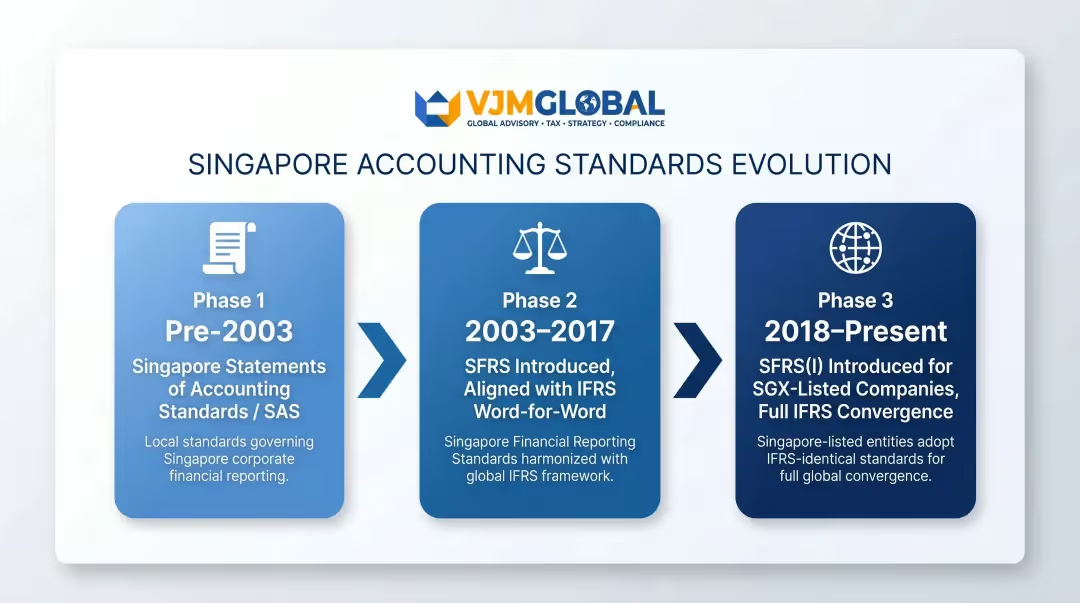
El marco contable de Singapur ha evolucionado a través de tres fases distintas:
El cumplimiento de las SFRS es obligatorio para:
Las empresas extranjeras que establezcan una filial en Singapur no pueden optar por no participar. La filial debe preparar estados financieros legales bajo las SFRS o SFRS(I), incluso si la empresa matriz informa bajo los US GAAP u otro marco, lo que hace que la planificación temprana del cumplimiento sea esencial para cualquier entidad extranjera que ingrese a Singapur.
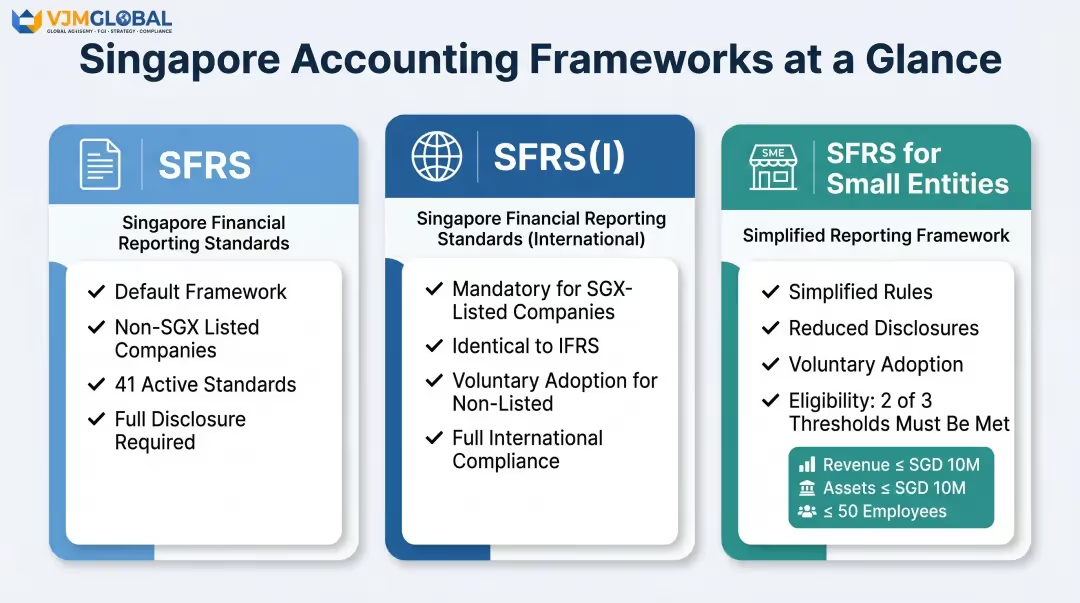
El ASC emite tres marcos principales, cada uno diseñado para diferentes tipos de entidades y perfiles empresariales. La selección del marco adecuado depende del tamaño de la empresa, su estado de cotización y si la entidad tiene responsabilidad pública.
Las SFRS son el marco predeterminado para la mayoría de las empresas constituidas en Singapur que no cotizan en la SGX. El marco abarca 41 normas distintas sobre temas que van desde la valoración de inventarios y la contabilidad de arrendamientos hasta el reconocimiento de ingresos e instrumentos financieros.
Estos tres estándares tienen el mayor impacto empresarial:
Las SFRS(I) están totalmente alineadas con las normas NIIF, lo que las hace inmediatamente familiares para las empresas multinacionales que ya operan bajo NIIF en otras jurisdicciones. El marco se volvió obligatorio para las empresas que cotizan en la SGX para los ejercicios anuales que comiencen a partir del 1 de enero de 2018.
Las empresas que no cotizan en bolsa pueden adoptar voluntariamente las SFRS(I), lo cual puede ser ventajoso para:
Esta alineación con los pronunciamientos del IASB significa que las actualizaciones de las SFRS(I) siguen de cerca los cambios globales de las NIIF, lo que reduce el riesgo de reexpresión para las multinacionales que operan entre diferentes marcos.
Las SFRS para Pequeñas Entidades son un marco simplificado para pequeñas empresas privadas elegibles, basado en la Norma de Información Financiera para las PYMES, con requisitos de divulgación reducidos y reglas de reconocimiento simplificadas.
Criterios de elegibilidad:
Las empresas deben cumplir al menos con 2 de los 3 umbrales durante los dos ejercicios financieros consecutivos inmediatamente anteriores:
Requisito adicional: la entidad no debe estar sujeta a rendición de cuentas pública (no debe tener valores cotizados en mercados públicos).
La adopción es voluntaria. Las empresas elegibles pueden optar por las SFRS completas si necesitan informes más exhaustivos o si se enfrentan a expectativas de las partes interesadas que así lo requieran.
Las SFRS se basan en principios fundamentales extraídos del Marco Conceptual para la Información Financiera. Estos principios rigen cómo se registran, revelan e interpretan las transacciones, y se aplican a todas las empresas que preparan estados financieros en Singapur.
Las transacciones deben registrarse cuando ocurren, no cuando se produce el movimiento de efectivo. Una empresa que presta servicios en diciembre de 2024 registra los ingresos en 2024, incluso si el cliente paga en enero de 2025.
Esto difiere fundamentalmente de la contabilidad de caja y proporciona una imagen más precisa de la situación financiera. Para los propietarios de empresas extranjeras, el cambio a la contabilidad de devengo es uno de los primeros ajustes de cumplimiento que deben realizar correctamente.
Los estados financieros asumen que la empresa seguirá operando en el futuro previsible. La dirección debe evaluar activamente esta suposición, especialmente durante períodos de tensión financiera, reestructuración importante o perturbación del mercado.
Si la dirección tiene dudas significativas sobre la capacidad de la empresa para continuar, se requieren dos acciones:
Las empresas deben aplicar las mismas políticas contables de un periodo a otro, lo que permite una comparación significativa a lo largo del tiempo y entre entidades. Los cambios de política solo se permiten cuando producen información más fiable y relevante, y deben revelarse con una explicación completa de la razón y el impacto financiero.
La prudencia requiere ejercer cautela en el juicio:
La integridad requiere que todas las transacciones materiales se registren, clasifiquen y revelen adecuadamente.
El Marco Conceptual revisado de 2018 restableció la prudencia como un componente que respalda la neutralidad, equilibrando el conservadurismo con una representación fiel.
La sección 201(2) de la Ley de Sociedades de Singapur de 1967 exige que los estados financieros ofrezcan una "imagen fiel" de la situación financiera y el rendimiento de la empresa. Este principio prevalece sobre el cumplimiento técnico estricto si la adhesión literal a una norma produjera resultados engañosos.
Los estados financieros deben presentarse de forma clara y comprensible para los usuarios con conocimientos financieros razonables. La jerga técnica sin una explicación adecuada infringe este principio.
Dos organismos regulan el cumplimiento corporativo en Singapur: ACRA se encarga de la presentación de estados financieros y la información corporativa, mientras que IRAS (Autoridad Tributaria de Singapur) gestiona las obligaciones fiscales. Ambos hacen cumplir plazos obligatorios, y las sanciones por incumplimiento se aplican independientemente del tamaño de la empresa.
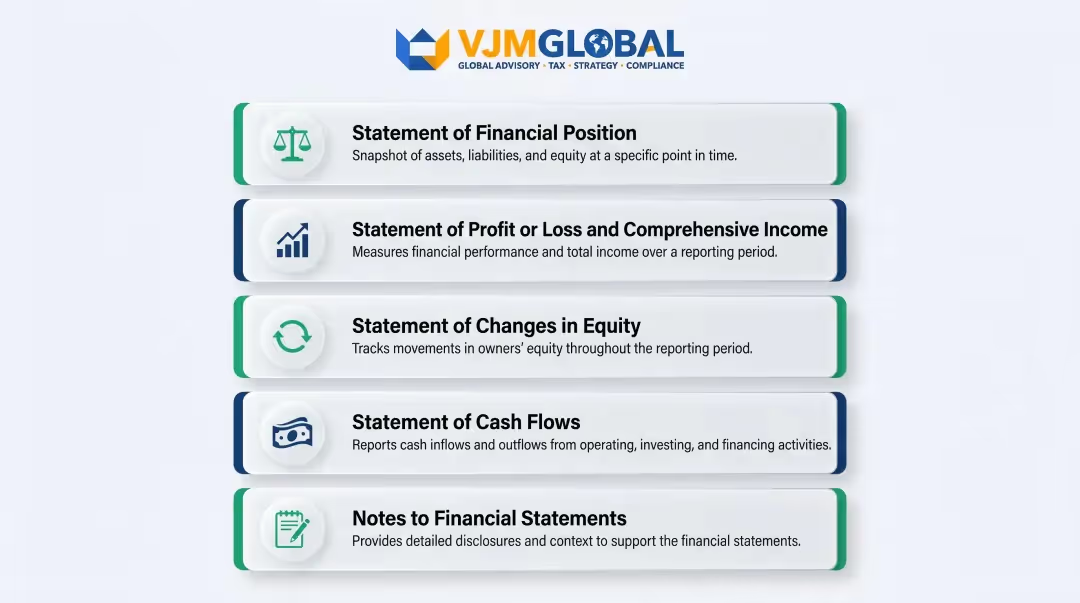
Todas las empresas constituidas en Singapur deben preparar y presentar ante ACRA sus estados financieros anuales, los cuales incluyen:
Los registros contables deben conservarse durante al menos 5 años a partir del cierre del ejercicio financiero al que correspondan, según lo estipulado en la Sección 199(2) de la Ley de Sociedades.
Los requisitos de la AGM varían según el tipo de empresa:
Las empresas privadas pueden omitir la celebración de una AGM si envían los estados financieros a todas las personas con derecho a recibirlos en un plazo de 5 meses tras el cierre del ejercicio, a menos que un miembro o auditor solicite la celebración de una AGM.
Plazos de presentación de la declaración anual se calculan a partir del cierre del ejercicio financiero, no desde la fecha de la AGM:
La mayoría de las empresas deben someterse a una auditoría anual legal realizada por un auditor registrado. Las pequeñas empresas que cumplan al menos 2 de los 3 criterios pueden estar exentas de auditoría:
Estos son los mismos umbrales que los SFRS para la elegibilidad de pequeñas entidades. Las empresas inactivas también están exentas de los requisitos de auditoría.
Las declaraciones de impuestos sobre sociedades deben presentarse anualmente ante el IRAS. Las obligaciones fiscales clave incluyen:
El Año de Evaluación (YA) se basa en los ingresos obtenidos durante el año natural anterior. Los ingresos obtenidos en el ejercicio fiscal 2024 se evalúan en el YA 2025.
Gestionar simultáneamente las obligaciones ante ACRA e IRAS —cada una con sus propios plazos y formatos de presentación— es donde muchas empresas extranjeras tienen dificultades. El equipo de contabilidad transfronteriza de VJM Global trabaja con empresas multinacionales e inversores extranjeros en más de 15 sectores, brindando apoyo en informes de cumplimiento, preparación de declaraciones anuales y servicios de estados financieros alineados con las NIIF y las normas contables internacionales.
Las empresas en Singapur deben elaborar un conjunto completo de estados financieros para cada periodo de informe. Los cinco componentes requeridos ofrecen una visión integral de la salud financiera:
La mayoría de las empresas deben presentar sus estados financieros en formato XBRL (eXtensible Business Reporting Language) a través del sistema BizFinx de ACRA:
Una EPC se define como una empresa privada con un máximo de 20 accionistas y sin accionistas corporativos.
Más allá de estos mecanismos de presentación, un principio rige toda la información financiera en Singapur, independientemente del tipo de empresa. Los estados financieros deben ofrecer una "imagen fiel" de la salud financiera de la compañía; un principio fundamental que prevalece sobre el cumplimiento técnico estricto si la adhesión literal a una norma pudiera generar resultados engañosos.
Las SFRS se basan sustancialmente en las NIIF, lo que significa que las empresas familiarizadas con las NIIF encontrarán las normas de Singapur en gran medida reconocibles. El Instituto de Contadores Públicos de Singapur confirma que "las SFRS son, en esencia, una copia literal de las NIIF".
Puntos clave de alineación:

Para las empresas estadounidenses y británicas con cotizaciones secundarias en Singapur, esta obligación de conciliación es la brecha de cumplimiento más común; la tabla anterior detalla exactamente dónde encaja cada escenario.
Singapur no sigue los US GAAP a nivel nacional. Las empresas matrices con sede en EE. UU. que tienen filiales en Singapur se enfrentan a requisitos de información duales:
La mayoría de los grupos multinacionales gestionan esto mediante ajustes de conversión o manteniendo una contabilidad de doble base desde el principio. Para los grupos con operaciones en la India, este malabarismo entre marcos —SFRS, US GAAP e Ind AS— es donde el apoyo contable transfronterizo especializado resulta rentable.
Aunque las SFRS(I) reflejan fielmente las NIIF, existen diferencias específicas:
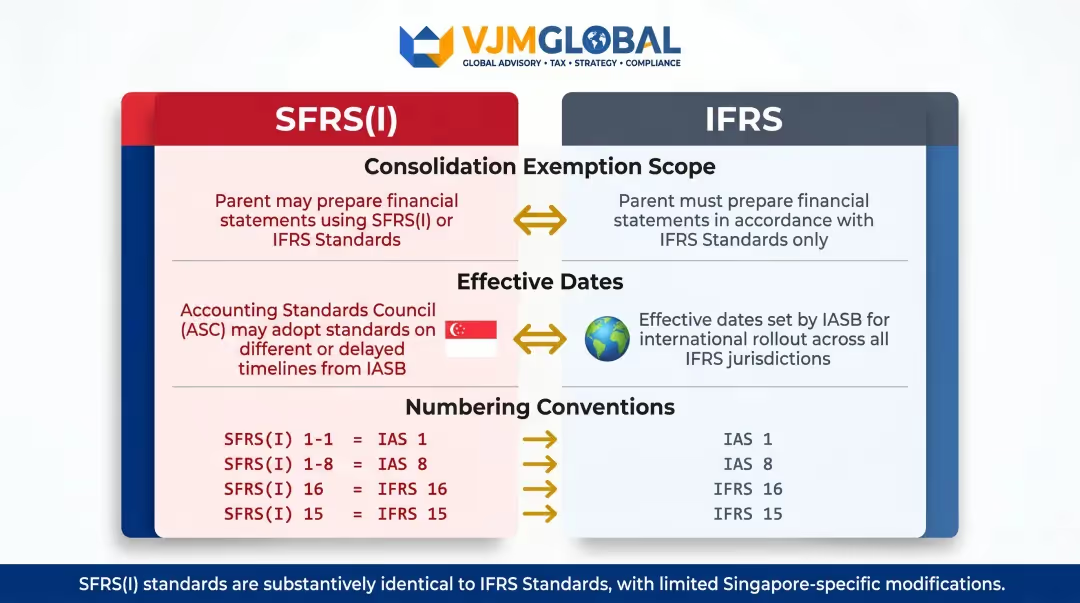
Antes de 2018, las SFRS presentaban divergencias más significativas respecto a las NIIF, incluyendo la adopción diferida de normas y modificaciones específicas de Singapur. El proyecto de convergencia de las SFRS(I) eliminó la mayoría de estas para las empresas cotizadas, razón por la cual ambos marcos están ahora tan estrechamente alineados en la práctica.
El marco SFRS de Singapur opera sobre principios fundamentales que incluyen la contabilidad de devengo, la hipótesis de empresa en funcionamiento, la consistencia y comparabilidad, la prudencia, la integridad, la presentación fiel y la comprensibilidad. Estos principios están integrados en el Marco Conceptual para la Información Financiera y rigen la forma en que todas las empresas de Singapur preparan sus estados financieros.
Las SFRS están estrechamente alineadas con las NIIF, pero no son idénticas. Las SFRS estándar son "sustancialmente una copia literal de las NIIF" con adaptaciones locales menores. Las SFRS(I), obligatorias para las empresas que cotizan en la SGX desde 2018, son idénticas a las Normas Contables NIIF, lo que las hace totalmente equivalentes a efectos prácticos.
El Accounting Standards Council (ASC) formula y emite las normas bajo la Ley de Normas Contables. La ACRA hace cumplir el cumplimiento a través del Programa de Vigilancia de la Información Financiera y supervisa el registro de empresas, la presentación de estados financieros y la regulación de los contadores públicos.
Las SFRS para Pequeñas Entidades son un marco simplificado y opcional con requisitos de divulgación reducidos para empresas privadas que cumplan 2 de los 3 umbrales: ingresos ≤ 10 millones de S$, activos ≤ 10 millones de S$ o ≤ 50 empleados, y que no tengan responsabilidad pública. Las entidades más grandes o con responsabilidad pública deben aplicar las SFRS completas.
Sí. Las sucursales en Singapur de empresas extranjeras deben cumplir con las SFRS al preparar sus estados financieros estatutarios. Las empresas extranjeras con valores de renta variable cotizados en la SGX pueden utilizar las SFRS, las Normas NIIF o los US GAAP, dependiendo de su tipo de cotización (primaria o secundaria).
Las empresas deben conservar los registros contables durante al menos 5 años después del cierre del ejercicio financiero al que correspondan, tal como exige la sección 199(2) de la Ley de Sociedades. El IRAS impone el mismo requisito de conservación de 5 años para los documentos relacionados con impuestos.
La estructura de cumplimiento de tres niveles de Singapur —SFRS completo con auditoría y presentación XBRL, SFRS para pequeñas entidades con exención de auditoría, o presentación mínima para EPC solventes— ofrece a las empresas extranjeras una flexibilidad significativa. Elegir el marco adecuado desde el principio reduce la carga administrativa y evita brechas de cumplimiento a medida que sus operaciones en Singapur crecen.