


Para las firmas de contadores públicos (CPA) y las pequeñas y medianas empresas en EE. UU., la temporada de auditoría suele significar largas horas buscando registros faltantes o explicando asientos poco claros. Sin una forma confiable de rastrear cada cambio, incluso las pequeñas brechas pueden generar graves riesgos de cumplimiento. Aquí es donde el software de pistas de auditoría se vuelve esencial.
El software de pistas de auditoría registra cada acción financiera dentro de su sistema contable, desde ediciones de facturas hasta aprobaciones de pagos, y crea un historial de actividad claro con marca de tiempo. Esta transparencia proporciona a los auditores la evidencia que necesitan, ayuda a las firmas a preparar estados financieros precisos y reduce el estrés de las conciliaciones de último minuto.
En este blog, explorará los principales tipos de pistas de auditoría, por qué son esenciales y cómo el software de pistas de auditoría ayuda a las firmas de CPA a realizar auditorías más fluidas y confiables para sus clientes.
Una pista de auditoría, también conocida como registro o seguimiento de auditoría, es un registro cronológico de las acciones realizadas dentro de un proceso. Muestra qué se hizo, quién lo hizo y cuándo. Aunque se utilizan en TI, recursos humanos y cumplimiento, las pistas de auditoría son fundamentales en contabilidad y auditoría. Su propósito es simple: proporcionar un historial confiable de eventos para su verificación.
En contabilidad, las pistas de auditoría forman la columna vertebral de la precisión e integridad financiera. Cada transacción, ajuste o edición queda registrada. Estos registros permiten a los contadores y auditores confirmar que los estados financieros sean precisos y completos. Con el software de contabilidad con pistas de auditoría, las transacciones están totalmente documentadas y son fácilmente rastreables.
Para las firmas de CPA en EE. UU., esto se vuelve especialmente importante durante las temporadas altas de auditoría. Si su firma maneja varias auditorías de clientes simultáneamente, subcontratar tareas de soporte, como la verificación de documentos y la revisión de transacciones, a un equipo externo en la India puede ayudar a aliviar la carga de trabajo. Ellos pueden revisar los registros de las pistas de auditoría del software contable, señalar anomalías y preparar la documentación para la revisión final. Esto ahorra tiempo y ayuda a su firma a entregar informes precisos y conformes sin necesidad de contratar personal temporal.
Una pista de auditoría exhaustiva siempre debe reflejar las normas que rigen la información financiera, como las establecidas por el Consejo de Normas de Contabilidad Financiera (FASB) o el Consejo de Normas de Contabilidad Gubernamental (GASB). El FASB supervisa la contabilidad del sector privado bajo los principios de contabilidad generalmente aceptados (GAAP), mientras que el GASB establece reglas más estrictas para las entidades públicas, enfatizando la transparencia y la rendición de cuentas en las finanzas gubernamentales.
Sin embargo, existen componentes típicos y genéricos que forman la estructura básica de cualquier pista de auditoría efectiva, independientemente de las normas que se apliquen. Estos componentes garantizan que cada transacción sea rastreable, verificable y segura.
Ejemplo: Imagine que su firma está auditando el proceso de cuentas por pagar de un cliente y un equipo de soporte en la India está revisando la aprobación de un pago a un proveedor. La pista de auditoría registra:
Con los componentes principales establecidos, la siguiente pregunta es: ¿qué rastrean exactamente estos sistemas en el día a día? Vamos a descubrirlo.
.avif)
Una pista de auditoría rastrea cada acción relacionada con los datos financieros, creando un historial claro de quién hizo qué y cuándo. Para las firmas de CPA, estos registros proporcionan más que transparencia; sirven como evidencia para respaldar las auditorías y mantener el cumplimiento. Estas son las áreas clave que cubre una pista de auditoría contable.
Rastrear inicios de sesión, ediciones de datos e incluso actualizaciones del sistema es una cosa, pero ¿por qué es importante? Aquí es donde entra el valor real del software de pistas de auditoría, demostrando por qué las firmas como la suya no pueden permitirse ignorarlo.
Audit trail software has become essential for modern auditing. It strengthens compliance and provides CPA firms with a practical way to manage errors, detect fraud, and complete audits more efficiently, especially when supported by offshore teams handling the heavy review work. Here's how:
No accounting system is free from mistakes. Without audit trails, a corrected entry could overwrite the original, leaving no record of the original transaction. With audit trail accounting software, every adjustment is logged with a timestamp and user ID, preserving both the original and revised values.
Example: If your support team updates a client's expense entry, you can still view the original figure, who made the change, and when the change was made.
Fraud remains one of the most significant risks for companies. Audit trails discourage misconduct by making every action traceable. They also provide investigators with the documentation needed to understand irregularities.
Why it matters: During busy seasons, offshore support teams can review audit trail logs to identify unusual approval patterns, thereby catching issues before they escalate into complete investigations.
System crashes, accidental deletions, or ransomware attacks can disrupt client operations, causing significant disruptions. With cloud-based audit trails, lost records can be restored, helping you maintain business continuity.
Audit fieldwork often consumes significant time. Audit trails simplify verification by creating a reliable history of actions tied to each transaction. Offshore audit teams can review thousands of entries, highlight exceptions, and prepare documentation in advance, leaving your in-house staff free to focus on higher-level analysis.
Example: Instead of combing through raw ledgers, your team receives a ready-to-review exception report that shortens audit turnaround time.
Public companies are required to comply with the Sarbanes-Oxley Act (SOX), which requires external audits and proof of internal controls. Nonprofits also rely on audit trails to support tax-exempt status claims. These logs show regulators and auditors how data is accessed, secured, and managed.
Audit trails can reveal operational inefficiencies that affect financial workflows. By analyzing logs, you can spot duplicated approvals, delayed sign-offs, or skipped controls. Support teams can identify these patterns, providing your staff with actionable insights.
Example: While reviewing a client's expense approvals, your team notices that two managers repeatedly approved the same invoices. The audit trail highlights this duplication, enabling your firm to recommend a more effective approval process that saves time and reduces the risk of errors.
Understanding why audit trails matter is only half the story. The way they're structured can look very different depending on what you're monitoring. Let's break down the various types of audit trails and how they support your audit work.
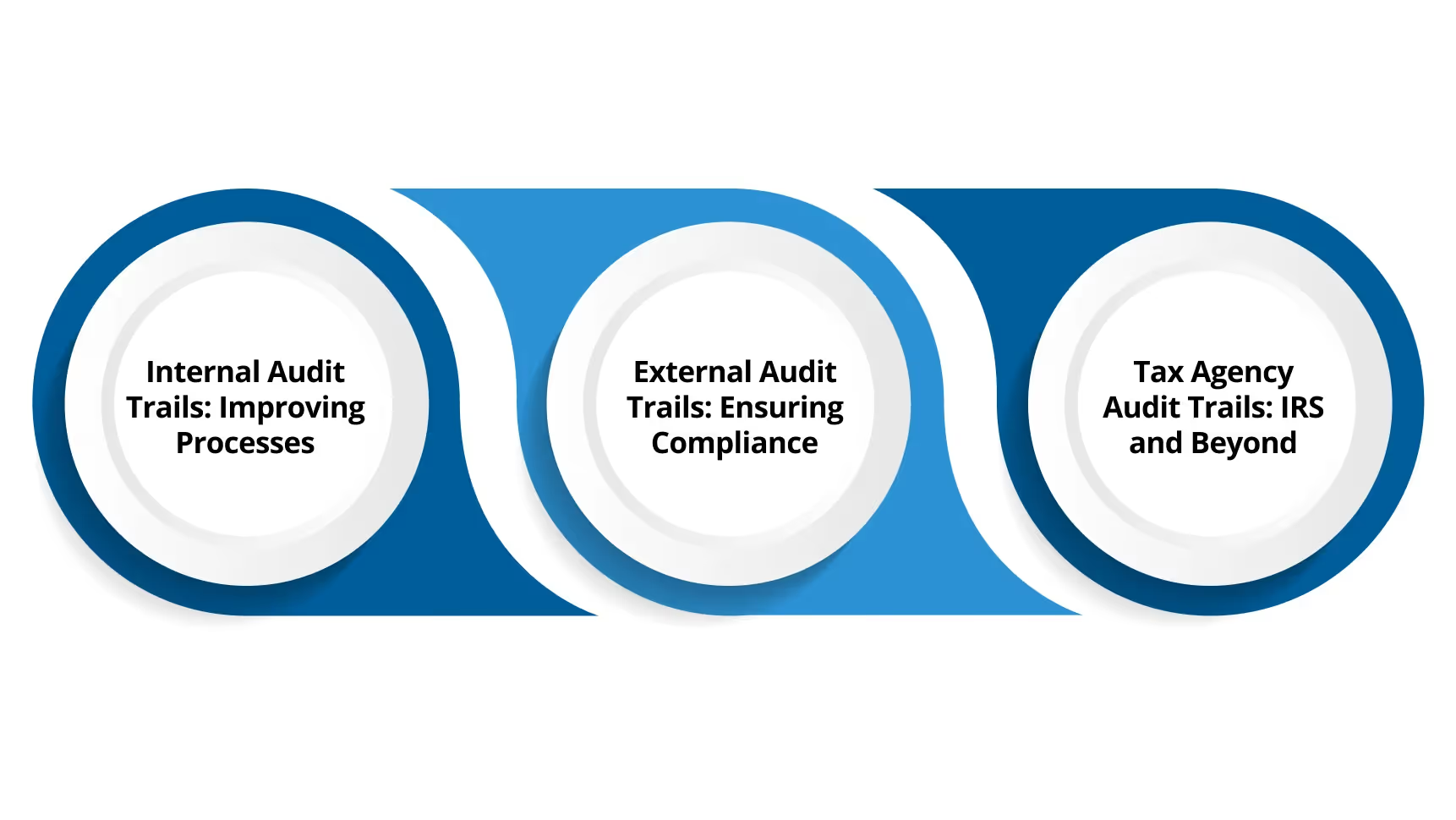
Audit trails are the foundation of various audits your firm may handle. Whether it's internal, external, or regulatory, maintaining a reliable log of activities strengthens your audit file and makes your client's compliance more defensible.
Internal audits are independent reviews designed to assess a company's internal practices. These may include accounting systems, process controls, technology use, and data policies. The goal is to identify inefficiencies, strengthen controls, and prepare the company for external audits.
Why it matters: Internal audit trails provide your support team with the evidence needed to identify weak approvals, repeated errors, or skipped steps.
Example: While reviewing a client's general ledger, your offshore team spots multiple journal entries that were reversed and re-posted with different amounts. The audit trail records the original figures, the revised entries, and the user IDs of those making the changes. This gives your firm clear evidence to question the accuracy of the client's month-end closing process and recommend stronger review controls.
External audit trails focus primarily on compliance with laws and reporting standards. For public companies, an annual external audit is mandatory to meet Securities and Exchange Commission (SEC) requirements. Private companies may also opt for external audits to build investor confidence or secure financing.
Why it matters: Detailed audit trails enable teams to match transactions against reported figures, thereby reducing the risk of misstatements.
Pro Tip: Ask your team to pre-check audit trail entries against tax filings or financial statements so your final review is faster.
Example: During a year-end audit, your offshore support team compares reported revenue with the audit trail in the accounting system. They find that several sales entries were posted after the reporting cutoff. The audit trail logs indicate when the entries were made, providing your firm with the necessary documentation to adjust revenue recognition and ensure financial compliance.
Lea también: Comprender las normas de reconocimiento de ingresos según los US GAAP
Government agencies, such as the Internal Revenue Service (IRS) in the U.S., may audit companies or individuals to verify tax filings. These audits often require transaction-level evidence to verify reported balances.
Why it matters: Audit trails enable your offshore team to quickly retrieve transaction details and provide regulators with accurate, time-stamped records.
Example: An IRS audit requests proof of depreciation claims for fixed assets. The team uses the audit trail to show the original asset purchase entry, approval workflow, and subsequent depreciation postings. This chronological record provides your firm with reliable evidence to expedite the inquiry.
Also Read: Understanding Company Audits: Key Processes and Types
As valuable as audit trails are, they're not without hurdles. Let's explore some of the key challenges with audit trails that you need to address.
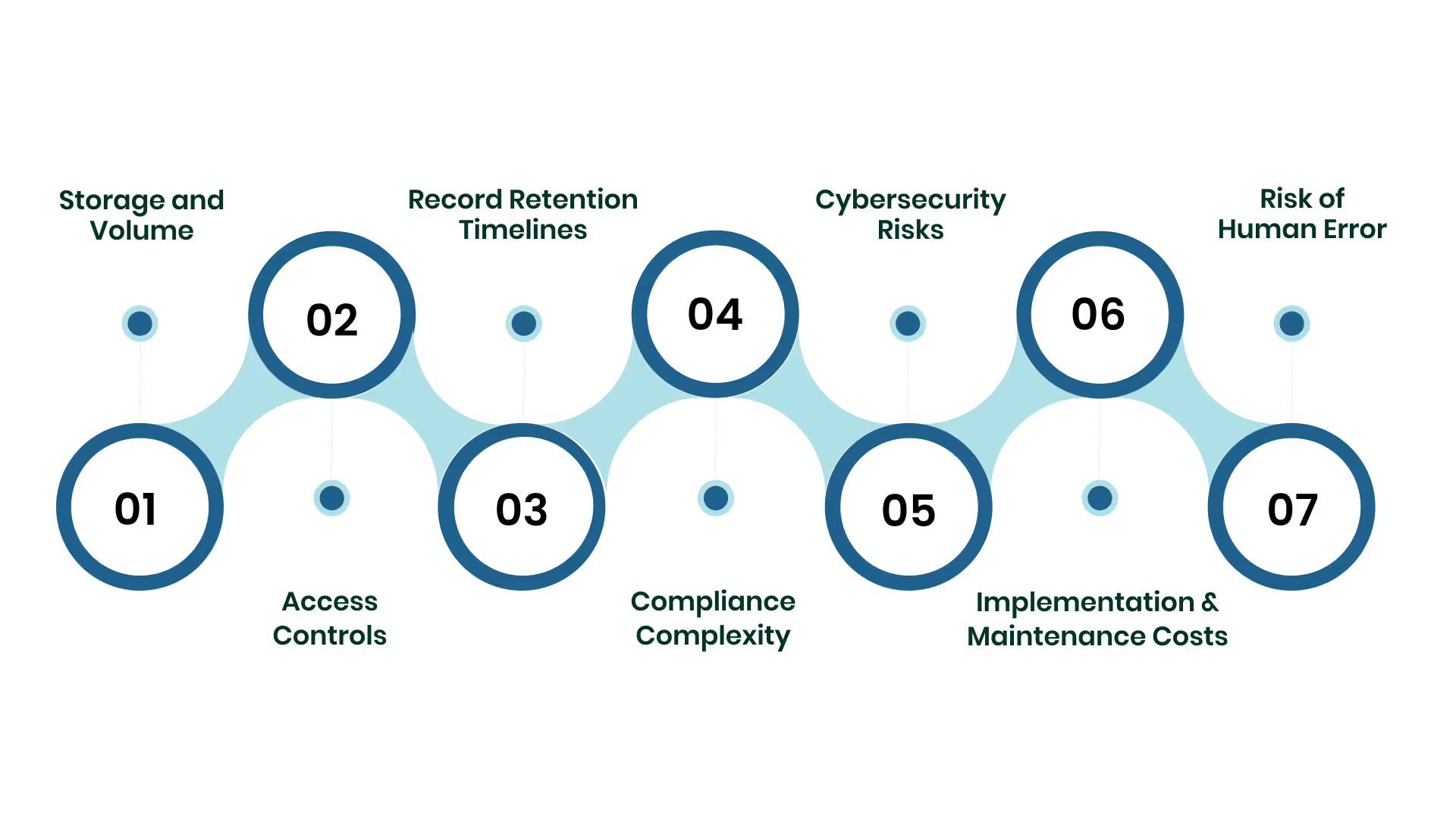
Audit trails act like an insurance policy: invaluable when you need them most. Yet keeping them accurate, secure, and compliant isn't without challenges. For CPA firms, especially those relying on offshore audit support, obstacles often arise around managing large volumes of log data, protecting access across multiple users, and maintaining oversight across different time zones.
Lea también: Gestión del trabajo de auditoría en el extranjero: desafíos y soluciones comunes
Struggling with audit trail backlogs and compliance risks? Outsource your audit support and let us handle the heavy lifting. Book your free consultation today.
Understanding audit trails is central to building reliable and compliant audit practices. From knowing what an audit trail system is to recognizing its components and the activities it monitors, every detail plays a vital role in maintaining financial accuracy.
By exploring why audit trail software matters, the types of audits it supports, and the challenges of maintaining accurate records, you gain a clear view of how audit trails protect data and strengthen reporting. With this knowledge, your firm can approach audits with greater confidence and accountability.
For U.S. CPA firms, the real test often comes during peak seasons when audit workloads surge. That's where offshore audit support becomes invaluable. At VJM Global, our skilled teams in India provide end-to-end support, from reviewing audit trail logs and preparing documentation to flagging anomalies for final review and approval. With our expertise, your firm can manage growing client demands, reduce costs, and deliver accurate, compliant reports on time.
Ready to strengthen your audits with reliable support? Connect with our experts today and discover how our offshore audit teams can help your firm handle high-volume audits confidently and cost-effectively.
Cloud-based audit trail software provides remote access, scalability, and cost-effective updates, while working papers offer the supporting documentation, such as preliminary balance sheets and income statements. Auditors can use these to validate processes and enhance internal or external audit reports.
Select software that accurately tracks and records exact field-level changes, such as invoice edits. It should log user IDs and timestamps for every entry. Look for multi-entity support, secure cloud storage with backups, and built-in reporting tools that create audit-ready compliance reports.
If your clients fail to maintain a proper audit trail, they may face significant fines, failed compliance checks, or even lawsuits. Regulatory agencies expect clear documentation of transactions and controls. Without it, they risk financial penalties, reputational damage, and loss of customer trust.
Utilize audit trail software that automatically captures all data entries and their corresponding versions. Record daily user activity directly into audit logs through automation. Review logs regularly to ensure they accurately capture the necessary information. Update logging rules whenever your clients introduce new policies or workflows.




