


India continues to attract increasing interest from Taiwanese investors, with approximately 200 Taiwanese businesses having already made investments in the country as of February 2024. This growing footprint reflects India’s appeal as a strategic base for regional expansion, supported by its large consumer market, improving infrastructure, and investor-focused reforms.
However, setting up a business in India requires more than market interest; it demands clarity on foreign investment rules, regulatory pathways, and operational requirements. From choosing the right legal structure to complying with FDI norms and post-incorporation obligations, each step must be approached carefully to ensure a smooth and compliant setup.
This guide offers a step-by-step roadmap for business setup in India for Taiwanese investors, covering approvals, incorporation, tax, capital flow, and practical market entry strategies.
Before setting up a business in India, Taiwanese investors must understand the Foreign Direct Investment (FDI) framework that governs foreign ownership across different sectors.
FDI policy in India is regulated by the Reserve Bank of India (RBI) and the Department for Promotion of Industry and Internal Trade (DPIIT), and it determines where and how foreign investment is allowed.
India permits FDI through two main channels:
Most sectors are open to 100% foreign ownership, especially under the automatic route. However, some activities like gambling, atomic energy, and real estate trading are fully prohibited.
Tip: Check the sector-specific FDI policy before selecting your business structure. This helps avoid delays and ensures your investment complies with RBI and DPIIT norms.
Once you’ve confirmed your sector is open to foreign investment and understand the applicable FDI route, the next step is selecting the right business structure. This choice determines your level of control, tax exposure, and long-term flexibility in India.
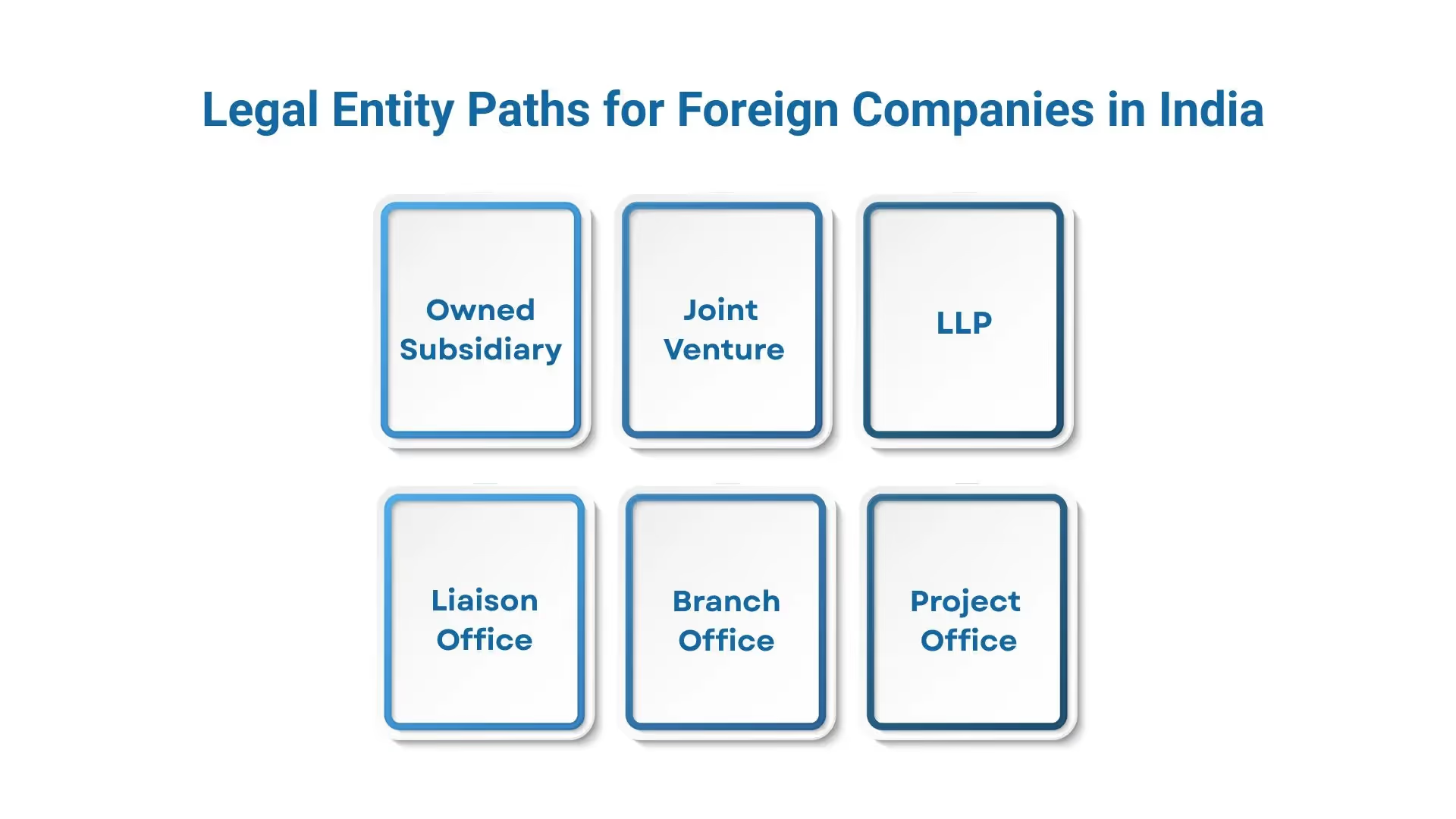
Taiwanese investors looking to establish operations in India can take advantage of India’s 100% Foreign Direct Investment (FDI) allowance in most sectors under the automatic route, which means no prior government approval is required.
However, this access is only available through certain legally recognized business structures.
The choice of entity impacts everything from tax liability to profit repatriation and operational control. Below are the most viable entry options for Taiwanese companies, each with its specific setup process, compliance obligations, and strategic advantages:
A wholly owned subsidiary is the most comprehensive and flexible business form available to foreign investors in India. It is a separately incorporated legal entity, allowing 100% Taiwanese ownership if the sector falls under the automatic FDI route.
主な特徴:
メリット:
合弁事業(JV)では、台湾企業がインド企業と提携して新しい事業体を設立し、所有権、リスク、経営責任を共有することができます。
主な特徴:
メリット:
An LLP is a hybrid structure combining the flexibility of a partnership with the limited liability of a corporation. 100% FDI is permitted under the automatic route in sectors where no performance-linked conditions apply.
主な特徴:
メリット:
連絡事務所は、直接的な販売や商業活動を行わずに、インド市場のテストを行いたい、あるいは親会社の代表として活動したい企業に最適です。
主な特徴:
メリット:
支店を設置することで、台湾の親会社はインドにおいて、サービス提供、輸出入、技術サポートなど、特定の商業活動を行うことができます。
主な特徴:
メリット:
特定のインフラプロジェクトやエンジニアリングプロジェクトを遂行する企業に最適で、特定の契約期間中のみ存続する形態です。
主な特徴:
メリット:
完全なコントロールと長期的な事業展開を目指すなら、完全子会社が最も確実な選択肢です。段階的な参入や規制の厳しい分野であれば、ニーズに応じて合弁会社(JV)、有限責任事業組合(LLP)、または連絡事務所を検討してください。
適切な事業形態を選択したら、次はインド法人を立ち上げるための法的手続きを行います。これには、承認の取得、関係当局への登録、税務およびコンプライアンス要件の充足が含まれます。
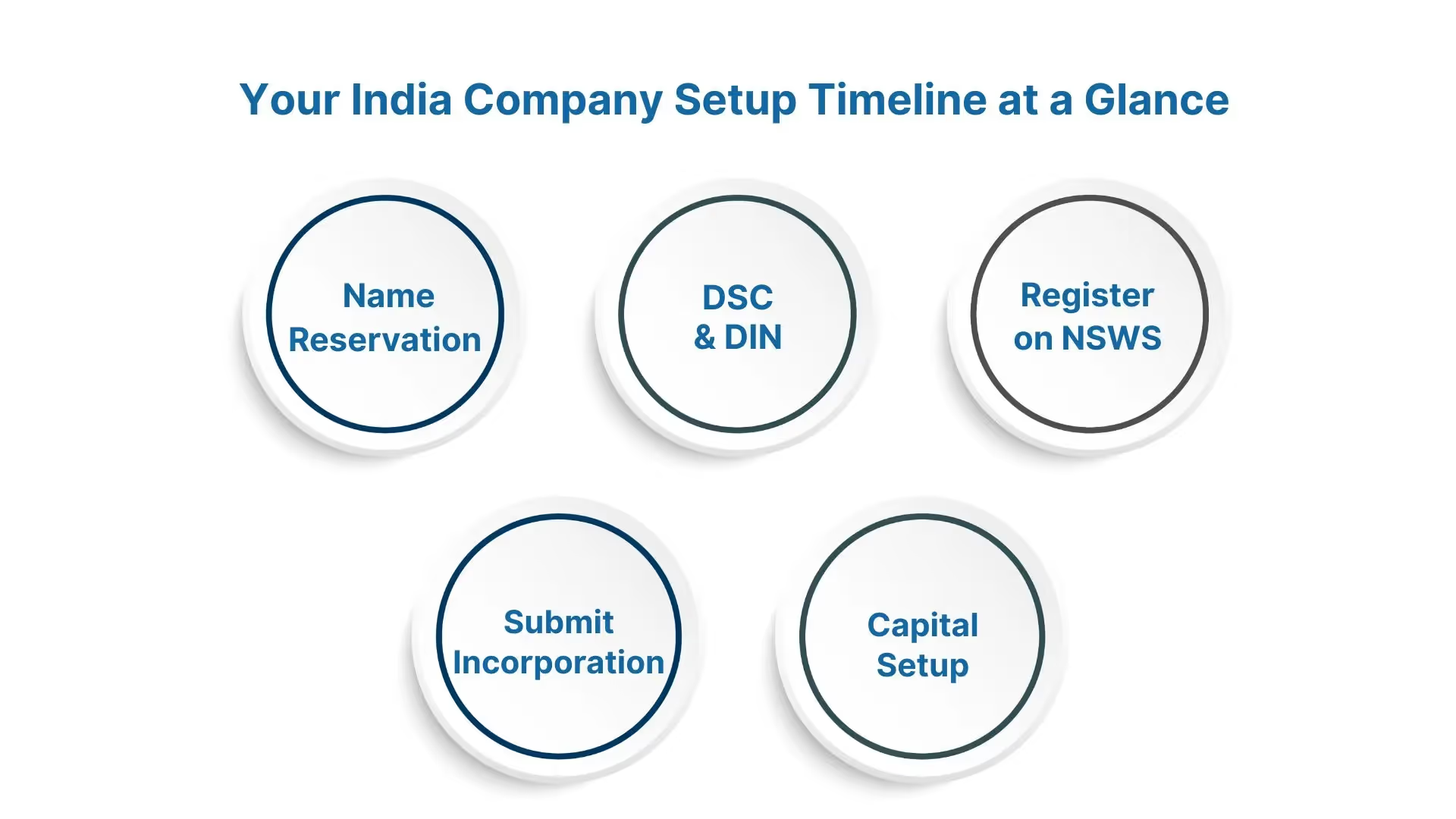
インドでの事業設立には、複数の規制上のステップが必要です。具体的なプロセスは事業形態によって多少異なりますが、多くの外資系企業は以下の一般的な手順に従います。
まずは、インド企業省(MCA)ポータルの RUN(Reserve Unique Name) サービスを利用して、独自の会社名を予約します。1回の申請で2つの名称を提案できます。
オンライン申請には電子署名が必要です。少なくとも1名の インド居住取締役 が取締役識別番号(DIN)を保持している必要があります。
NSWSポータルを利用することで、中央政府および州政府の承認申請を単一のプラットフォームから行うことができます。
主な手順:
インド企業省(MCA)は、SPICe+(Simplified Proforma for Incorporating Company Electronically Plus)と呼ばれる統合電子フォームを提供しており、単一のデジタル窓口を通じて会社設立手続きを効率化できるよう設計されています。
What’s Included in SPICe+:
When filing SPICe+, you’re completing multiple registrations in one step:
All documents are submitted online and must be digitally signed using Digital Signature Certificates (DSCs).
Once approved, the applicant receives:
Why it matters: SPICe+ eliminates the need to file separate applications across departments, saving time and ensuring compliance from day one.
Use your Certificate of Incorporation (CoI) and PAN to open a current account with an RBI-authorised Indian bank. Once opened, transfer the initial share capital from your foreign bank account through proper banking channels.
送金がFDI(外国直接投資)として正しくタグ付けされていることを確認し、外国送金証明書(FIRC)を取得してください。これは、RBIへの報告および将来の資金還流の際に必要となります。
注:これらについては、登録前にAD-I銀行を通じてRBIの追加承認および固有識別番号(UIN)の発行を受ける必要があります。
With your company now officially incorporated and essential registrations, the focus shifts to operational readiness. Setting up internal systems, appointing auditors, and meeting ongoing compliance requirements are critical to keeping your Indian business running smoothly.
Once the Certificate of Incorporation is issued, your Indian business must meet several initial compliance steps and prepare for ongoing operations. These actions are essential to avoid regulatory penalties and to maintain good legal standing. Key Post-Incorporation Steps:
All companies must appoint a Chartered Accountant (CA) as an auditor within 30 days of incorporation.
This is essential for signing off annual accounts and maintaining regulatory compliance. Failure to comply may result in monetary penalties or the disqualification of directors.
This state-level registration is mandatory for offices, shops, or commercial premises used for operations or hiring.
Each state has its own timeline and documentation process, and non-compliance can lead to labour law issues during inspections.
The company must issue physical or dematerialized share certificates to all initial shareholders within 60 days of incorporation.
This must be backed by a board resolution and recorded in the company’s register of members.
Companies are required to maintain statutory registers under the Companies Act, 2013—these include registers of members, share allotments, directors, and board meeting minutes.
These must be kept at the registered office and presented during audits or ROC inspections.
After receiving share capital, companies must file Form INC-20A with the MCA within 180 days of incorporation.
This declaration is mandatory to activate the company’s business operations; failure to file may result in a freeze on the bank account or company status being marked as inactive.
Note for Foreign-Owned Entities: Additional compliance applies under FEMA, including capital reporting via Form FC-GPR and submitting shareholding details through your Authorized Dealer (AD) bank.
VJM Global assists foreign investors through every stage of incorporation, from name reservation and digital signatures to multi-agency registrations. Our experts ensure timely approvals and full compliance. Book a Demo Today
Once the company is operationally active, the next priority is managing capital flows, opening compliant bank accounts, and ensuring adherence to India’s foreign exchange laws. This is especially important for Taiwanese companies routing funds into India and repatriating profits later.
India regulates all cross-border financial transactions under the Foreign Exchange Management Act (FEMA). Taiwanese investors must follow these specific procedures when bringing in capital or transferring funds to and from their Indian entity:
After incorporation, businesses must open a current account in an RBI-authorised Indian bank. This account will be used for:
Capital from Taiwan must be sent through proper banking channels and converted to INR by an Indian bank (AD Category I).
主なコンプライアンス手順:
Profits earned in India can be repatriated to Taiwan after:
注意:FEMA(外国為替管理法)の報告が遅延または不履行となった場合、罰金が科されたり、将来の送金が制限されたりする可能性があります。多くの企業が、これを適切に管理するために現地の会計士やコンプライアンスアドバイザーを起用しています。
Alongside managing capital flows, understanding India’s corporate tax framework is key to financial planning. Taiwan–India tax treaties, startup incentives, and location-specific exemptions can significantly impact your total tax burden.
Foreign businesses operating in India are subject to the country’s domestic tax laws. However, with careful structuring, Taiwanese companies can take advantage of both central incentives and bilateral agreements.
Taiwanese companies can still avoid double taxation in India through a DTAA-like arrangement, even without a formal treaty between the two governments.
インドと台湾の間には正式な租税条約はありませんが、インド台北協会がDTAAに準じた枠組みを支援しています。これにより、以下が可能となります:
India offers a range of national and state-level schemes that can reduce tax burden and support business growth, especially for startups and strategic sectors.
In addition to national-level incentives, India offers multiple support schemes and facilitation platforms tailored for foreign investors. Taiwanese businesses can leverage these programs to reduce setup friction, connect with authorities, and access grants or policy exemptions.
あわせて読みたい:外国投資家がインドで会社を設立する方法:法務・税務ガイド
India has launched several national and regional programs aimed at making foreign business entry easier, especially in manufacturing, electronics, logistics, and innovation-led sectors.
India’s central government has introduced several flagship initiatives to attract and support foreign investors across priority sectors.
インド政府は、事業立ち上げの効率化とグローバル資本の誘致を目的として、政策支援、許認可の迅速化、および経済的インセンティブを提供する主要なプログラムを導入しています。
「Make in India」、「Startup India」、および「National Single Window System (NSWS)」といったこれらの取り組みは、外国企業が市場参入を簡素化し、業界特有のメリットを享受し、政府機関とより効率的に連携する一助となっています。
DPIIT(商務省産業政策促進局)を通じた迅速な許認可、セクター別の政策、投資家支援を提供することで、国内製造業を促進しています。台湾の電子機器・部品メーカーは、すでにタミル・ナードゥ州やアーンドラ・プラデーシュ州などでこの恩恵を受けています。
Startup Indiaは、テクノロジーとイノベーション主導型のベンチャー企業向けに設計されており、以下の特典を提供しています。
Many Indian states operate their own Investment Promotion Agencies (IPAs) and tailor incentives to attract FDI. These may include:
例:タミル・ナードゥ州の「Guidance TN」、カルナータカ州の「Udyog Mitra」、グジャラート州の「Vibrant Gujarat」プラットフォームなど。
インドで持続可能なプレゼンスを築くために、台湾企業は実践的かつ現地に根ざした戦略に注力すべきです。以下に、市場参入を成功させた事例から得られたベストプラクティスを挙げます。
インドは、政策改革と市場アクセスに支えられ、台湾の投資家にとってインドでの事業立ち上げにおける長期的な大きな可能性を秘めています。インド市場は、規模、セクターの多様性、そして長期的な成長の可能性を兼ね備えた稀有な市場です。エレクトロニクスやクリーンエネルギーからIT、物流に至るまで、その機会は従来の製造業の枠を大きく超えています。
インドの規制枠組みは一見複雑に思えるかもしれませんが、NSWS、SPICe+による統合申請、州レベルの支援といったプラットフォームにより、外国資本企業にとっての参入障壁は大幅に低減されています。
適切な戦略と現地のガイダンスがあれば、台湾企業はインドで強固かつコンプライアンスに準拠したプレゼンスを確立し、長期的な商業的成功を収めることができます。
インドでの事業立ち上げに関するサポートが必要ですか?
VJM Globalは、国際企業のインドでの事業設立と規模拡大を専門に支援しています。法人登記やFDIコンプライアンスから、税務ストラクチャリング、クロスボーダー送金まで、当社のチームがあらゆるステップで貴社をサポートします。
お問い合わせいただければ、インド進出に向けたカスタマイズ済みのロードマップをご提案します。

.avif)


