Expanding your business into India is a thrilling prospect, but choosing the right structure can be tricky for U.S. companies unfamiliar with local regulations. The wrong choice can lead to unexpected delays, compliance issues, or unnecessary taxes, causing frustration and potentially stalling growth before it even begins.
This guide will help you understand the business structures in India, from subsidiaries to liaison offices, and show you which one fits your needs. By the end of the blog, you’ll have a clearer picture of how to position your business for success in India’s dynamic market. Let’s jump in.
Key Takeaways
Choosing the right business structure in India impacts liability, taxes, compliance, and long-term growth potential.
Simple structures like Sole Proprietorships are quick to set up, while Private Limited Companies offer greater flexibility and investment opportunities.
Each business structure has unique tax implications, so understanding your options is key to tax-efficient planning.
Compliance requirements vary by structure, with companies and LLPs needing more paperwork and legal formalities than simpler setups.
Expert advice is essential for tackling India's regulatory domain, ensuring your business setup aligns with both short-term goals and long-term success.
What is a Business Structure or Business Entity?
A business structure, or business entity, is the legal framework that defines how your business is organized. It affects everything from taxes to personal liability, influencing how your business interacts with local and international laws.
For instance, when a U.S. company enters India, it might need to establish a separate business entity to open a local bank account or apply for loans. Each business structure comes with its own set of benefits and limitations, depending on your goals and the nature of your operations.
Understanding these differences ensures you make the best choice for your expansion.
Now that you know what a business structure is, let's explore why choosing the right one in India is essential for your success.
Why Choosing the Right Business Structure in India Matters
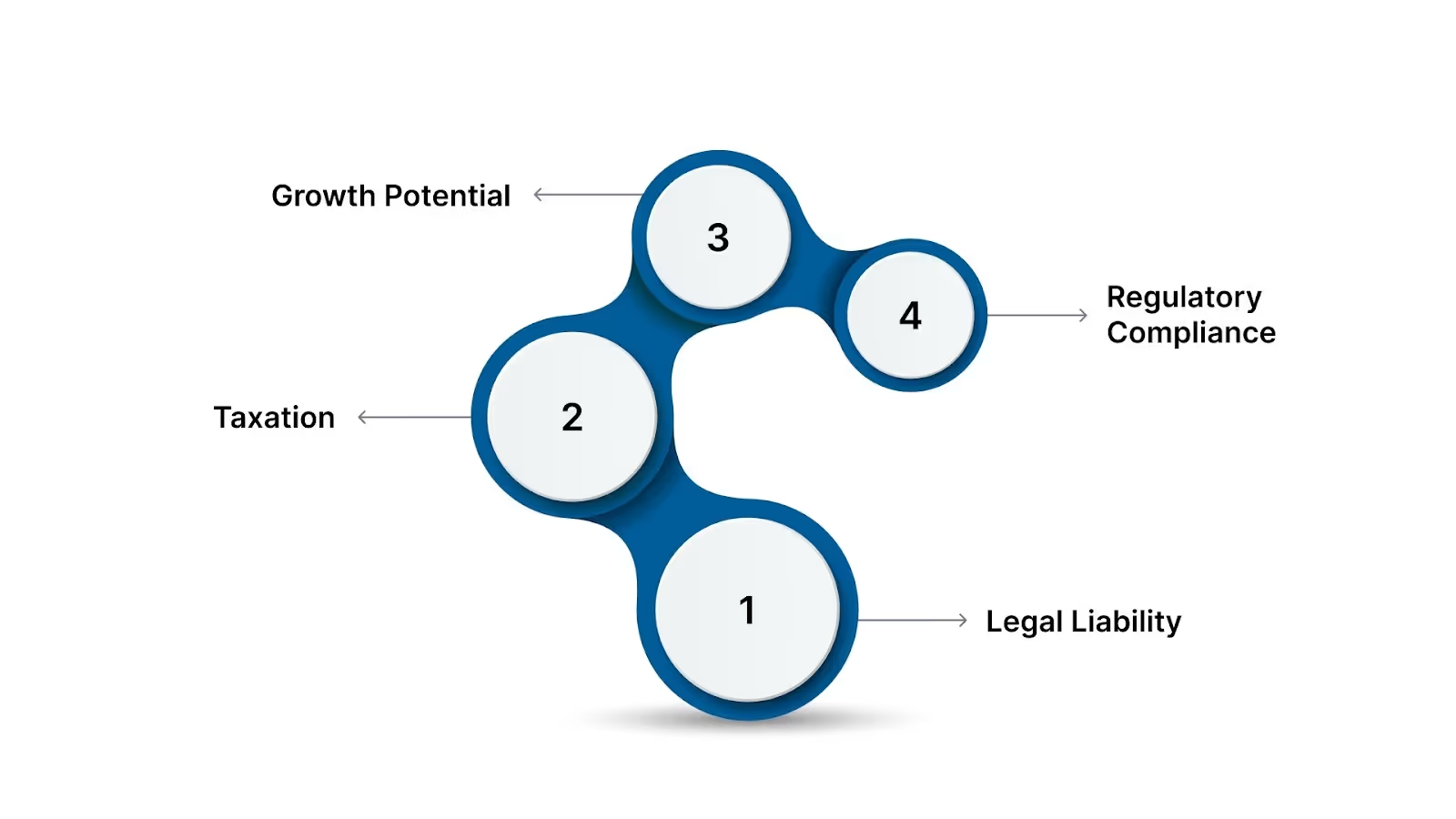
Alt text: Why Choosing the Right Business Structure in India Matters
When expanding into India, selecting the right business structure is crucial. It affects everything from legal liabilities to long-term growth potential.
Legal Liability: Your business structure impacts your personal liability. In a sole proprietorship, you're personally responsible for debts, while in a private limited company, your liability is limited to the capital invested.
Taxation: Different structures have varying tax implications. Sole proprietorships are taxed as personal income, while private limited companies are subject to separate taxation.
Growth Potential: A sole proprietorship may limit your ability to attract investors or raise capital. In contrast, structures like a private limited company make it easier to bring in partners or secure funding.
Regulatory Compliance: Each structure requires different levels of compliance. A sole proprietorship may be limited in its ability to raise capital or attract investors. On the other hand, a partnership or a private limited company offers greater flexibility, making it easier to attract investors.
Carefully considering these factors better positions you to make the right choice for your business's future in India.
With that in mind, here’s a look at the various business structures available in India and what each one offers.
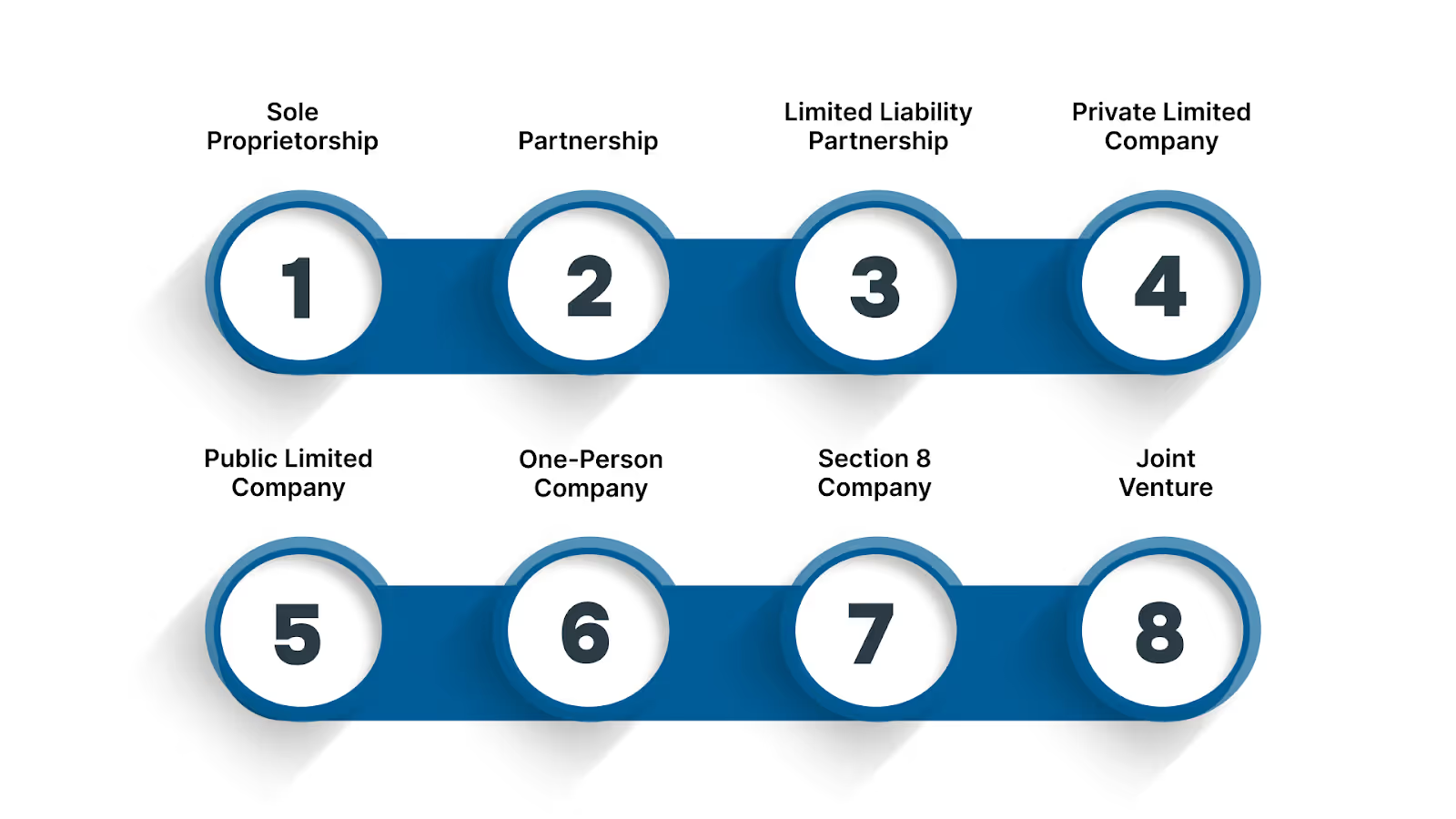
Different Types of Business Structures in India
Choosing the right business structure in India is essential for the success of your international operations. Here's a breakdown of the most common structures:
Entity Type
Legal Identity
Liability
Compliance Level
Suitable For
Sole Proprietorship
No
Unlimited
Low
Individual entrepreneurs or consultants entering India with minimal setup needs
Partnership Firm
No
Unlimited
Low
Small U.S. businesses with Indian partners or limited local operations
Limited Liability Partnership (LLP)
Yes
Limited
Moderate
Service-based firms or early-stage startups seeking flexibility and limited liability
Private Limited Company
Yes
Limited
High
U.S. startups or mid-size companies planning long-term operations and investor participation
One Person Company (OPC)
Yes
Limited
Moderate
Solo founders expanding to India who prefer corporate status with single ownership
Public Limited Company
Yes
Limited
Very High
Large U.S. enterprises or joint ventures requiring public investment or large-scale funding
Section 8 Company (Non-Profit)
Yes
Limited
Moderate
U.S. NGOs, foundations, or social enterprises establishing charitable operations in India
Joint Venture (JV)
Varies
Varies
Varies
Strategic partnerships between U.S. and Indian companies for sector-specific expansion
1. 個人事業主(Sole Proprietorship)
A Sole Proprietorship is a business run by a single individual. It is the simplest form of business to set up, and the owner has full control over decision-making and profits.
Key Features:
Wholly controlled by one person.
No separate legal identity from the owner.
No formal registration required.
Pros:
Cost-Effective: Low setup costs with minimal legal requirements.
Flexibility: Full control over decision-making and operations.
Direct Tax Filing: Income is reported on the owner’s personal tax return, simplifying the process.
Cons:
Unlimited Liability: Personal assets are at risk if the business incurs debts.
Limited Growth: Difficult to scale due to the structure’s limits.
No Separation: Business and personal finances are intertwined, making financial management more complex.
2. Partnership
A Partnership involves two or more people working together to share profits and responsibilities. It is a popular structure for businesses that require pooled resources but do not offer the same protection as other structures.
Key Features:
At least two partners.
Partnership deed outlines roles and profit-sharing.
Informal registration; however, it is advisable to register.
Pros:
Fund Raising: Easier access to funding compared to Sole Proprietorships.
Shared Responsibility: Liabilities and responsibilities are shared, spreading the risk.
Trust: Established mutual trust and accountability among partners.
Cons:
Unlimited Liability: Partners are personally liable for the business’s debts.
Partnership Instability: The business may face disruption if a partner exits.
Management Disagreements: Conflicts between partners can affect business operations.
3. Limited Liability Partnership (LLP)
An LLP offers the flexibility of a partnership while providing limited liability for its partners. It is a good option for businesses that want to protect individual assets while maintaining ease of management.
Key Features:
Partners have limited liability.
No minimum capital requirement.
LLP and partners are separate legal entities.
Pros:
Limited Liability: Partners are liable only for their investment, protecting their personal assets.
No Minimum Capital: Can be started with minimal capital.
Lower Compliance: Fewer legal formalities than a private limited company.
Cons:
Self-Employment Taxes: Partners must pay self-employment taxes on their income.
Complexity in Membership: Requires formal agreements when adding or removing partners.
Limited Growth: Raising large amounts of capital can be challenging.
4. Private Limited Company
A Private Limited Company is a separate legal entity. It’s an ideal choice for businesses that want to scale, raise capital, and separate personal and business liabilities.
Key Features:
Limited liability protection for shareholders.
Minimum of two shareholders, maximum of 200.
More formal legal structure with required compliance.
Pros:
Limited Liability: Shareholders are protected from business debts.
Access to Funding: Easier to raise capital through equity and loans.
Credibility: Preferred by investors and creditors due to formal structure.
Cons:
Higher Compliance: Requires annual filings, audits, and board meetings.
Management Complexity: Can be cumbersome to manage with multiple shareholders.
Costs: Higher setup and operational costs due to formal registration and legal requirements.
5. 公開有限会社(Public Limited Company)
A Public Limited Company is suitable for large businesses looking to raise funds by issuing shares to the public. This is the most complex structure, with stringent regulatory requirements.
Key Features:
Minimum of seven shareholders.
Can issue shares to the public.
More stringent regulatory compliance.
Pros:
Large Capital Access: Ability to raise substantial funds through public offerings.
Limited Liability: Shareholders’ liability is limited to their stake.
Separate Entity: The company exists independently of its shareholders.
Cons:
High Compliance Costs: Ongoing legal requirements, including detailed financial disclosures.
Less Control: Shareholders can influence company decisions, diluting founders’ control.
Setup Complexity: Higher initial costs and extensive paperwork.
6. One-Person Company (OPC)
An OPC is designed for solo entrepreneurs who wish to operate as a separate legal entity while enjoying limited liability protection.
個人事業や一人会社(One Person Company)であれば、意思決定を完全にコントロールできます。一方、責任を分担することに抵抗がないのであれば、パートナーシップや協同組合の方が適しているかもしれませんが、重要な決定に影響を与えるパートナーと協力する必要があることを覚悟しておく必要があります。
Sole Proprietorships and Partnerships are taxed as individuals, while Companies are taxed at corporate rates. LLPs offer some tax flexibility and lower compliance costs. It’s critical to consult with a local tax advisor to determine the most tax-efficient structure.
For U.S. companies entering the Indian market, working with experts like VJM Globalcan help you choose the right structure and maximize savings.Get in touch today.
11. Compliance Burden
Sole Proprietorships and Partnerships face minimal compliance, making them attractive to small businesses. However, LLPs and Companies must adhere to stricter regulations, including annual returns, board meetings, and statutory audits, depending on their turnover.
12. Ease of Setup and Exit
While Sole Proprietorships and Partnerships are easier to start and close, LLPs and Companies require more paperwork and legal formalities to dissolve. If you expect frequent changes in your business structure, simpler options may be more convenient.
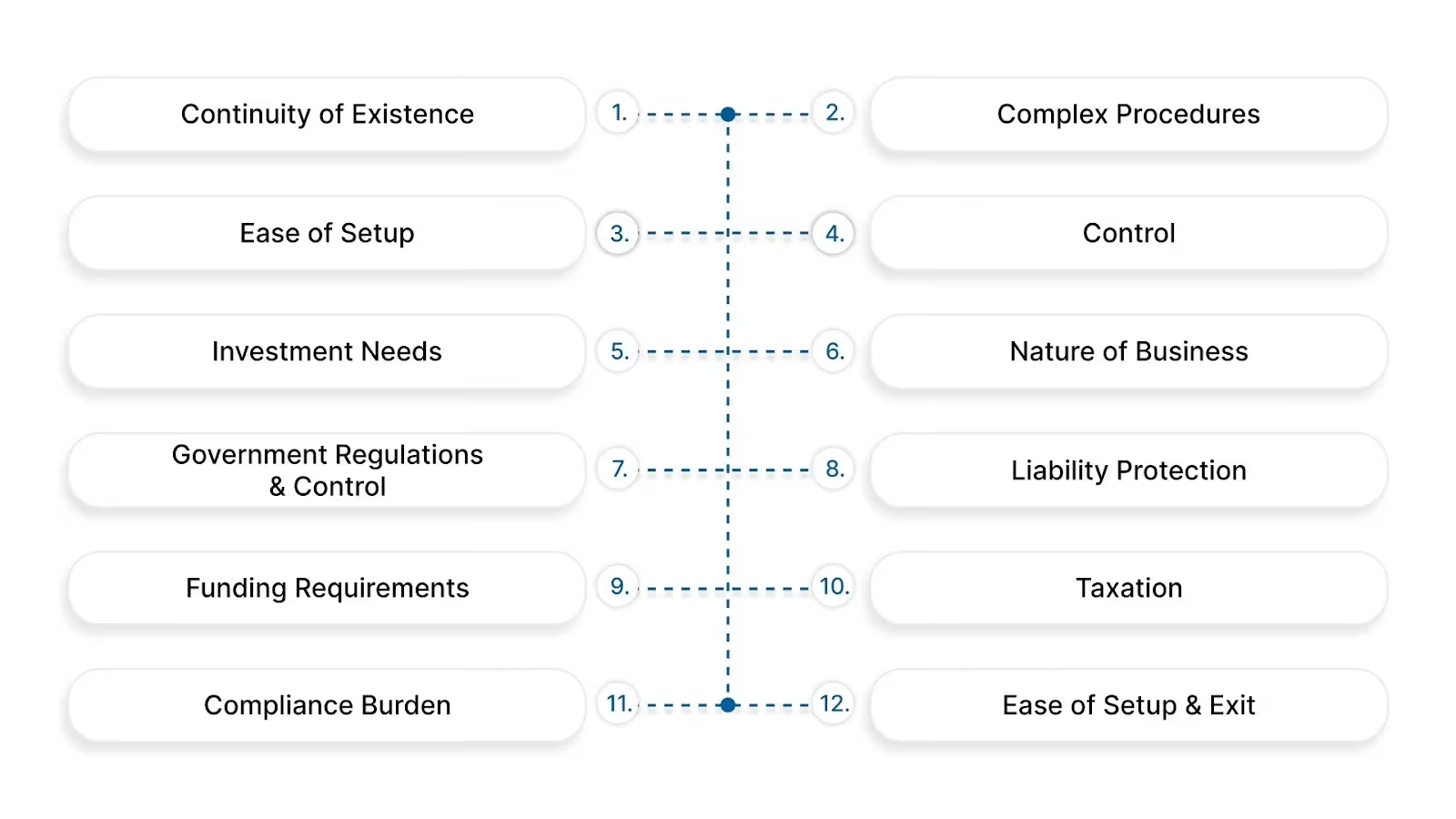
Understanding these factors will help you select the best fit for your needs, making it easier to understand the Indian market and avoid costly missteps.
Next, let’s learn how VJM Global can guide you through the process and ensure you set up the right foundation for business in India.
Ready to Choose the Right Business Structure in India?
Tackling India’s business domain requires expert guidance. VJM Global offers tailored support to help you make the best choice for your business setup. Here’s how we can assist:
Comprehensive Business Setup Advisory: We guide you through each business structure, ensuring you choose the one that fits your goals, whether you're a startup or multinational.
Expert Tax and Compliance Services: From international tax planning to FDI advisory, we help minimize risks and ensure compliance with India’s regulatory requirements.
Seamless Incorporation Assistance: We handle all the paperwork and legal formalities for setting up your business, whether it’s a Private Limited Company or Joint Venture.
Ongoing Support for Growth: Our services extend beyond setup, offering continuous support for corporate structuring, accounting outsourcing, and more as your business scales.
Specialized Knowledge for U.S. Companies: With experience in working with U.S. businesses, we understand your specific needs and challenges in entering India’s market.
Let VJM Global help you build a strong foundation for your Indian venture.
Conclusion
Selecting the right business structure is a crucial step in your journey to expand into India. The choice you make affects everything from tax planning and liability to regulatory compliance and long-term business stability.
Aligning the right structure with your business goals sets the stage for success in one of the world’s most dynamic markets.
At VJM Global, we specialize in helping U.S. businesses like yours address India’s business domain. Our team is here to ensure a smooth, successful entry into the Indian market, from business setup and tax planning to compliance and beyond.


.avif)

.avif)


