

%20(6).avif)
Crypto bookkeeping can often feel like an uphill struggle, especially when setting up your business from the US to India. As you handle the complexities of crypto finance across borders alone, you’ll face challenges such as volatility, constant data reconciliation, and complex reporting requirements. These hurdles can leave you scrambling to keep up. Many accountants in the blockchain and Web3 space experience the same frustrations during this transition.
This blog will guide you through the components of crypto bookkeeping, the common challenges you'll encounter, and the tools that can simplify the process. We’ll also explore tax compliance, strategies for staying organized, and much more to help you gain control over your crypto financials as you scale your operations.
Crypto bookkeeping involves recording and organizing all cryptocurrency transactions to maintain clear, accurate financial records. It includes tracking every buy, sell, swap, and transfer across wallets and exchanges. Each entry notes the date, value, and fees to calculate gains or losses correctly.
Unlike traditional bookkeeping, it deals with decentralized assets and volatile market prices. Maintaining precise records is key for tax reporting and regulatory compliance. It also gives businesses a transparent view of their crypto finances and helps with better decision-making. In short, crypto bookkeeping keeps digital asset management organized, compliant, and audit-ready.
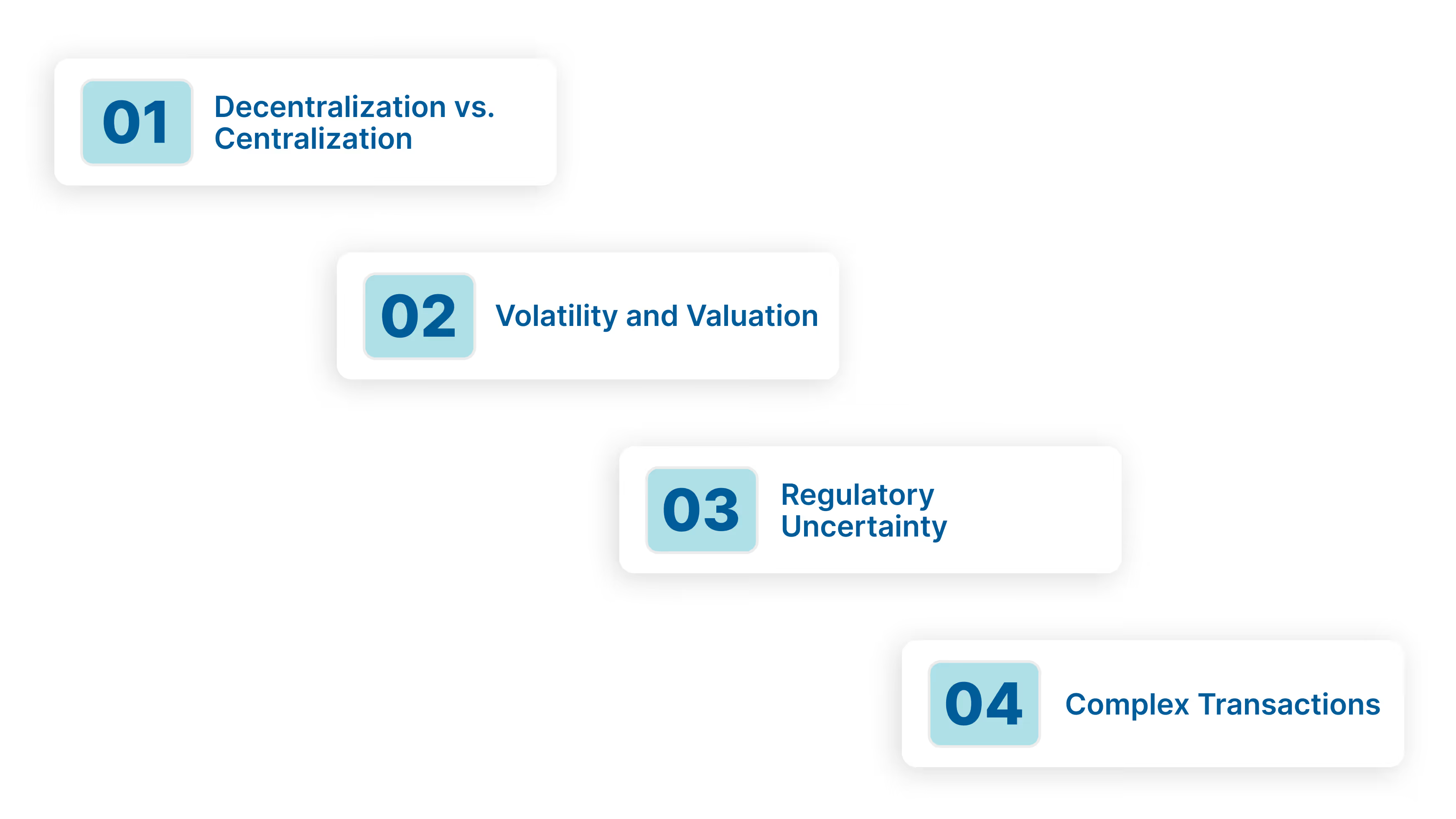
Crypto bookkeeping introduces complexities that set it apart from traditional accounting methods. Key distinctions include:
These fundamental differences create a challenging environment for businesses managing digital assets. Understanding why meticulous record-keeping matters becomes critical when handling this complex terrain.
As you expand your crypto business from the US to India, understanding tax and compliance expectations in both regions becomes critical. In the US, the IRS classifies cryptocurrency as property, meaning every sale, trade, or payment can trigger a taxable event. In India, while regulations are still evolving, crypto transactions are taxed at a flat 30% on profits, with a 1% TDS on transfers under the Income Tax Act. Accurate bookkeeping helps businesses in both countries track gains and losses, report them correctly, and avoid compliance issues.
Beyond taxes, proper crypto bookkeeping offers clear visibility into profits, losses, and cash flow, essential for financial transparency and investor trust. It also helps manage risk in a volatile market and ensures operational efficiency through automation and reliable data. With global reporting frameworks like the OECD’s Crypto-Asset Reporting Framework (CARF) emerging, maintaining organized records positions businesses to stay compliant as regulations tighten worldwide.
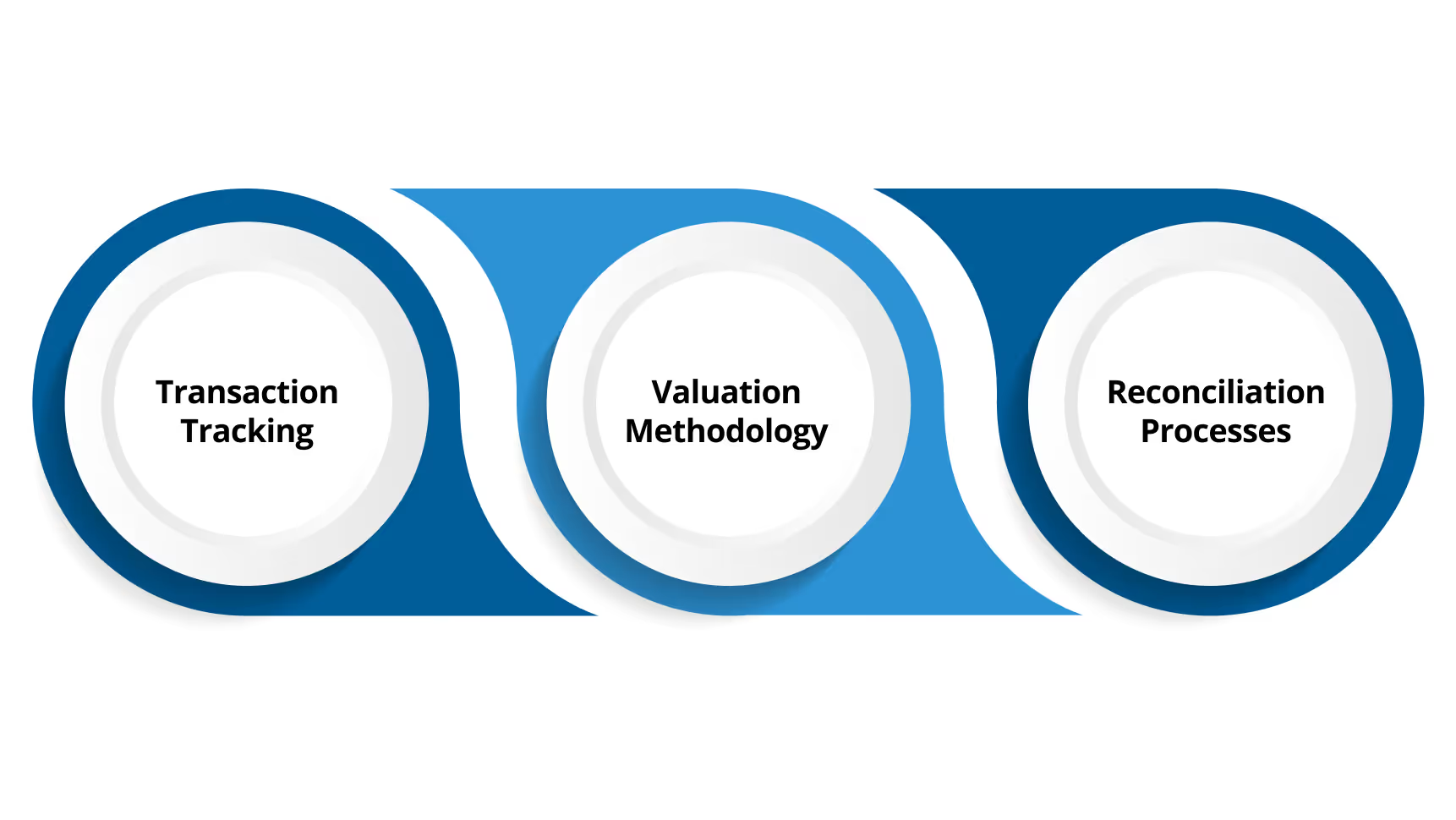
Crypto tax professionals take specific steps in digital bookkeeping to accurately record your business's capital gains or losses. Without systematic financial reporting, your company risks penalties. Due to the decentralized and volatile nature of cryptocurrencies, crypto accountants apply specialized methods to reduce financial risks.
Tracking every cryptocurrency transaction is the foundation of crypto bookkeeping. Every buy, sell, transfer, and trade must be accurately recorded to understand the full financial picture. Here's a breakdown of what to track:
Valuation in crypto bookkeeping is complex due to the volatile nature of cryptocurrency prices. To maintain consistency in your financial statements and tax calculations, you must adopt a valuation method that fits your business. The primary methods used are:
照合は、暗号資産の取引記録とウォレットや取引所の実際の残高を一致させるための極めて重要なステップです。正確な照合を行うことで、監査や申告漏れ、さらには金融詐欺につながる可能性のある不一致を未然に防ぐことができます。照合における主な手順は以下の通りです。
これらの基本要素をしっかりと理解していても、実務においては大きな壁に直面することがあります。暗号資産のエコシステムには、どれほど入念に帳簿管理を行おうとしても、それを阻害しかねない障害が存在します。
暗号資産の取引管理には、従来の慣行とは異なる特有の課題があります。暗号資産の帳簿管理において直面する主な障害の概要は以下の通りです。
こうした課題に取り組むには、単なる自動化だけでなく、テクノロジーと専門家によるアドバイスの適切な組み合わせが必要です。暗号資産の帳簿管理ツールは取引の追跡を簡素化できますが、国際税務、FEMA(外国為替管理法)コンプライアンス、クロスボーダーでの事業立ち上げといった複雑な領域には対応できません。そこでVJM Globalがお役に立ちます。暗号資産会計、DTAA(二重課税防止条約)アドバイザリー、インドでの事業設立における深い専門知識を持つ当社のチームが、グローバル企業の規制上のギャップを埋め、完全なコンプライアンス維持をサポートします。 今すぐご相談ください。
米国からインドに至るまで、暗号資産に対する規制上の扱いを理解し遵守することは、暗号資産で取引を行うあらゆる企業にとって不可欠です。しかし、デジタル資産のボラティリティや特異な性質ゆえに、暗号資産の帳簿管理戦略を策定・実行することは複雑になりがちです。暗号資産取引を効率的に管理するために採用すべきベストプラクティスを以下に紹介します。
日付、金額、暗号資産の種類、送金者・受取人の情報、取引手数料、取引時点の公正市場価格など、すべての暗号資産取引を細かく記録してください。これにより、税務コンプライアンスの確保と正確な財務報告が可能になります。
暗号資産の評価方法を一貫させましょう。FIFO(先入先出法)、LIFO(後入先出法)、総平均法(WAC)などの一般的な手法を用いることで、税務計算やキャピタルゲイン報告のための取得原価を正確に算出できます。
暗号資産の帳簿管理ソフトウェアを活用し、取引のインポートと分類を自動化しましょう。これによりミスを最小限に抑え、時間を節約できるだけでなく、ウォレットと取引所間の記録照合も容易になります。
暗号資産に関する規制は常に進化しています。ペナルティを回避するため、IRSなどが定める最新の税法や報告要件に合わせて、帳簿管理の実務を常にアップデートしてください。
Protect your crypto data with robust security practices. Use hardware wallets for large holdings, enable two-factor authentication (2FA) on all accounts, and regularly back up financial data to safeguard against data breaches.
Establishing strong standalone crypto bookkeeping processes is essential, but most businesses don't operate in a crypto-only environment. The real transformation happens when digital asset tracking becomes part of your unified financial ecosystem.
Integrating crypto bookkeeping into your existing accounting systems adds another dimension to your financial processes. As cryptocurrency continues to gain traction in business transactions, this integration helps achieve a comprehensive overview.
Crypto bookkeeping involves tracking all digital asset transactions while managing traditional fiat currencies like USD and INR. For businesses operating between the US and India, this integration helps reconcile the flow of funds between wallets, exchanges, and bank accounts. A unified system gives finance teams a full picture of how crypto activity impacts cash flow, revenue, and taxation across jurisdictions.
Accurate crypto bookkeeping provides visibility into profits, losses, taxes, and liquidity across borders. Modern accounting software can automate much of this process, syncing data from exchanges and wallets while aligning with regional standards, whether it’s FASB’s fair value guidelines in the US or evolving Indian tax disclosure requirements under the Income Tax Act.
Strong bookkeeping practices are your best defense during audits or regulatory reviews. Maintaining detailed transaction records, especially cost basis and transfer details, is crucial for compliance in both regions. For India, accurate reporting supports TDS tracking and proof of source of funds, while in the US, it minimizes IRS audit risks. A consistent approach ensures transparency and protects your business from penalties or non-compliance.
Successfully integrating crypto into your financial infrastructure requires both technical know-how and strategic expertise. Partnering with specialists who understand both the digital asset space and international regulatory frameworks can make the difference between compliance and costly mistakes.
VJM Global is a distinguished Chartered Accountancy firm that specializes in providing comprehensive financial, taxation, and business advisory services to both domestic and international clients.
As crypto becomes part of mainstream business, bookkeeping is no longer just about compliance; it’s about building financial clarity across borders. For companies operating between the US and India, the real challenge lies in syncing two evolving regulatory landscapes while maintaining transparent, verifiable records.
The focus should be on creating systems that adapt, automating what’s repetitive, documenting what’s complex, and auditing what’s uncertain. Done right, crypto bookkeeping doesn’t just prevent penalties; it builds investor trust and strategic visibility into your digital asset flow.
While specialized tools can aid in crypto bookkeeping, integrating this process into your broader accounting strategy and utilizing expert services like VJM Global can help in financial management, especially for international taxation and business setups. Talk to our advisors today!
The 30-day rule in crypto, often referred to as the "wash sale rule," prevents taxpayers from claiming a tax deduction on a loss if they repurchase the same or substantially identical asset within 30 days. This rule is intended to discourage tax-loss harvesting through short-term sales.
To record crypto in accounting, track the date of the transaction, the amount of cryptocurrency involved, its fair market value in fiat at the time, and any associated fees. When expanding from the US to India, it’s crucial to account for both countries' tax regulations. Crypto transactions should be treated as assets, and gains or losses should be recorded based on changes in value, with compliance with both US and Indian tax laws.
To minimize or avoid capital gains tax on crypto, consider holding your assets for over a year to qualify for long-term capital gains rates, or offset gains with losses through tax-loss harvesting. You can also donate crypto to charities to potentially avoid taxable gains.
The four major types of cryptocurrency are:
Yes, cryptocurrency is considered taxable income. If you receive crypto as payment for services or goods, its fair market value is taxable as income. Additionally, capital gains tax applies when you sell, trade, or exchange crypto for a profit.

.avif)


