


If you're a U.S. business owner or entrepreneur looking to expand your operations internationally, India presents a huge opportunity. As one of the fastest-growing economies in the world, India offers access to a vast consumer base, skilled labor, and a growing middle class.
インドでのビジネス設立に向けたさまざまな選択肢の中でも、有限責任会社(LLC)の登記は、外国人起業家にとって最も人気のある選択肢の一つです。
Setting up an LLC in India is an appealing option for U.S. business owners due to its relatively straightforward process, limited liability benefits, and strong legal protections. But, just like any business decision, there are key steps and considerations you’ll need to tackle to get it right.
In this guide, we’ll walk you through everything you need to know to start your LLC in India, from understanding the structure to the registration process.
An LLC, or Limited Liability Company, is a business structure that offers the benefits of limited liability while allowing for flexible management. In India, LLCs are governed by the Companies Act of 2013.
The key advantage of an LLC is that it protects the personal assets of its owners (shareholders), meaning they are not personally liable for the company’s debts or liabilities beyond their investment in the company.
米国においてLLCが人気なのは、法人の有限責任保護とパートナーシップの税制上のメリットを兼ね備えているためです。同様に、インドのLLCも有限責任保護を提供しますが、独自の規制枠組みの下で運営されます。
Whether you plan to run your business solo or with a few partners, an LLC could be a viable way to establish a presence in India while minimizing your personal financial risk.
Now that we understand what an LLC is, let’s explore the different types of LLCs available in India.
In India, there are two types of LLCs you can establish, each offering unique benefits based on your business needs. Below, we’ll explore the key types:
これはインドで最も一般的なLLCの形態です。非公開有限会社は、所有者に有限責任保護を提供しつつ、株主数を最大200名までに制限しています。独立した法人格を持つため、会社名義で資産の保有、契約の締結、訴訟の提起や被訴訟を行うことが可能です。
LLP(有限責任事業組合)は、パートナーシップの柔軟性と法人の有限責任保護を組み合わせたハイブリッドな構造です。インドのLLPは、Pvt Ltd会社の複雑さを避けつつも有限責任を求める弁護士、コンサルタント、建築家などの専門家によく利用されています。
Both options offer limited liability protection, but a Pvt Ltd company is generally seen as more formal and more suitable for larger businesses or those seeking external investment.
インドでのビジネスニーズにどのタイプのLLCが最適か判断に迷う場合は、VJM Globalが専門的なアドバイスと最適なソリューションを提供します。当社は、米国の企業がインドでPvt Ltd会社やLLPを設立するプロセスを簡素化し、現地の規制を遵守しながら戦略的目標を達成できるよう支援することに特化しています。
Also Read: Register a Software Company in India: Step-by-Step Guide
Now that we understand the types, let’s look at the eligibility criteria for LLC registration in India.
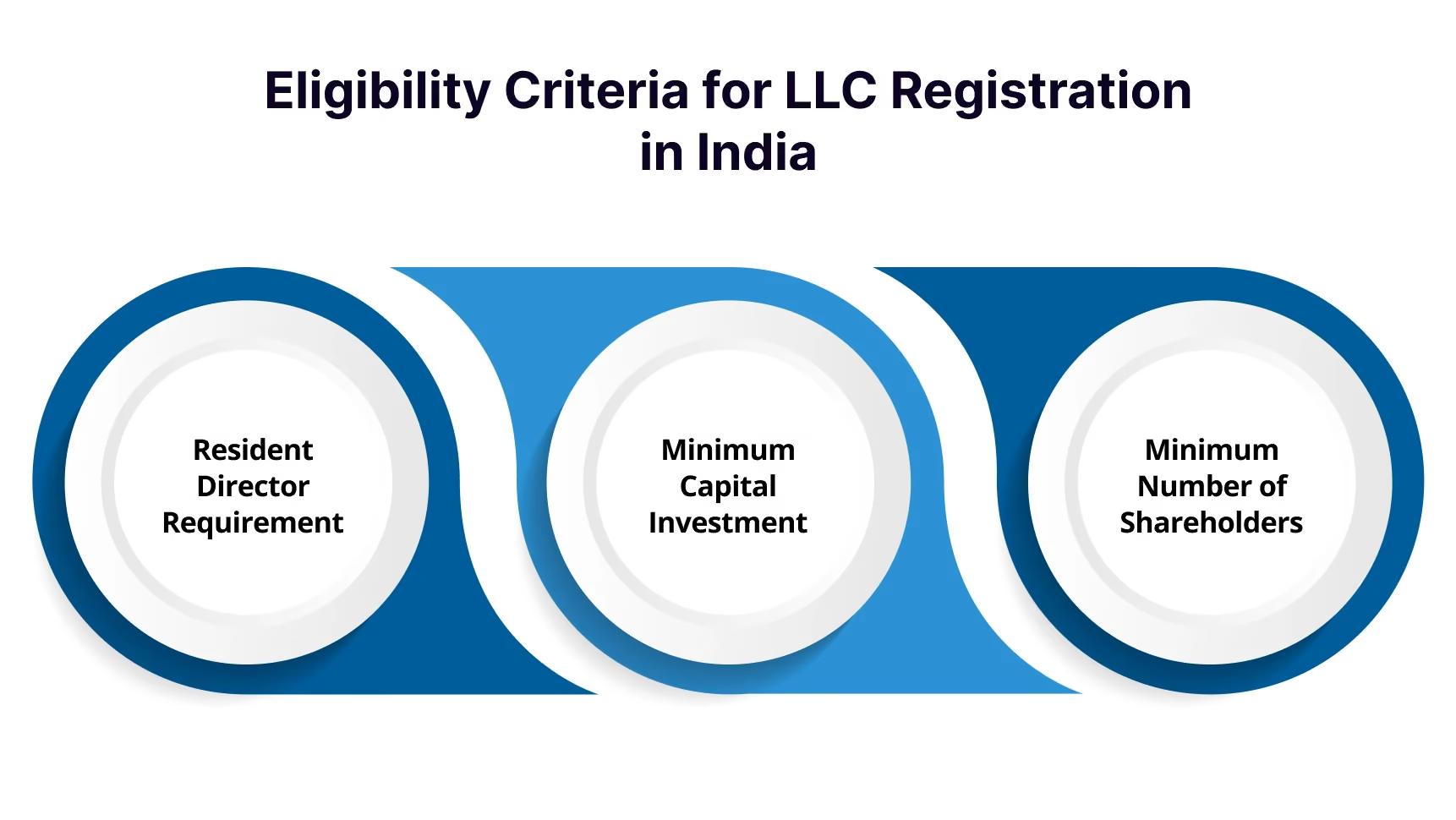
To form an LLC in India, certain eligibility criteria must be met to ensure your company is legally recognised and compliant with Indian laws. These requirements are fairly simple but essential to begin the process. Here are the key criteria you need to know before starting an LLC in India:
At least one director of the company must be a resident of India. A resident director is someone who has stayed in India for at least 182 days in the preceding calendar year. This requirement ensures that your business has a local representative who is familiar with Indian laws and regulations. Non-resident business owners can still set up an LLC, but they must appoint an Indian resident as one of the directors.
Your LLC in India must have a minimum capital investment, which is often nominal. For a Private Limited Company, the minimum capital requirement is ₹1 lakh (approximately $1,300), though you may want to consider investing more to ensure sufficient working capital for your business operations. It’s important to note that while the legal requirement is low, your business needs adequate capital to operate effectively.
An LLC in India requires at least two shareholders to be legally formed. These shareholders can either be individuals or corporate entities. While there is no upper limit on the number of shareholders, having at least two ensures that your business is structured according to Indian company laws. This allows for more flexibility in managing the ownership and governance of the LLC.
おすすめの記事:インドにおける個人事業主の登録ガイド
By fulfilling these eligibility criteria, you can easily meet the legal requirements for registering an LLC in India, ensuring your business is compliant and ready for success. Next, let’s explore the steps involved in registering an LLC in India.
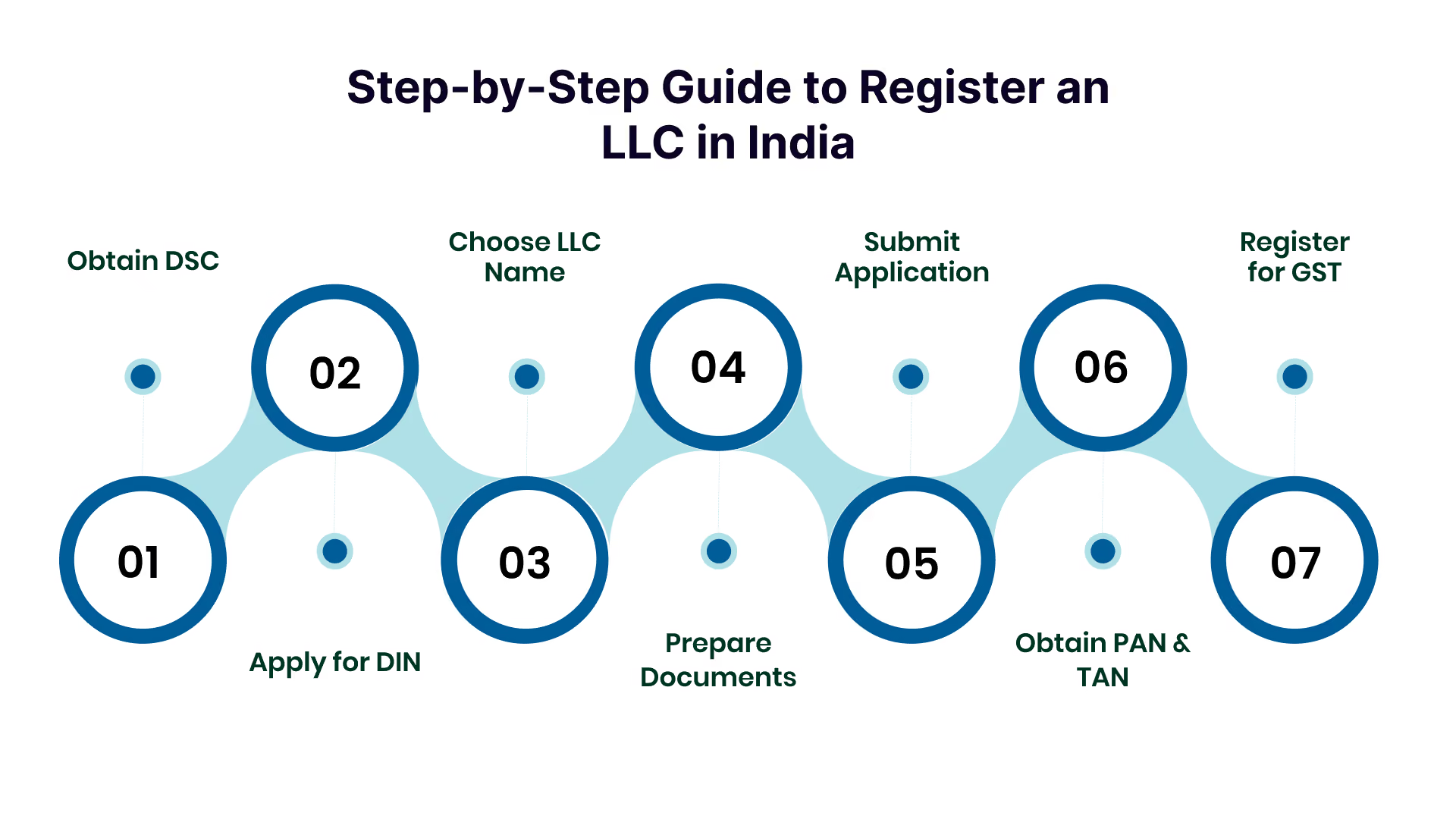
The process of registering an LLC in India is structured and straightforward, ensuring compliance with local laws. Let’s take a look at the necessary steps to get your business up and running.
A Digital Signature Certificate (DSC) is necessary for all company directors to sign official documents electronically. You can easily apply for a DSC through government-approved certifying authorities in India. This is a crucial first step, as the DSC will be required for filing forms and documents with the Ministry of Corporate Affairs (MCA).
To become a director of a company in India, each individual must obtain a Director Identification Number (DIN). This number serves as a unique identifier for directors and is mandatory for all companies in India. You can apply for the DIN online through the MCA portal, and it generally takes a few days for approval.
The next step is selecting a name for your LLC. The name must be unique and not too similar to other registered companies. You can check name availability on the MCA portal, and once you’ve chosen the right name, you’ll need to submit it for approval. It’s crucial to choose a name that reflects your business and complies with India’s naming guidelines.
Once the name is approved, you'll need to prepare your Memorandum of Association (MOA) and Articles of Association (AOA). These documents outline the objectives and rules of your company. Additionally, you'll need identification proof for the company directors, such as passports, Aadhaar cards, or voter IDs.
Submit the incorporation application with the required documents through the MCA portal. This includes the MOA, AOA, and proof of identification. After submission, the MCA will review your application, and once everything is in order, you’ll receive your Certificate of Incorporation, officially registering your LLC.
To comply with Indian tax laws, your company will need to obtain a Permanent Account Number (PAN) and a Tax Deduction and Collection Account Number (TAN). The PAN is required for all tax-related matters, while the TAN is used for tax collection at source. These can be easily applied for online through the Indian tax department.
If your business turnover exceeds the prescribed threshold, you’ll need to register for GST (Goods and Services Tax). This tax is applicable to businesses that deal with the supply of goods and services. GST registration ensures your business complies with India’s taxation system, allowing you to collect taxes and claim credits for any GST paid on purchases.
By following these steps, you can ensure that your LLC is legally registered in India and ready to operate. The process is designed to be efficient, but it's essential to ensure you meet all the requirements to avoid delays.
To make the registration process smoother and more efficient, VJM Global is here to guide you every step of the way. Our team has extensive experience in company registration, accounting outsourcing, and compliance with both Indian and U.S. standards. Whether you're setting up a Pvt Ltd company or an LLP, VJM Global can streamline the entire process.
Also Read: From Idea to Incorporation: A Deep Dive into Company Setup in India and Different Business Types
Next, let’s take a look at the advantages of forming an LLC in India.
Registering an LLC in India can open up numerous opportunities for U.S. business owners, offering both limited liability protection and tax benefits. Here are the primary advantages of choosing an LLC for your business:
After completing the registration process, you'll need to gather the necessary documents for your LLC registration, which we will examine in the next section.
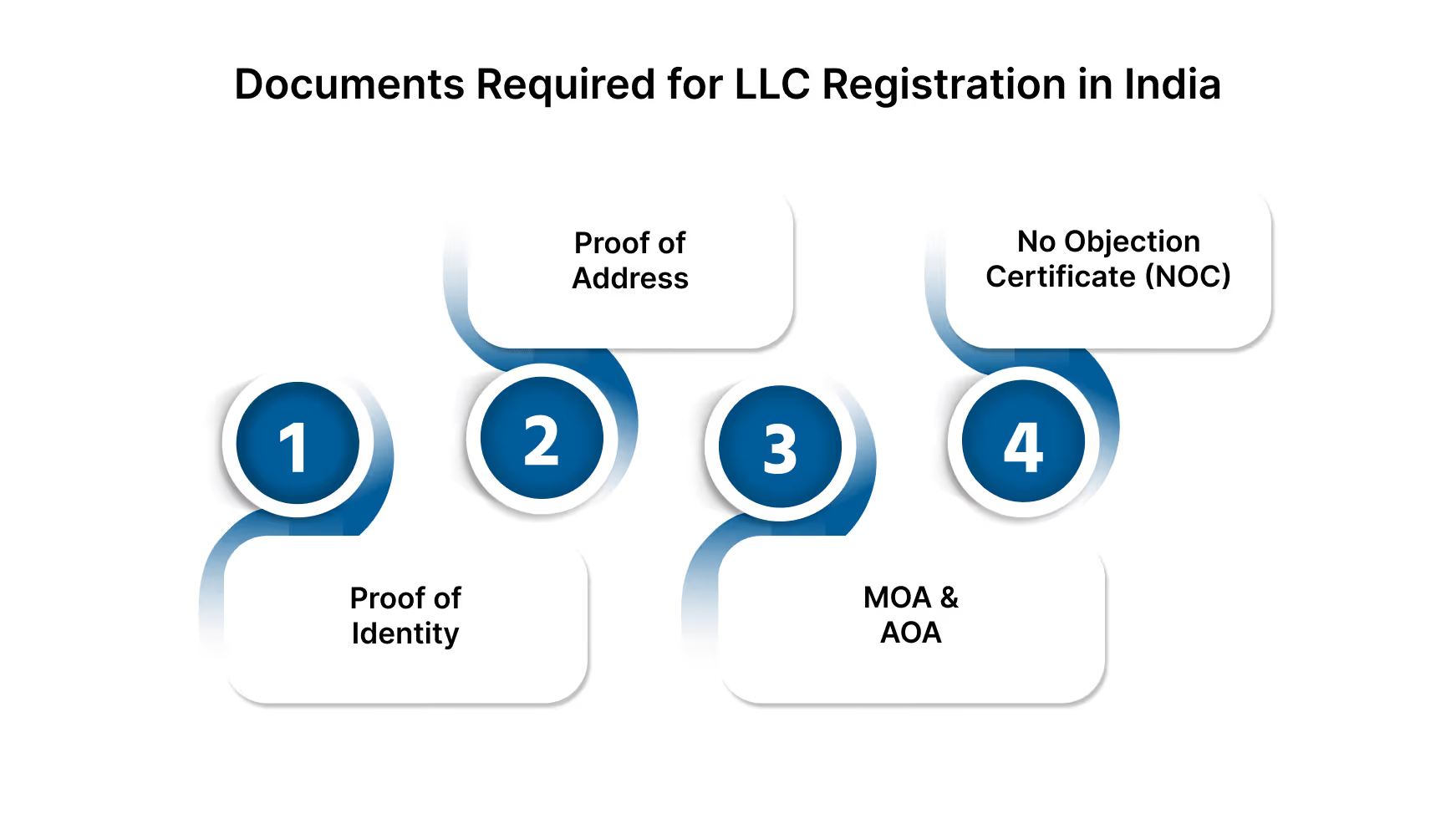
To ensure a smooth and efficient registration process for your LLC in India, it's crucial to have the necessary documents ready. Below are the key documents you’ll need to gather for a seamless registration process:
Each director must provide valid proof of identity to verify their legal status. This is necessary for the registration of both Private Limited Companies and Limited Liability Partnerships (LLP).
The directors will also need to provide proof of their residential address. This ensures that the company’s records are accurate and up-to-date.
基本定款(MOA)および付属定款(AOA)は、会社の構造、目的、規則を定義する法的文書です。これらは、インドでLLC(有限責任会社)を設立する際に不可欠な書類です。
賃貸物件で事業を行う場合は、家主から無異議証明書(NOC)を取得する必要があります。これは、その場所で事業を行うことに対して家主が異議を唱えていないことを証明するものです。
これらの書類を事前に準備しておくことで、インドでのLLC登録手続きを円滑に進め、不必要な遅延を避けることができます。
必要な書類が整ったら、インドの税制を遵守するために、納税義務を理解することが不可欠です。
あわせて読みたい:インドでジョイントベンチャーを設立する方法
インドでLLCを登録すると、インドの税法を遵守するためにいくつかの納税義務が生じます。これらの税金を理解することは、適切な事業計画と財務管理を行う上で不可欠です。主な納税義務の内訳は以下の通りです。
法人税とは、LLCの利益に対して課される税金です。インドの法人税率は、会社の規模にもよりますが、一般的に25%から30%の範囲です。スタートアップ企業や中小企業向けには、税負担を軽減できる減税措置や免除制度が設けられています。
GSTは、インドのほとんどの事業に適用される消費税です。LLCの年間売上高が一定の基準(通常は400万ルピー、約5万ドル)を超えると、GSTへの登録が必要になります。標準的なGST税率は18%ですが、提供する商品やサービスの種類によって異なる場合があります。
インドで登録されたLLCは、利益に基づいて年次所得税申告を行う必要があります。所得税は、運営コストや従業員の給与などの経費を差し引いた後の事業総所得に対して課されます。税率は利益水準によって異なり、中小企業やスタートアップ企業には低い税率が適用されます。
これらの納税義務を理解することで、会社の財務をより適切に管理し、LLCがインドの税規制を確実に遵守できるようになります。
インドの税規制に従うことは複雑ですが、VJM Globalの専門家チームは、インドの税法と米国の会計基準の両方に精通しており、お客様のLLCがすべての納税義務を遵守できるよう、カスタマイズされたソリューションを提供します。
あわせて読みたい:インドでの商標登録方法:ステップバイステップガイド
LLCの登録手続き自体は単純ですが、外国人投資家が直面する可能性のある課題もいくつか存在します。
.avif)
インドは企業にとって多くの機会を提供していますが、外国人起業家がLLCを設立する際にはいくつかの課題に直面します。これらの課題を理解しておくことで、手続きに向けた準備を整え、インド市場への円滑な参入を確実にすることができます。以下に、主な課題とその解決策を挙げます。
India’s legal and regulatory framework can be overwhelming, especially for foreign investors unfamiliar with local laws and business practices. The country has numerous regulations, from labor laws to tax requirements, which can make compliance difficult.
Solution: Partnering with a local legal expert or consultant who understands Indian regulations can streamline the process and ensure compliance. This can help you manage the legal landscape smoothly.
Understanding local business culture and communication styles can be difficult for U.S. entrepreneurs. India’s business culture tends to be more formal, and decision-making processes may take longer due to hierarchical structures.
Solution: Investing time in understanding Indian business etiquette and building relationships with local partners can help bridge the cultural gap. Hiring local talent or a liaison can also facilitate smoother interactions.
Although India has made strides in improving its business environment, bureaucratic delays still occur, especially with government approvals and documentation processes. These delays can cause frustration and disrupt business timelines.
Solution: To mitigate delays, work closely with local authorities and legal teams to ensure all documentation is in order. Additionally, using online platforms for registration can expedite many processes.
Currency fluctuations in India’s Rupee (INR) can impact the profitability of your business, especially when exchanging foreign currency or dealing with cross-border transactions. This can lead to unforeseen financial risks.
Solution: Hedge your currency risk by using forward contracts or setting up multi-currency accounts to manage fluctuations. It’s also advisable to work with a local financial advisor to stay informed about currency trends and risks.
You Might Also Like: Understanding Company Audits: Key Processes and Types
Dealing with these challenges is a part of the journey when starting an LLC in India, but with the right support, you can successfully establish your business and thrive in the Indian market.
Starting an LLC in India can be a game-changer for U.S. entrepreneurs looking to expand into one of the world’s fastest-growing markets. With its low-cost labor, expanding middle class, and favorable tax policies, India offers great potential for businesses looking to establish a foothold in Asia. By following the steps outlined in this guide and ensuring you meet all requirements, you can successfully launch your business in India.
If you're ready to establish your LLC in India, VJM Global is here to guide you through every step of the process. Our team of experts specializes in accounting outsourcing, audit support, and company registration, ensuring that your business complies with Indian regulations while aligning with U.S. standards.
VJM Globalのデモを予約して、LLC登録を開始し、ビジネスを成功へと導きましょう。
A Private Limited Company (Pvt Ltd) is a more formal business structure suited for larger businesses and those seeking investment. In contrast, a Limited Liability Partnership (LLP) is more flexible and is typically used for smaller businesses, particularly in the professional services sector.
To register an LLC in India, you need the Memorandum of Association (MOA) and Articles of Association (AOA), which define the company's purpose and operating rules. Additionally, you will need the identity and address proof of all directors, such as passports, Aadhar cards, or utility bills, and a No Objection Certificate (NOC) from the property owner if you’re renting office space.
Yes, at least one director must be a resident of India to legally register your LLC. A resident director is someone who has lived in India for a minimum of 182 days in the preceding year.
VJM Global offers end-to-end services for LLC registration in India, including assistance with document preparation, compliance, and meeting regulatory requirements. Our team provides expert support for U.S. businesses looking to expand into India, ensuring a smooth registration process and helping you comply with both Indian and international standards.
Your LLC in India will be subject to several taxes, including corporate tax on profits, GST (Goods and Services Tax) if your turnover exceeds the threshold, and income tax on any earnings. It’s essential to stay updated on tax filing deadlines and maintain accurate financial records to avoid penalties and ensure compliance with Indian tax laws.

.avif)


