

.avif)
Foreign Direct Investment (FDI) from South Korea into India reached approximately USD 400 million in FY 2024, marking a notable increase over the previous year. This growth reflects the rising confidence Korean companies have in India’s manufacturing strength, digital economy, and long-term market potential.
To support this momentum, the Indian government, through the Korea Plus Programme, offers Korean investors dedicated, end-to-end facilitation for entering and operating in India. From resolving regulatory issues to coordinating with state authorities, Korea Plus has become a critical bridge between Korean businesses and Indian opportunities.
This guide explains the complete process of business setup in India for South Korea, covering everything from selecting the right entity to understanding the National Single Window System (NSWS) for FDI approvals, ensuring compliance, and building a sustainable presence in India.
コリア・プラスは、インドと韓国の両政府による二国間イニシアチブとして2016年6月に設立された、投資促進のための専任窓口です。インドでの事業展開や拡大を検討している韓国企業に対し、ワンストップの支援機関として機能しています。
While Korea Plus offers hands-on assistance with market entry, registrations, and operational guidance, Korean investors still need to understand the broader regulatory framework that governs foreign investment in India. The foundation of this framework lies in India’s FDI rules and the Foreign Exchange Management Act (FEMA), which define what sectors are open, under what conditions, and how investments must be structured.
Foreign direct investment (FDI) is the foundation of most market entry routes in India. South Korean investors can own up to 100% equity in several sectors, including manufacturing, retail, and IT services, under what’s called the automatic route. This means no prior government approval is required, only post-filing with the Reserve Bank of India (RBI).
しかし、防衛、通信、メディアなどのセクターは「承認ルート」に該当し、以前は複数の省庁への対応や手作業による申請が必要でした。これを簡素化するため、インドは2025年に国家単一窓口システム(NSWS)を立ち上げ、FDIプロセスにおける主要なデジタル改革を行いました。
The NSWS acts as a centralised platform for securing approvals and licenses across ministries and states. Investors can:
While it doesn’t replace RBI filings or sectoral compliance, NSWS has replaced the earlier Foreign Investment Facilitation Portal (FIFP) and now handles approval-based FDI sectors end-to-end.
With FDI rules clarified and approval channels streamlined through NSWS, Korean investors can begin the formal setup process.
The following guide walks you through each phase from choosing the right legal structure to securing tax registrations, injecting capital, and ensuring compliance. Each step is tailored to the practical needs of Korean businesses entering India in 2025.
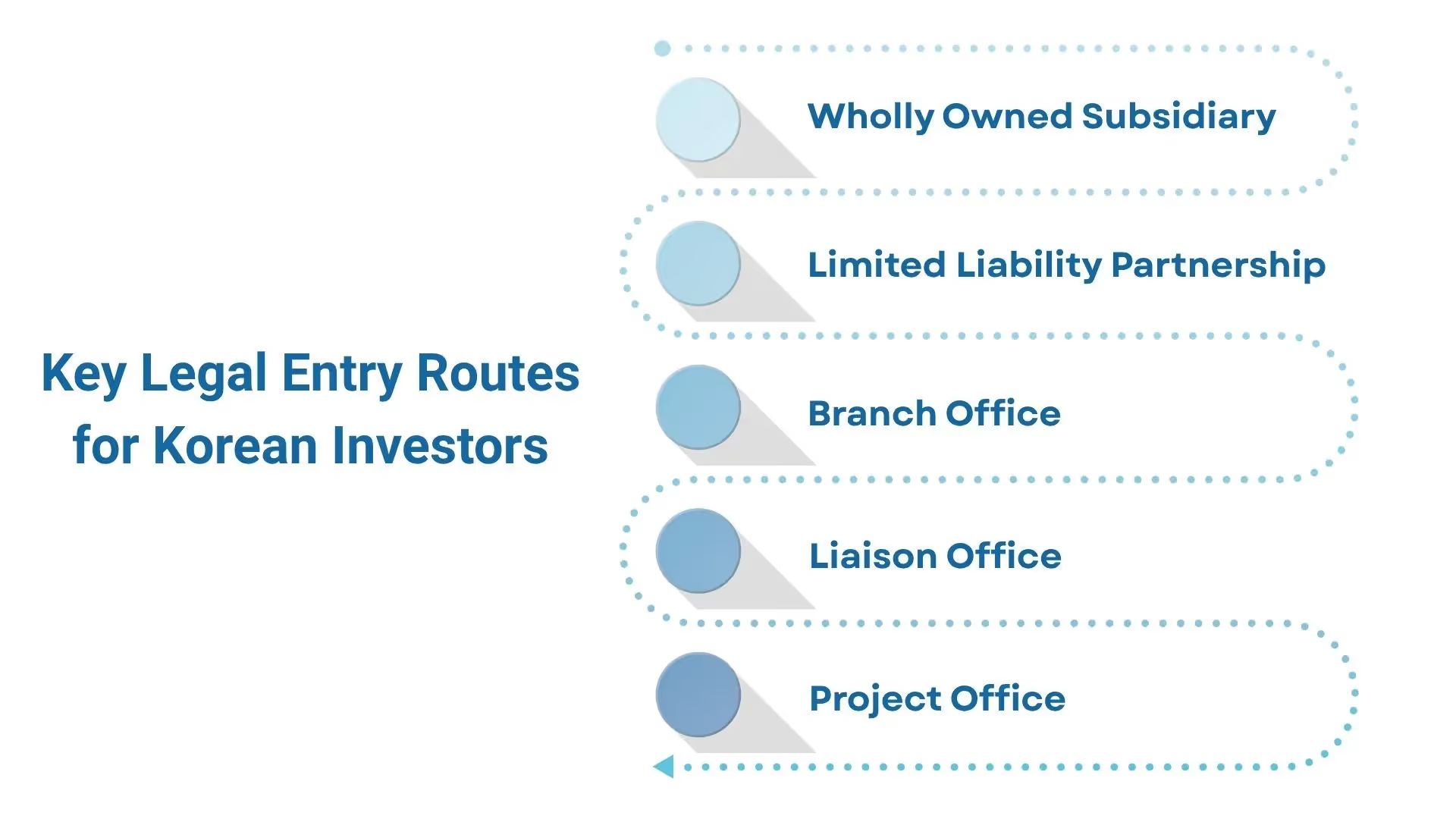
Under India’s Foreign Exchange Management Act (FEMA) and FDI policy, foreign investors, including South Korean businesses, are not permitted to directly set up sole proprietorships or general partnerships. Instead, they must operate through legally recognized structures that comply with India’s foreign investment framework.
The appropriate structure depends on sector eligibility, FDI route, tax treatment, liability protection, and long-term business objectives. Below are the most common entry vehicles available to South Korean investors planning to register operations in India.
A Private Limited Company is the most common structure for Korean firms in India, which allows 100% FDI under the automatic route in most sectors. According to the Korea Trade Investment Promotion Agency (KOTRA), about 88% of all Korean subsidiaries established in India are wholly-owned, while approximately 11.3% are joint ventures.
LLP is a flexible model combining corporate and partnership features. FDI is allowed only in sectors under the automatic route without restrictions.
Used to conduct specific business activities such as R&D, export/import, or technical services. No incorporation required, but RBI approval is mandatory.
A non-commercial office for coordination and promotion purposes. Cannot engage in sales or revenue-generating activities.
A temporary office set up to execute a specific contract in India. Typically used by engineering or infrastructure firms.

Once the legal structure is chosen, setting up a business entity in India involves a defined sequence of filings and document submissions. This is a crucial phase of business setup in India for South Korean companies, covering legal registration, tax IDs, digital infrastructure, and capital setup.
This process is governed by the Ministry of Corporate Affairs (MCA) and other regulatory bodies.
まず、MCAポータルのRUN(Reserve Unique Name)サービスを使用して、会社名を予約します。最大2つの名称を、簡単な理由を添えて申請できます。承認されると、その名称は20日間確保されます。
各取締役のデジタル署名証明書(DSC)を申請します。これは文書に電子署名するために使用されます。外国籍の取締役は、SPICe+フォームを通じて取締役識別番号(DIN)も取得する必要があります。
必要な韓国側の会社書類をすべて英語で準備し、公証およびアポスティーユ認証を取得します。これには以下が含まれます:
SPICe+統合フォームを使用し、DSCで電子署名された設立書類を提出します。このフォームには、定款(MoAおよびAoA)、PAN、TAN、および必要に応じてGSTの申請が含まれます。承認後、会社設立証明書が発行され、PAN、TAN、および固有の会社識別番号(CIN)が付与されます。
会社設立後、インドのADカテゴリーI銀行で当座預金口座を開設します。設立書類、KYC詳細、および署名権限を付与する取締役会決議書を提出してください。
資本金は、送金目的を「株式資本への出資(subscription to share capital)」と明記した上で、SWIFTを通じて韓国から送金する必要があります。この入金は、株式割り当てから30日以内にForm FC-GPRを通じてインド準備銀行(RBI)に報告しなければなりません。
VJM Globalは、韓国の投資家が計画から実行までスムーズに進められるよう、会社設立、規制当局への登録、FDI(外国直接投資)対応の各段階を調整し、遅延やコンプライアンス上の不備なくインドでの事業を開始できるようサポートします。今すぐお問い合わせください。
初期資本金がインド法人の銀行口座に入金されたら、外国為替管理法(FEMA)に基づき、インド準備銀行(RBI)へ報告する必要があります。韓国の投資家は、日常的な資本注入であっても義務的な届出が必要であることを認識しておくべきです。ここでの遅延は、その後の事業拡大、将来のFDIラウンド、または配当金の送金に影響を及ぼす可能性があります。
必要な主なコンプライアンス対応:
これらのFEMA規制を遵守しない場合、罰金が科されたり、利益の送金が困難になったり、将来の資金調達でボトルネックが生じたりする可能性があります。送金やM&A取引の際、RBIの審査は厳格であり、すべての届出が追跡可能であることが求められます。
Once your company is incorporated, Korean businesses must meet a combination of central and state-level obligations. These include both financial controls and local labor regulations, which are essential for day-to-day operations and long-term scalability.
Also Read: Cost of Registration of a Company in India | Quick, Easy and Affordable Process
Deploying South Korean nationals to manage or support Indian operations brings immigration, tax, and employment compliance into focus. Companies must ensure that expatriates have the correct visas, valid employment contracts, and are properly registered with Indian authorities.
If you're looking for hands-on assistance, VJM Global supports Korean and other foreign companies with end-to-end FEMA compliance, RBI filings, and regulatory governance. Our India-based CA team helps you stay on track with automated calendars, post-investment documentation, and accurate, on-time submissions, so your expansion runs without compliance delays.
あわせて読みたい:外国投資家がインドで会社を設立する方法:法務・税務ガイド
Completing the formal setup is only the first milestone. To succeed long-term, Korean companies must also adapt to India’s business environment, operational realities, and cultural nuances. The following playbook outlines what to expect on the ground and how leading Korean firms have navigated these challenges successfully.
South Korean companies entering India face a large, complex market, but one that rewards those who prepare with local knowledge, operational flexibility, and smart sequencing. Here’s how Korean investors can approach market entry and growth effectively.
Korean companies that have scaled successfully in India tend to adopt a phased, ground-level strategy:
India isn’t a market for rapid replication; it rewards localization, patience, and on-ground execution. Korean investors who adopt flexible planning, build strong Indian teams, and tap into bilateral channels are best positioned for long-term success.
South Korean investors bring to India not just capital but also technological expertise and global business acumen. India, in return, offers access to a large and growing market, a skilled workforce, and a strong manufacturing and service ecosystem.
With the right structure, regulatory clarity, and local insight, Korean businesses can build a lasting presence in India.
VJM Global supports foreign investors across every stage of setup and compliance. If you're planning your India entry, book a free appointment with our experts for tailored guidance and on-ground execution support.

.avif)


