


インドは、グローバル展開において最も有望な国の一つへと急速に進化しています。同国は、製造業のGDP比を2023年の16%から2030年までに25%へ引き上げることを目指しており、貿易フローの拡大によって経済に0.8兆ドルから1.2兆ドルの押し上げ効果をもたらす可能性があります。新たな市場、サプライチェーンの強靭性、そしてコスト効率の高いオペレーションを求める米国企業にとって、この勢いは長期的なチャンスへの扉を開くものです。
世界中の企業が投資先や事業拠点の見直しを進める中、インドは若年層の労働力、拡大する中間層、そして投資家に優しい政策によって際立った存在となっています。しかし、成功の鍵は、この市場の潜在力と規制上の細かなニュアンスの両方を理解することにあります。
本記事では、なぜインドが米国企業にとって重要な拠点となったのか、その機会や課題、そして世界で最も急速に成長している経済圏の一つへ円滑かつコンプライアンスを遵守した形で進出するための実践的な洞察を解説します。
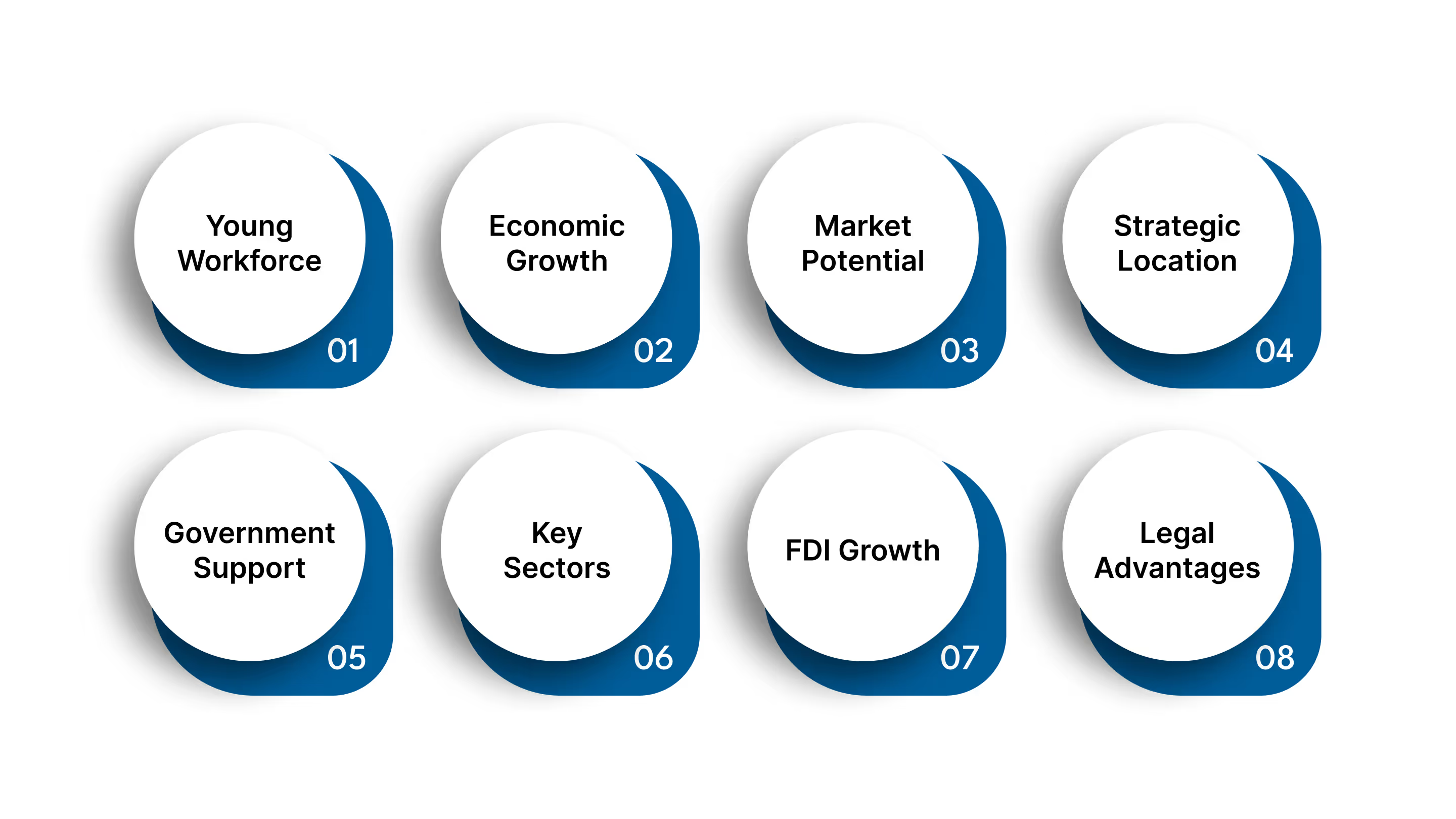
多くの米国企業幹部にとって、インドは「潜在的な市場」から「戦略的な成長拠点」へと変化しました。コスト削減を目指すCFO、サプライチェーンのボトルネックを解消したいCOO、あるいは新たな市場を開拓する創業者にとって、インドは長期的な成長を牽引するために必要な規模、コスト効率、そして信頼性を兼ね備えています。
米国ビジネスリーダーがインドに注目する理由は以下の通りです。
中央値年齢が28歳であり、毎年500万人のSTEM卒業生を輩出するインドは、世界で最も若く有能な労働市場の一つです。国内の人件費上昇に直面する米国企業にとって、インドは高度な技術的・デジタルスキルを備えた、英語を話す膨大な労働力へのアクセスを提供します。
Microsoft、Google、IBMといった企業は、Microsoft、Google、IBMインドでの事業を拡大し、製品エンジニアリング、アナリティクス、カスタマーサクセスのためのグローバル・ケイパビリティ・センターを設立しています。この人材の厚みにより、米国企業は運用効率を維持しながら、より迅速に事業を拡大することが可能になります。
多くの経済圏が停滞や景気後退の圧力に直面する中、インドは数年間にわたり6%を超える安定したGDP成長率を維持しています。テクノロジー、製造、ヘルスケア、金融サービスにわたる多様な経済構造が、世界的な不確実性の中でも安定性をもたらしています。
米国の製造業各社は、中国への過度な依存を減らすための補完的な拠点として、インドをますます重視しています。AppleがiPhoneの組み立てをインドで行うという決定は、多国籍企業がインドの安定した政策とコスト効率の高いエコシステムを活用して、長期的な強靭性を構築している好例です。
14億人を超える人口と急速に拡大する中間層を抱えるインドは、世界最大級の未開拓の消費者基盤です。所得水準の上昇、デジタル化の進展、そしてプレミアム製品やテクノロジー製品への強い意欲は、米国ブランドにとって魅力的なフロンティアとなっています。
Starbucks、Amazon、Walmartといったグローバル企業は、Starbucks、Amazon、Walmart現地価格の設定、デジタルコマース、流通パートナーシップを通じてインドの消費者にリーチするために多額の投資を行ってきました。国内市場の飽和に直面している米国企業にとって、インドは持続的な収益成長のための新たな道筋を提供します。
東南アジア、中東、アフリカの間に位置するインドは、貿易と物流のハブとして自然な優位性を持っています。港湾、高速道路、貨物専用鉄道などのインフラ整備が進んだことで、商品の迅速な輸送と、新興の地域市場へのより円滑なアクセスが可能になっています。
米国の製造業者や物流企業にとって、インドの「チャイナ・プラス・ワン」の優位性は、説得力のある多角化戦略となっています。半導体、自動車、エレクトロニクスなどの分野の企業は、現在、アジアのサプライチェーン・ネットワークにおける重要な拠点としてインドを活用しています。
The Indian government continues to attract global investment through flagship initiatives such as Make in India, Startup India, and the Production Linked Incentive (PLI) schemes. These programs are similar in intent to the U.S. SelectUSA, Small Business Administration (SBA) initiatives, or CHIPS and Science Act incentives, which aim to simplify compliance, encourage innovation, and promote advanced manufacturing across sectors like electronics, renewable energy, defense, and technology.
Recent reforms have further improved India’s ease of doing business, including digital company incorporation, faster FDI clearances, and stronger intellectual property protection. For U.S. enterprises familiar with structured, rules-based systems, these changes create a predictable environment that reduces administrative friction, improves transparency, and speeds up market entry.
India’s economy spans several fast-growing sectors that present lucrative opportunities for foreign businesses:
India’s FDI inflows have been steadily increasing, with over US$81 billion recorded in FY25, marking a 14% increase from the previous year. This demonstrates growing investor confidence in India’s market potential.
The services sector, in particular, captured 19% of total FDI equity inflows, reflecting the sector’s strong growth prospects.
India provides a well-defined corporate framework that gives foreign investors the same foundational protections they expect in established markets. These advantages make it easier for U.S. companies to operate with legal clarity, financial security, and governance transparency.
As India continues to strengthen its global trade and investment landscape, these legal safeguards make it a practical and dependable choice for U.S. businesses planning long-term operations in one of the fastest-growing markets in the world.
あわせて読みたい:外国投資家がインドで会社を設立する方法:法務・税務ガイド
Now that you understand why India is so appealing, let’s take a closer look at the Foreign Direct Investment (FDI) policies that support this growth.
For U.S. restaurant franchises looking to expand into India, understanding the Foreign Direct Investment (FDI) policy is crucial. The Indian government, through the Foreign Exchange Management Act (FEMA), regulates foreign investment in the country.
Foreign investments in India can be made through two primary routes:
Whether you are considering establishing a franchise or investing in a joint venture, ensuring compliance with FDI regulations can significantly streamline the process.
Read Also: Physical Verification of Registered Office for Company Incorporation
With a clearer understanding of FDI, let’s explore the various options available for foreign investors to establish a business presence in India.
Foreign investors and businesses wanting to establish a business presence in India are offered the following choices:
An Indian branch office is said to be an extension of the parent company, which is based in a foreign land. The primary duty of a branch office is to perform certain business operations in the name of the foreign parent company in India. A branch office must obtain RBI approval before starting its business activities.
A liaison office is a crucial place of business that acts as a connective medium of communication. It facilitates working coordination between the foreign-based parent company and its business parties or associates in India.
The Liaison Office is also called the Representative Office. Such an office cannot undertake or perform any business activities, including trading, industrial operations, or other commercial functions, directly or indirectly.
A project office is a short-term or temporary office established in India to fulfill the needs and business interests of a foreign entity executing a particular project in the country. At each stage of the operation, the project office is deemed responsible for the overall management.
Wholly Owned Subsidiary is a private limited company, which is fully owned, operated, and controlled by a foreign company. Commencing such an incorporated entity or private company will need RBI approval, along with sanctions from the relevant government authorities.
Also Read: How to Create an Exit Plan for Your Business: The Complete Guide
Once you know your options, the next step is understanding the specific process involved in setting up a foreign company in India.
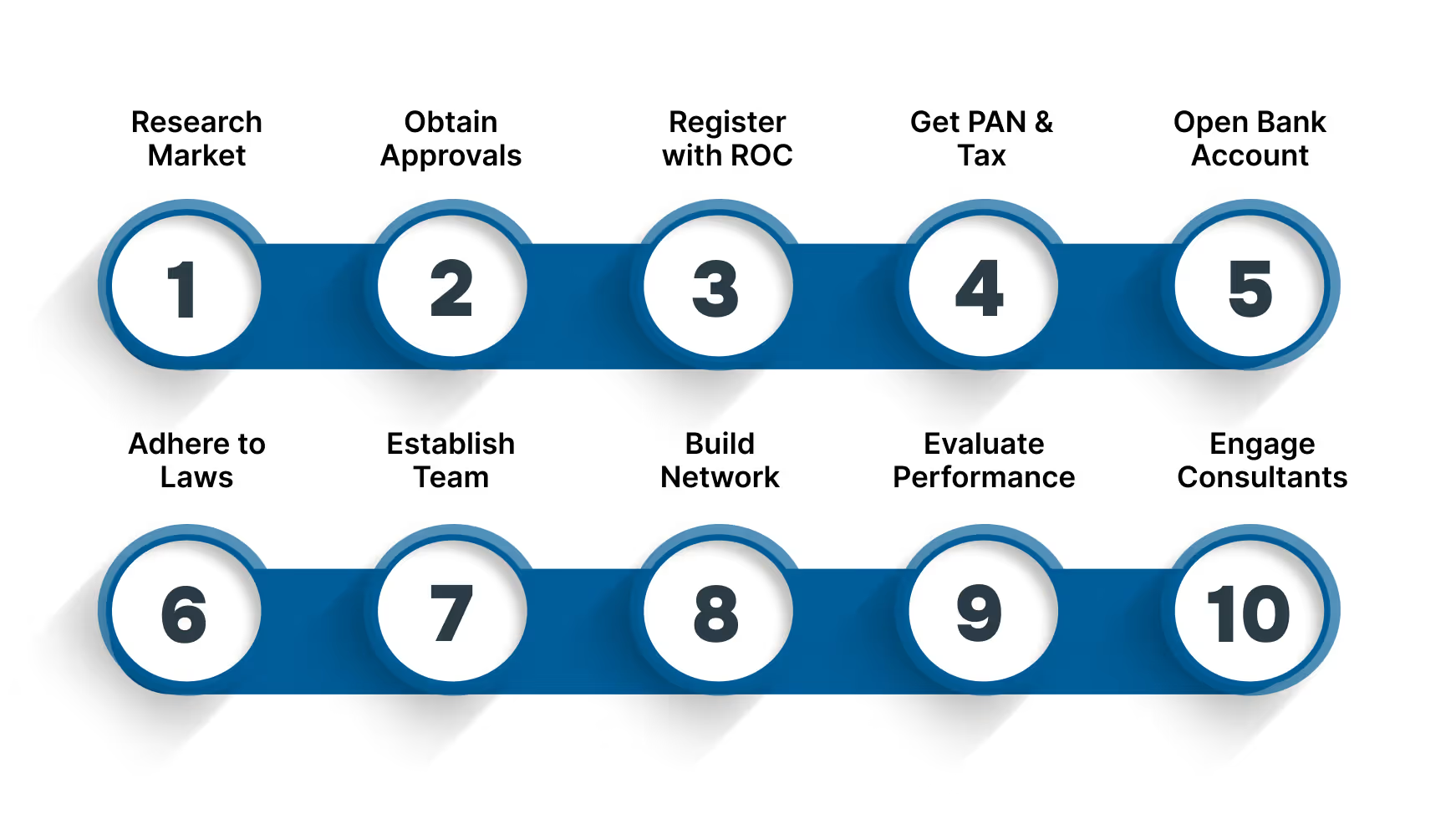
Setting up a foreign company in India involves careful planning and tackling various legal, financial, and regulatory processes. Here’s a step-by-step guide to help you along the way:
Setting up a foreign company in India is a detailed process that requires careful attention to legal and regulatory requirements.
あわせて読みたい:米国からインドで会社を設立するために必要な書類
After reviewing the steps, it's crucial to identify the most promising regions for investment in India, as location can significantly impact outcomes.
India’s economic opportunities are not evenly distributed; certain states have become magnets for global investment because of their infrastructure, talent, and policy efficiency. For U.S. companies evaluating where to establish operations, these regions offer strong alignment with different industry goals.
When choosing a location, evaluate industry focus, labor availability, infrastructure maturity, and state-level incentive programs. VJM Global helps U.S. investors perform detailed location benchmarking to align cost structure, compliance requirements, and long-term scalability.
While most Indian industries are open to foreign participation, a few remain restricted to protect national and social interests. U.S. companies should be aware of these exclusions early in the planning stage.
Foreign investment is not permitted in the following areas:
Understanding these restrictions ensures compliance and helps investors focus on the many open, high-growth sectors such as technology, renewable energy, logistics, and advanced manufacturing.
As global economic growth shifts towards developing nations, India stands as one of the fastest-growing economies, offering immense opportunities for businesses looking to expand. At VJM Global, we ensure a seamless entry into the Indian market with our comprehensive support.
Here’s how we can assist:
Let VJM Global be your trusted partner in tackling the Indian market and setting your business up for long-term success.
For U.S. business leaders, the next phase of growth is no longer just about entering new markets. It is about finding the right balance between cost efficiency, operational control, and confidence in compliance. Many finance and operations heads are under pressure to improve margins while protecting their organizations from global supply chain disruptions. At the same time, founders are seeking regions that can fuel innovation, offer reliable governance, and provide access to skilled talent. India meets all of these needs in one place. It combines rapid economic growth with policy stability and a deep English-speaking workforce, allowing U.S. companies to expand globally without compromising on quality or transparency.
With VJM Global’s expertise, that opportunity becomes actionable. We help U.S. companies establish a compliant and future-ready presence in India that supports long-term profitability, resilience, and growth. From company formation and FDI clearances to tax strategy and ongoing compliance, our team ensures your India expansion operates as seamlessly as your business at home.
Partner with VJM Global to turn your global growth vision into measurable success in India’s fastest-growing economy. Book a demo today to simplify your business setup in India and explore the potential of this rapidly developing market.
India offers a massive market, a growing economy, and a youthful workforce, making it an ideal location for business expansion.
You can set up a liaison office, branch office, project office, or even a subsidiary, depending on your business goals and strategy.
Yes, depending on your business type, you’ll need approvals from Indian regulatory bodies like the RBI and DPIIT.
VJM Global provides expert guidance on all aspects of business setup in India, from registration to compliance, ensuring a smooth and efficient process.
India provides access to a vast market, a resilient economy, and a growing middle class, offering enormous growth opportunities for foreign businesses.

.avif)


