

Managing your business finances is the foundation of your company's success. Yet, many small to mid-sized businesses blur the lines between bookkeeping and accounting. While these terms are often used interchangeably, they serve different purposes. Understanding the key differences between bookkeeping vs. accounting can make all the difference in your financial health.
A clear understanding of these two functions is essential for businesses using cloud software. Did you know that 82% of small businesses fail due to poor cash flow management? According to a report by QuickBooks, businesses struggle with poor cash flow management, which can be avoided by separating bookkeeping and accounting to improve financial strategy. This article will guide you through the differences and show how both work together to optimize your operations, reduce errors, and drive growth.
Bookkeeping is the process of systematically recording daily financial transactions, such as sales, purchases, receipts, and payments. It ensures that financial data is well-organized, accurate, and readily available for decision-making. This is essential for financial management and serves as the foundation for a company’s overall financial health. Proper bookkeeping is crucial for staying on top of cash flow, managing taxes, and preparing for future business growth.
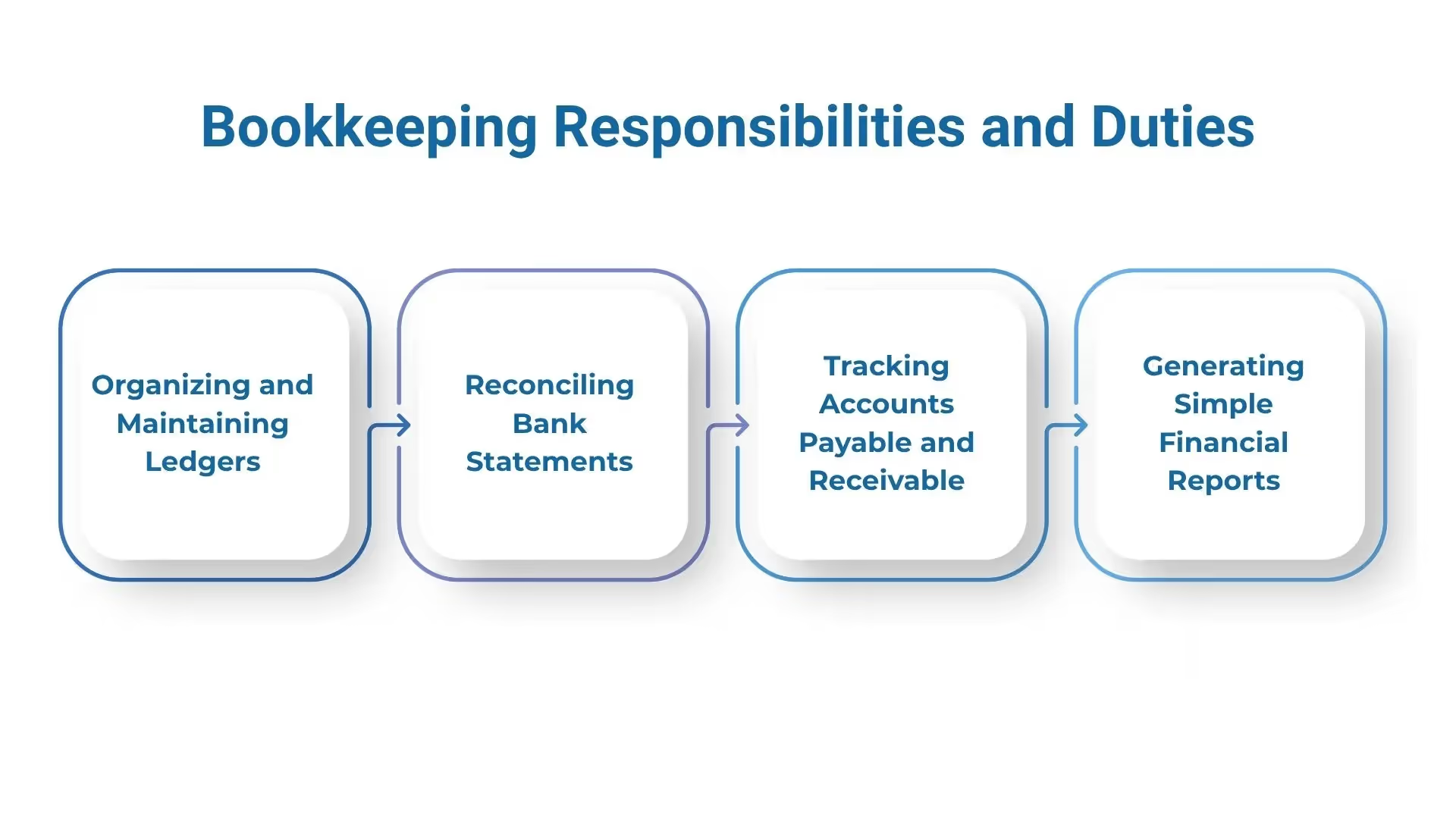
The main role of a bookkeeper is to keep financial records in order. Let’s explore some of the key responsibilities that make this task effective:
To streamline and simplify these tasks, businesses often use cloud-based financial software. Popular tools include:
These platforms make tracking expenses, managing payroll, and reconciling accounts easier. They also help reduce errors and automate repetitive tasks, ensuring that businesses stay on top of their finances.
Frequency of Bookkeeping Tasks
Bookkeeping is not a one-time task; it's an ongoing process. To ensure accurate records, bookkeeping tasks typically need to be updated daily or weekly, especially in businesses with high transaction volumes. Regular updates help businesses maintain accurate financial data and prepare for tax season or year-end reporting.
Accounting involves interpreting, analyzing, classifying, and summarizing financial data to provide insights for business decisions. While bookkeeping focuses on recording financial transactions, accounting takes those records and turns them into comprehensive reports and strategies that guide business planning and performance. Accounting is crucial for evaluating a company's financial health and ensuring compliance with regulatory requirements.
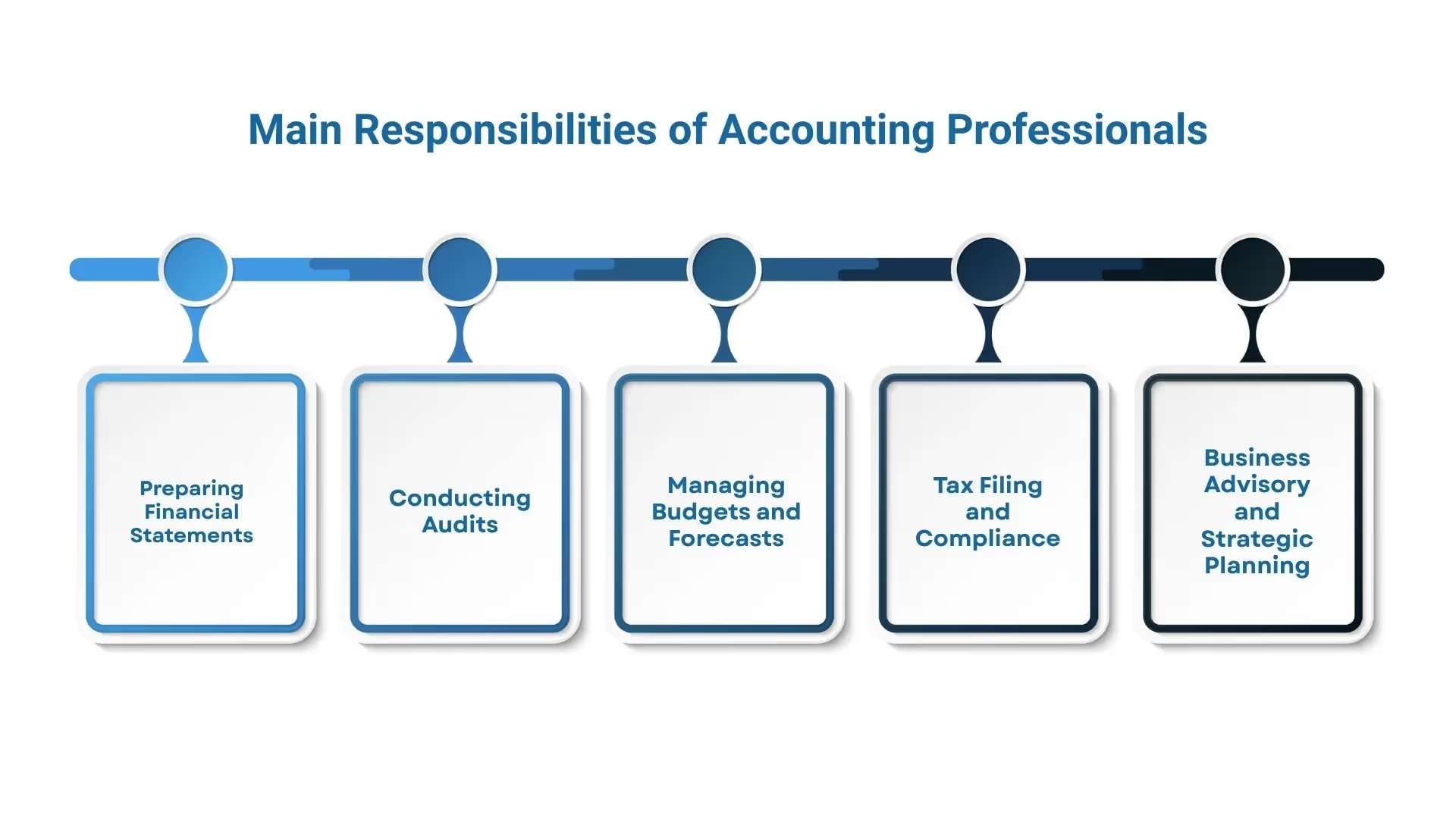
Now that we understand the distinction between bookkeeping and accounting, let’s look at the key tasks accountants handle to ensure a business’s financial health:
Accountants use a variety of advanced tools to carry out their tasks effectively. These tools include:
経理業務の頻度
経理業務は通常、月次、四半期、または年次で行われます。例えば、月次の財務諸表は日々の経営判断に役立ち、年次の監査や税務申告は、法令順守や長期的な事業計画において不可欠です。
あわせて読みたい:中小企業のための経理管理方法
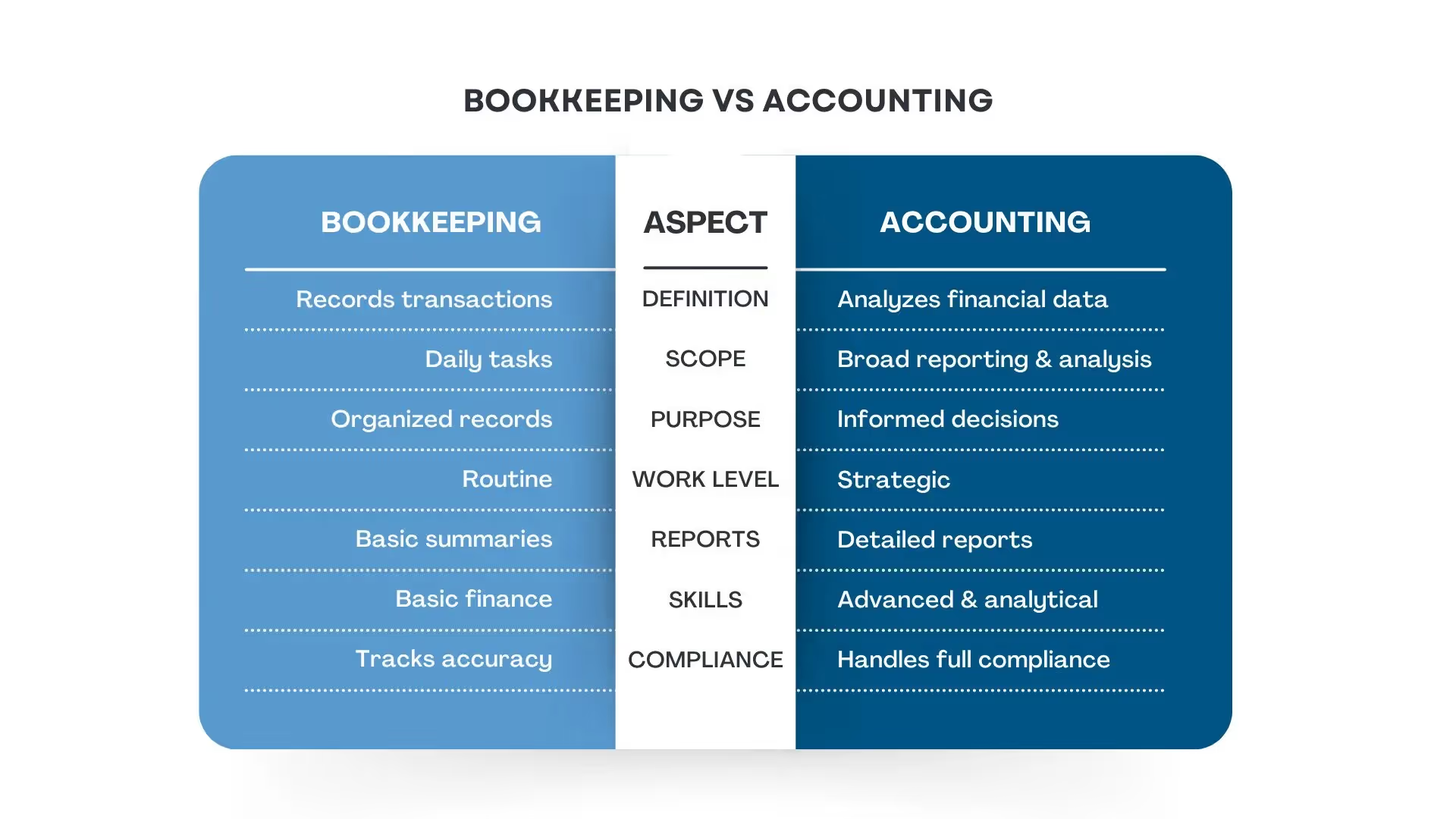
簿記と会計は、相互に関連しながらも異なる目的を持つ2つの重要な財務機能です。両者の違いを理解することで、ビジネスの財務をより効果的に管理できるようになります。
簿記と会計の違いを理解すれば、両方の機能を効果的に活用して正確な財務記録を維持し、情報に基づいた意思決定を行うことができます。日々の取引処理であれ、戦略的な財務データの分析であれ、どちらの役割もビジネスの成功には欠かせません。クラウド型ソフトウェアを利用する中小企業であれば、これらのプロセスを効率化し、より良い財務管理を実現できます。
ビジネスにおいて簿記と会計のどちらのサービスが必要かを判断することは、財務を効果的に管理する上で重要です。どちらも不可欠ですが、それぞれ異なる目的を果たします。
簿記は、売上、仕入、支払といった日々の取引を記録する必要がある企業に最適です。特にQuickBooksやXeroなどのクラウドソフトウェアを使用する場合、財務記録を正確かつ最新の状態に保つことができます。
会計は、詳細な財務分析、税務申告、監査を必要とする企業向けです。会計士は意思決定のための貴重な洞察を提供し、長期的な財務計画をサポートします。
これらのサービスをアウトソーシングすることで、中小企業は時間を節約し、成長に集中できるようになります。正確な記録を維持するために簿記を外部委託し、税務計画や財務戦略といったより複雑な業務には会計を活用するのが適しています。
実際、Grand View Researchのレポートによると、世界のビジネス・プロセス・アウトソーシング(BPO)市場は2021年から2028年にかけて年平均成長率(CAGR)9.8%で成長すると予測されており、財務や会計を含む主要なビジネス機能においてアウトソーシングの採用が拡大していることが示されています。
簿記と会計のどちらを選ぶかは、ニーズ次第です。簿記は日々の財務データを管理し、会計はより広範な財務戦略を扱います。どちらもアウトソーシングすることで効率化を図ることができます。
At VJM Global, we understand the complexities of managing your business's financial operations. With the demands of bookkeeping and accounting weighing heavily on small to mid-sized companies, it's easy to become overwhelmed. That's why we offer specialized outsourcing services designed to simplify these tasks, helping you keep your finances organized without the added stress. With VJM Global by your side, you can ensure your financial records are always in order, enabling you to focus more on scaling your business.
当社のサポート内容は以下の通りです。
We provide a comprehensive suite of services, including transaction recording, accounts payable/receivable, payroll management, and financial reporting. By using advanced cloud-based platforms like QuickBooks, Xero, and Gusto, we ensure your financial data is up-to-date and accurate. Our team helps you streamline these processes so you can gain clear insights into your financial health, and make data-driven decisions without being bogged down by manual tasks.
監査シーズンにおいて、適切なサポートは非常に重要です。VJM Globalは、米国の会計基準および機密保持要件を遵守し、信頼性の高い監査サポートを提供します。監査準備、ドキュメント作成、レビューまでを専門チームが支援し、事務的な負担を最小限に抑え、必要な時に万全の体制を整えます。
インドへの事業拡大をご検討ですか?当社は、FEMA、RBI、GST、MCAコンプライアンスといった複雑な規制環境への対応を含め、会社設立から運営まで一貫したサービスを提供します。初めての市場参入であっても、事業の立ち上げであっても、煩雑な事務手続きは当社にお任せください。皆様は成長戦略に集中していただけます。
By working with VJM Global, you can save valuable time and reduce costs while ensuring that your financial processes run smoothly. Reach out today and let us take care of your bookkeeping and accounting needs, so you can concentrate on growing your business.

.avif)


