

%20(15).avif)
Incorporating an OPC in India from the US presents a significant opportunity. The complex registration process from abroad can feel overwhelming. You must manage unfamiliar laws and remote procedures alone. This complexity often delays market entry and increases costs.
A One-Person Company (OPC) structure is designed for this challenge. It allows a single entrepreneur to run a corporate entity. This model offers limited liability protection and a formal business status. You can control your entire company without any partners.
This guide will walk you through the process for OPC registration in India. We will outline the steps, documents, and compliance requirements. You will learn how to establish your corporate presence efficiently from the US.
A One-Person Company (OPC) is a corporate business structure in India. It allows a single individual to incorporate and manage a company. This legal framework is defined under the Companies Act of 2013. An OPC is recognized as a separate legal entity from its owner.
Your personal assets remain protected with this business model. The company's debts and liabilities are separate from your personal finances. This structure combines the benefits of a sole proprietorship and a company. You receive corporate status with limited liability protection.
You are the sole shareholder and director of the OPC. There is no requirement for a minimum paid-up capital. You must appoint a nominee during the incorporation process. This nominee will manage the company if you are unable to do so.
Understanding the OPC model leads to a key question about eligibility. The Indian government sets specific criteria for who can form this entity.
Indian law specifies clear eligibility criteria for a One-Person Company. The sole shareholder must be a natural person. This individual must also be an Indian citizen for OPC registration. Foreign nationals cannot act as members or nominees. Your residential status as an Indian citizen is now more flexible.
Recent rule changes have simplified the requirements. Non-Resident Indians (NRIs) who are Indian citizens can now incorporate an OPC. This change makes the structure more accessible for entrepreneurs abroad.
You cannot convert an existing partnership firm into an OPC. Certain business activities also make an enterprise ineligible. This includes banking, insurance, and investment-based financial services. A minor cannot become a member or nominee of the company.
An Indian Citizen, regardless of their residential status (resident or non-resident), can incorporate an OPC in India.
Foreign Citizens/nationals can not incorporate an OPC in India.
After confirming your eligibility, you should consider the advantages. The OPC structure offers several specific benefits for solo entrepreneurs.
Unsure if you meet all the criteria for an OPC? Let VJM Global provide a personalized assessment for your situation. Contact us now.
Also read: Outsource Tax Preparation from the US to India: A CPA’s 2025 Guide
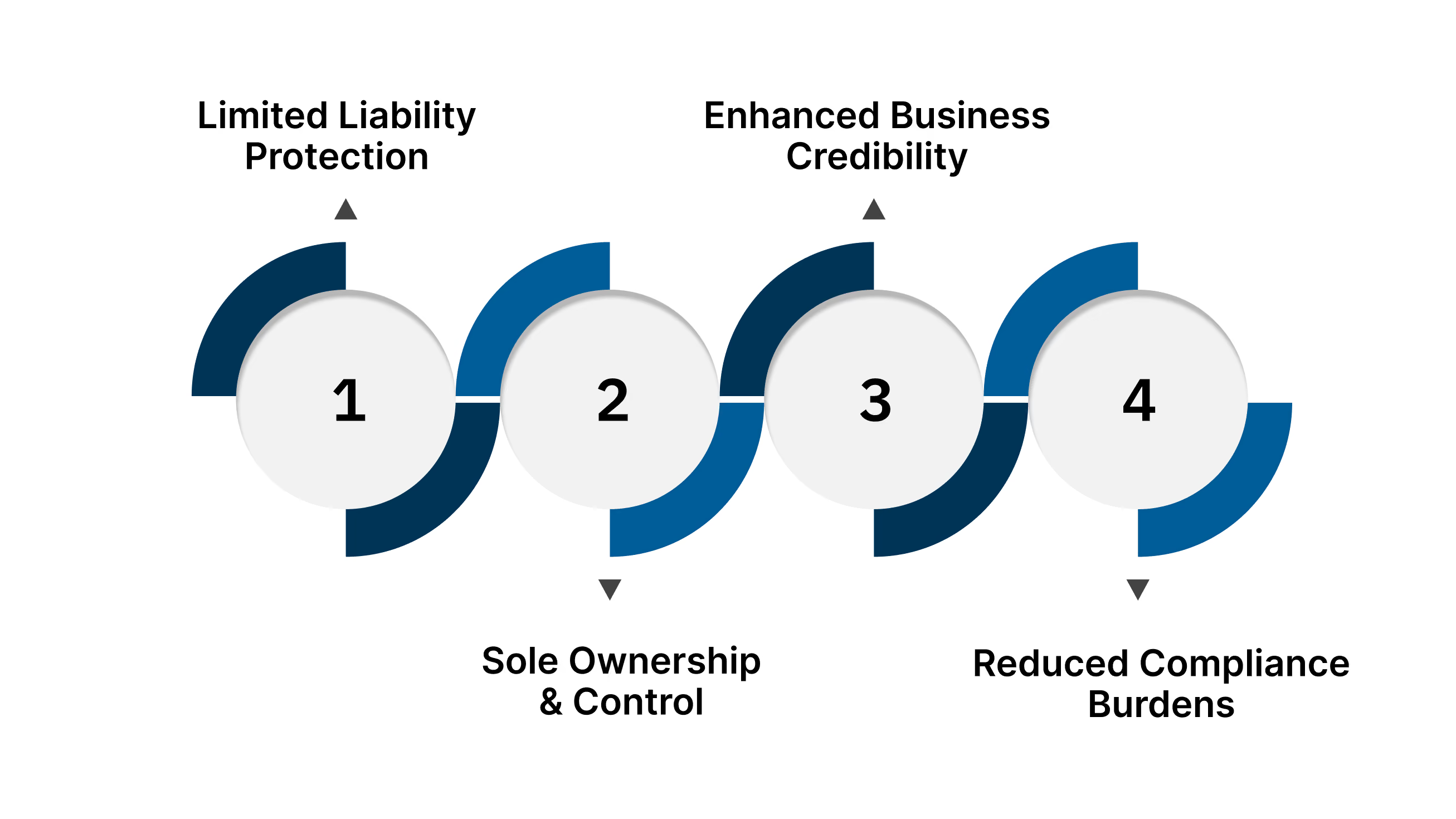
The OPC structure provides distinct advantages for solo entrepreneurs. It offers a formal corporate framework for your business operations. These benefits support growth, enhance credibility, and simplify compliance. Understanding them helps you evaluate their suitability for your venture.
Your personal assets remain separate from company debts. This protects your savings and property from business-related financial risks. The company is a distinct legal entity from you as an individual. Your financial responsibility is limited to your investment in the company.
You retain complete control over all company decisions. There is no need to consult partners or a board of directors. You are the sole shareholder and director of the entity. This allows for quick and unified management of the business.
An OPC carries more weight than a sole proprietorship. Clients and partners often perceive registered companies as more stable. The 'Pvt. Ltd.' suffix in the company name builds trust. This can improve your standing with vendors and financial institutions.
An OPC faces fewer mandatory filing requirements than a private limited company. The annual compliance process is generally simpler and more straightforward. You are not required to hold an annual general meeting. This reduces your administrative workload throughout the year.
These benefits make a strong case for choosing the OPC model. You must next verify that you meet all the detailed eligibility conditions.
あわせて読みたい:税務債務を確実に解決する:米国企業向け救済オプション
Before you begin the registration process, you must confirm your eligibility. The criteria are specific and defined by Indian company law. Meeting these requirements is mandatory for a successful OPC incorporation from the US. This ensures your application proceeds without legal complications.
You must meet the following key eligibility conditions:
The sole member must be an Indian citizen. The residency rule now accommodates Non-Resident Indians. The previous 182-day residency requirement has been relaxed. Your Indian citizenship is the primary requirement.
You must appoint a nominee during the company incorporation. This nominee must also be an Indian citizen. They will take over the company if you become incapacitated. Their written consent is a mandatory part of the application.
Your OPC must have a registered office address in India. This can be a commercial or residential property. All official correspondence will be sent to this address. Proof of address is required for registration.
The proposed name for your OPC must be unique. It cannot be identical to any existing company or trademark. The name must adhere to the guidelines in the Companies Act 2013. The name approval is a distinct step in the process.
Once you confirm you meet the criteria, you can gather the necessary paperwork. Proper documentation is fundamental for a successful application.
あわせて読みたい:内部監査アウトソーシングのメリットを最大限に活用する
Gathering the correct documents is a critical step for OPC registration. You must provide proof of identity, address, and business location. All foreign documents require notarization and apostille authentication. This preparation ensures a smooth application process with the Indian authorities.
You will need to provide the following documents:
After incorporation, your OPC must adhere to ongoing legal obligations. Understanding these compliance requirements is crucial for long-term operations.
Operating an OPC requires adherence to specific statutory obligations. These ongoing requirements maintain your company's legal standing in India. Managing them from the US demands awareness of Indian corporate law. Timely compliance prevents penalties and ensures smooth business operations.
You must prepare and file financial statements annually. These documents include a balance sheet and a profit and loss account. An auditor must review these statements if mandated by turnover. The filings are submitted to the Registrar of Companies.
Your OPC must file a corporate income tax return each year. This is separate from your personal tax filings in the US. The return must be filed by the specified due date. Maintaining accurate financial records is essential for this process.
You are required to maintain specific statutory registers. These records detail company directors, members, and meeting minutes. The registers must be kept at your registered office in India. They must be available for inspection by authorities.
You must hold at least two board meetings each financial year. The gap between these two meetings cannot be less than ninety days. Minutes of the discussions and decisions must be properly recorded. These records are part of your company's official documentation.
Knowing your future duties allows you to focus on the initial setup. The registration itself is a clear, multi-stage digital process.
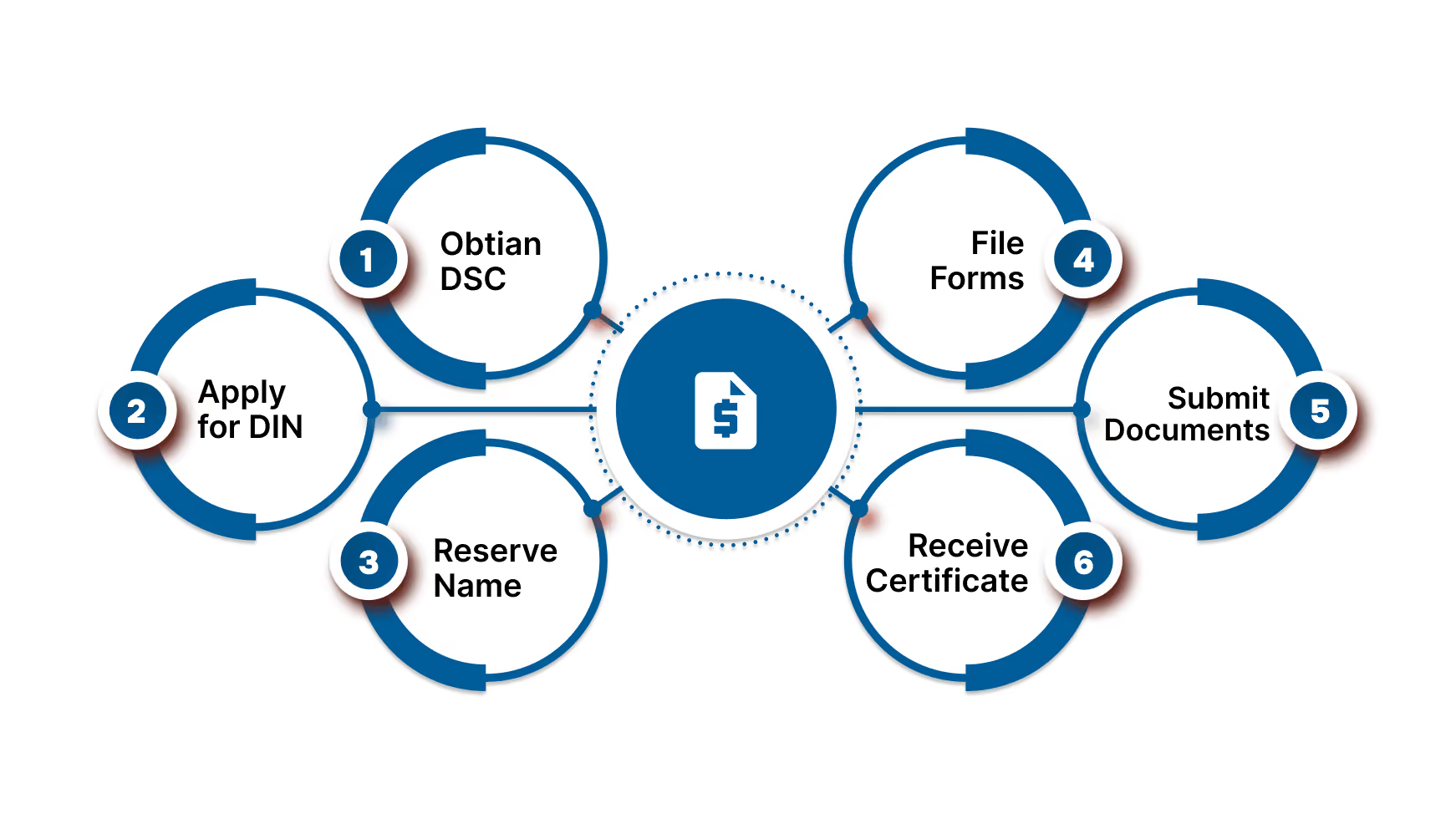
The registration of an OPC from the US follows a defined digital pathway. You will primarily interact with the Indian Ministry of Corporate Affairs portal. This process requires careful preparation of digital signatures and documents.
Proper execution of each step leads to the timely issuance of your Certificate of Incorporation.
Your first action is to secure a Class 3 Digital Signature Certificate. This DSC serves as your online signature for all official forms. You must obtain it from a government-certified agency in India. This is non-negotiable for all subsequent digital filings.
取締役として活動するには、取締役識別番号(DIN)が必要です。この固有番号は、DIR-3フォームを使用して申請します。このフォームには、デジタル署名と本人確認書類の添付が求められます。DINは企業省(MCA)によって直接承認されます。
OPC(一人会社)には、固有の名称を選択して予約する必要があります。これは、MCAポータルでSPICe+ PART-Aフォームを提出することで行います。
名称が承認されたら、SPICe+ PART-BフォームおよびINC-12フォームを提出する必要があります。これらのフォームは、設立申請全体を統合するものです。
オンラインフォームに必要なすべての書類を添付します。添付書類には、本人確認書類、住所証明、指名人の同意書などが含まれます。会社登記官が申請内容を詳細に審査します。必要に応じて、説明や追加情報の提出を求められる場合があります。
申請が承認されると、登記官が設立証明書を発行します。この書類は、あなたの「一人会社(OPC)」が法的に誕生したことを証明するものです。ここには法人識別番号(CIN)が記載されます。これにより、インドで法的に事業を開始できるようになります。
登録の各ステップを実行する際には、所定の手数料が発生します。これらの費用を予算に組み込んでおくことは、計画において重要です。
米国からの多段階にわたる登録プロセスを簡素化しましょう。VJM Globalの包括的なOPC設立サービスについてお問い合わせください。 こちらからご連絡ください(詳細をご案内します)。
あわせて読みたい: 経営監査の理解:定義と主な用途
OPC登録に必要な財務的支出を把握しておくことは、効果的な計画立案に役立ちます。総費用には、政府手数料と専門家への報酬が含まれます。これらの費用は、会社を法的に設立するために必須のものです。あらかじめ予算を確保しておくことで、予期せぬ遅延を防ぐことができます。
OPC登録の主な費用は以下の通りです:
企業省(MCA)は設立手数料を徴収します。この手数料は、会社の授権資本金に基づいて決定されます。インドにおけるOPC登録の総費用は、通常5,000インドルピーから20,000インドルピーの範囲内です。
費用は、専門家への報酬、授権資本金、所在地などのさまざまな要因によって異なります。政府手数料は、通常、総費用のかなりの部分を占めます。
You must obtain a Class 3 DSC from a certified provider. The cost for this digital signature ranges between INR 500 and INR 1,500. It is a one-time cost for the director and the nominee. This is valid for one to two years.
Engaging a consultancy involves professional fees. These fees cover document preparation, application filing, and liaison work. The cost for these services varies based on the service provider. This support is crucial for a seamless registration from the US.
You should account for costs like notarization and apostille of documents. There may also be charges for a registered office address facility. Initial compliance, such as obtaining a PAN and TAN, may have minor fees. These are essential for commencing operations.
Financial planning should also account for potential procedural hurdles. Being aware of common challenges helps you avoid them.
Registering an OPC from a different country presents specific logistical and legal hurdles. Being aware of these potential issues allows for better preparation and planning. Proactive management of these challenges helps prevent delays in your company formation. Professional guidance is often critical to navigate this process smoothly.
You may encounter the following common challenges:
All your supporting documents require notarization and apostille attestation. This authentication process verifies your documents for use in India. It can be time-consuming to complete from abroad without local assistance. The procedure must follow the Hague Apostille Convention guidelines.
The entire registration is conducted online through the MCA portal. You may face difficulties with time zone differences for verifications. Coordinating with notaries and service providers remotely adds complexity. A reliable digital workflow is essential for success.
Indian company law has specific requirements for name approval and forms. Minor errors in form-filling can lead to outright rejection. Understanding the specific compliance triggers for an OPC is also important. These nuances are often unfamiliar to those outside the Indian system.
You must provide proof of a registered office address in India. Finalizing a lease and obtaining a No Objection Certificate can be difficult. This is especially true when you are not physically present in the country. This step often requires local support to arrange.
You can mitigate these potential issues with a proactive strategy. Adopting a few best practices will make the process significantly smoother.
Also read: How to Start a Profitable Water Business in India
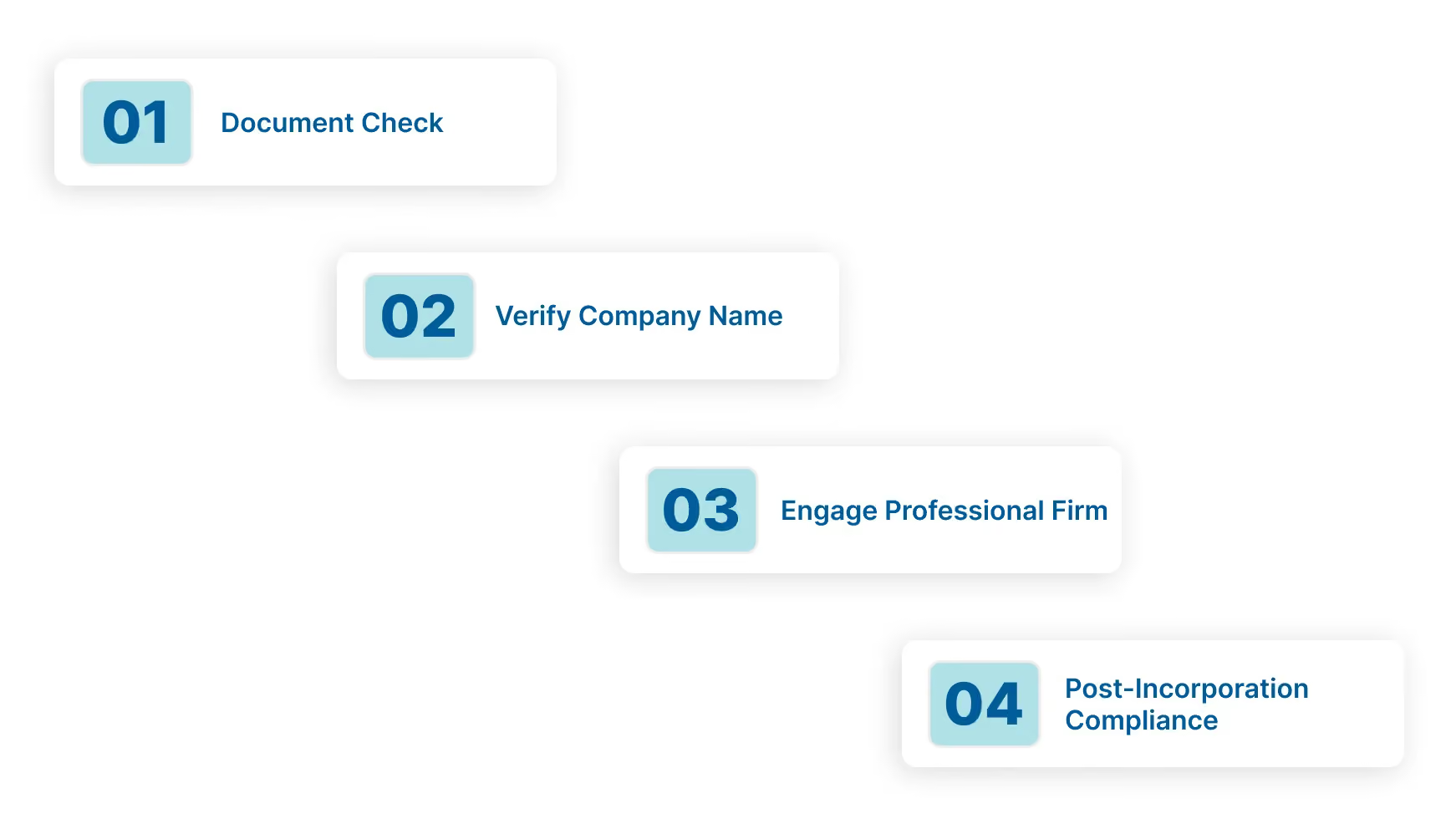
Adopting a strategic approach from the start can significantly improve your experience. These practices help you avoid common errors and procedural delays. They are particularly valuable for entrepreneurs managing the process from the US.
Careful planning makes the remote registration more manageable and predictable. The following recommendations will guide your preparation and execution:
Verify all your personal and business documents well in advance. Confirm that your passport and other identification are valid for the entire process. Ensure all documents meet the specific format and notarization requirements. This prevents last-minute rejections from the authorities.
Conduct a preliminary search on the MCA portal for name availability. Choose a name that reflects your business but is also unique. Avoid names that are too similar to existing trademarks or companies. A distinct name increases the likelihood of quick approval.
Partner with a firm like VJM Global that specializes in cross-border registrations. Their expertise in Indian corporate law provides crucial guidance through each step. They can manage document authentication and liaison with government bodies. This support minimizes your direct administrative burden.
Understand your ongoing statutory obligations immediately after receiving the incorporation certificate. This includes applying for a PAN, TAN, and opening a corporate bank account. Establish a system for maintaining statutory registers and meeting filing deadlines. Early compliance planning prevents future legal complications.
Implementing these practices is most effective with expert support. VJM Global is structured to provide this exact guidance for US clients.
Managing the OPC registration process from the US involves complex hurdles. You must handle document authentication, remote procedures, and unfamiliar regulations. Navigating the MCA portal and meeting all legal criteria can be difficult. These challenges often lead to application delays and compliance issues.
VJM Global provides a structured solution for OPC registration from the US to India. Our firm handles the entire process, from initial documentation to final incorporation. We help you establish your corporate presence in India with precision. Our service is designed to save you time and prevent costly errors.
Our approach includes several key features:
We specialize in helping US businesses and entrepreneurs expand into India. Our team understands both US business practices and Indian regulatory standards. This dual expertise allows for a more efficient and informed registration process. We bridge the gap between the two business environments.
We manage the complete registration workflow on your behalf. Our services include document preparation, application filing, and liaison with authorities. We also assist with securing a registered office address in India. This end-to-end support simplifies the entire experience for you.
Our service extends beyond the initial company registration. We provide ongoing guidance for your statutory and tax compliance obligations. This includes assistance with annual filings and regulatory changes. Our goal is to ensure your company remains in good legal standing.
Partnering with VJM Global provides a clear and managed pathway for your business entry into India.
Establishing a One-Person Company in India from the US is a structured process. It requires careful attention to eligibility, documentation, and specific procedures. Understanding the compliance requirements and potential challenges is also crucial.
This guide provides a foundational roadmap for your business expansion journey. VJM Global specializes in simplifying this cross-border incorporation for you. Our expertise in Indian corporate law and experience with US clients is a key advantage.
We manage the complex administrative and regulatory tasks on your behalf. This allows you to focus on your core business planning and strategy.
Contact VJM Global today to discuss your specific OPC registration requirements.
An Indian citizen is eligible to start an OPC, regardless of their residential status. This now includes Non-Resident Indians (NRIs). Foreign nationals and other corporate entities cannot form an OPC.
The primary advantage is limited liability protection. In an OPC, your personal assets are separate from the company's debts. A sole proprietorship offers no such legal distinction.
Yes, an OPC can receive foreign direct investment if it meets certain conditions. The investment must comply with the Foreign Exchange Management Act (FEMA) regulations. The company must also be classified as an "eligible startup" by the DPIIT.
Conversion is mandatory if your average annual turnover exceeds two crore rupees for three consecutive years. Your paid-up capital exceeding fifty lakh rupees will also trigger a requirement for conversion.
The nominee's role is to take over the management of the OPC if the sole member becomes incapacitated or passes away. Their written consent is a mandatory part of the incorporation process.
The entire process typically takes two to three weeks after document submission. This timeline depends on the speed of government approvals and the completeness of your application. Professional assistance can help streamline the timeline.

.avif)


