


Expanding your U.S.-based business to India brings exciting growth prospects, but it also introduces significant financial complexities. Cross-border receivables management is particularly challenging; delayed collections and extended DSO add risk when you’re dealing with multiple currencies and regulatory systems.
In fact, U.S. companies that receive cross-border payments experience an average Days of Sales Outstanding (DSO) of 33 days, about 55% longer than for domestic invoices. For U.S. firms entering India, mismatched ledgers, invoice disputes, and compliance hurdles can quickly turn revenue into locked-up capital.
This guide explains everything US business owners and entrepreneurs need to know about receivables management while expanding or starting operations in India, covering objectives, processes, tools, challenges, and practical tips for staying compliant.
For US business owners expanding their operations into India, receivables management is the process of tracking and collecting money owed to your company. It involves setting up an effective system for invoicing, collecting payments, and following up on overdue accounts.
When expanding into India, receivables management helps ensure that your business has sufficient cash flow to cover its expenses while maintaining strong customer relationships. It’s crucial to track not only customer payments but also the potential for bad debts, and to take preventive actions to avoid financial pitfalls.
As your receivables operations expand across borders, having a reliable accounting partner can make all the difference. VJM Global streamlines receivables for U.S. companies expanding to India. Our experts align workflows with Indian tax, FEMA, and U.S. GAAP standards, ensuring precision in invoicing, credit control, and remittance documentation across both jurisdictions.
Also Read: Top Benefits of Outsourcing Accounting Services to India for US Small Businesses
Now that you understand what receivables management means, the next step is to explore its core objectives and how they shape your company’s financial stability in India.
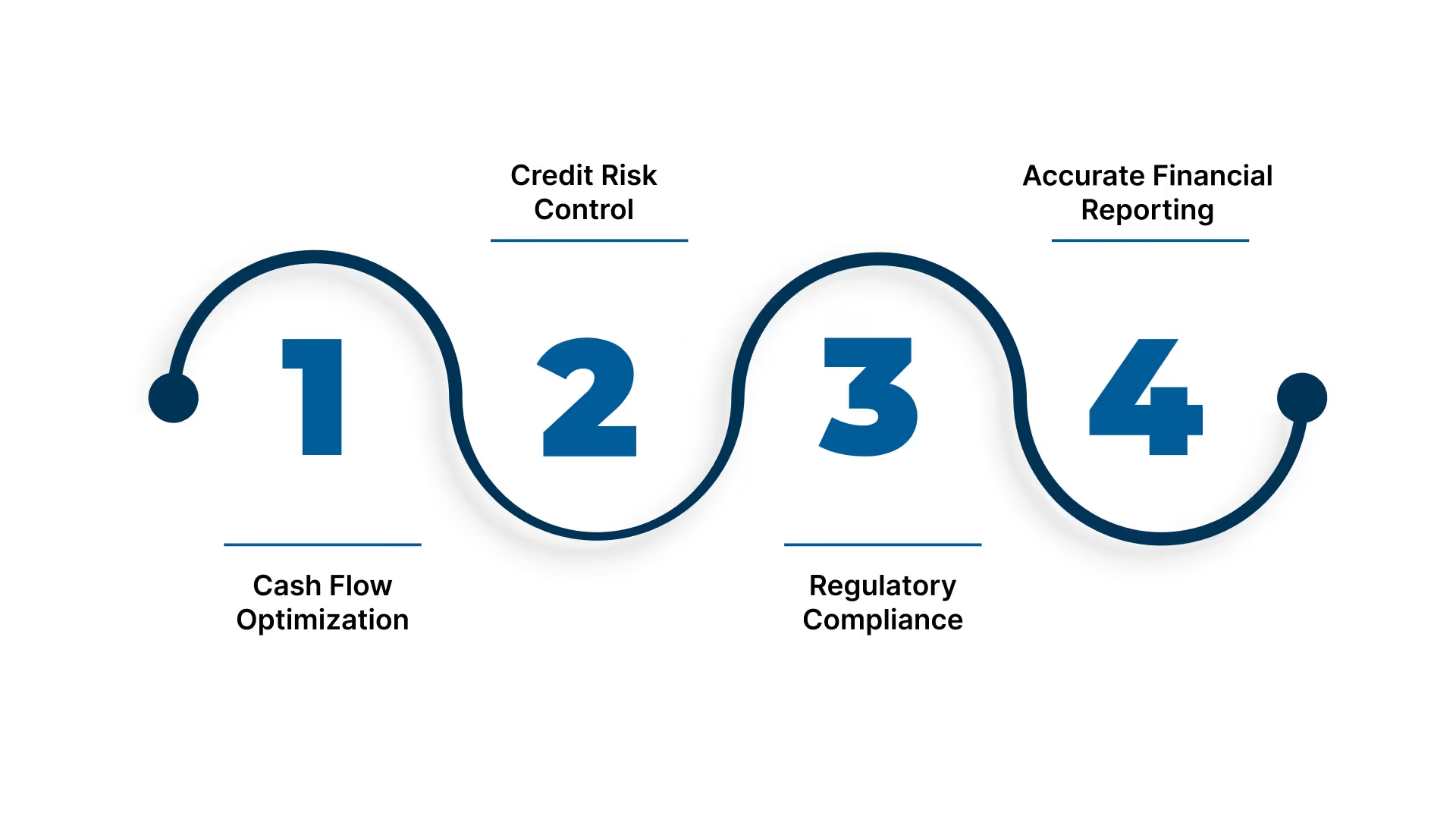
For a U.S. company entering India, receivable management is not just about collecting dues; it’s about creating a structured, compliant, and resilient process that ensures steady liquidity across both jurisdictions. The objectives below focus on safeguarding working capital, mitigating risk, and strengthening transparency for cross-border operations.
Maintaining liquidity between the US headquarters and the Indian entity is crucial. AR systems must synchronize real-time data on invoice aging, payment forecasts, and foreign currency settlements. This ensures that delayed rupee collections don’t disrupt your U.S. treasury projections or vendor payments in India.
Before extending payment terms to Indian distributors or clients, conduct credit assessments using trade references, GST filing histories, and credit bureau data. Establish multi-tier approval workflows to apply stricter controls to high-risk accounts. This preempts overdue receivables and prevents strain on cross-border profitability.
Every invoice generated in India must comply with GST invoicing rules, RBI’s foreign remittance procedures, and FEMA reporting norms. Any deviation can freeze remittances or trigger scrutiny. Structuring receivable systems to auto-capture required data fields ensures regulatory precision and audit readiness.
AR balances feed directly into consolidated U.S. financial statements, thereby influencing KPIs such as DSO and working capital ratios. Accurate tracking ensures intercompany eliminations and FX adjustments are reflected correctly. This maintains the credibility of group-level reporting during audits and due diligence.
あわせて読みたい:フラクショナル・コントローラーとは何か、なぜ米国企業はインドにアウトソーシングするのか
次に、インドに進出する米国企業にとって、なぜ売掛金管理が極めて重要なのかを見ていきましょう。
米国企業がインドで事業を展開する際、規律ある売掛金管理は財務上の防波堤となります。これが欠如すると、キャッシュフローの停滞、規制上の不備、債務不履行などが生じ、収益性や投資家の信頼を損なう恐れがあります。売掛金管理の主なメリットは以下の通りです。
専門家の支援を受けることで、インドに進出する米国企業は、売掛金管理のアウトソーシングを通じて、GSTコンプライアンス、照合、自動レポート作成を効果的に処理できます。当社の体系的なプロセスにより、請求書発行から代金回収に至るまでの売掛金ライフサイクル全体において、コンプライアンスを維持しつつ最適化を図ることが可能です。
あわせて読みたい:組織評価を実施するための重要なステップ:なぜ米国企業はインドにアウトソーシングするのか
メリットが明確になったところで、これらの利点を維持するために、効果的な売掛金管理を支える体系的なプロセスを理解することが不可欠です。
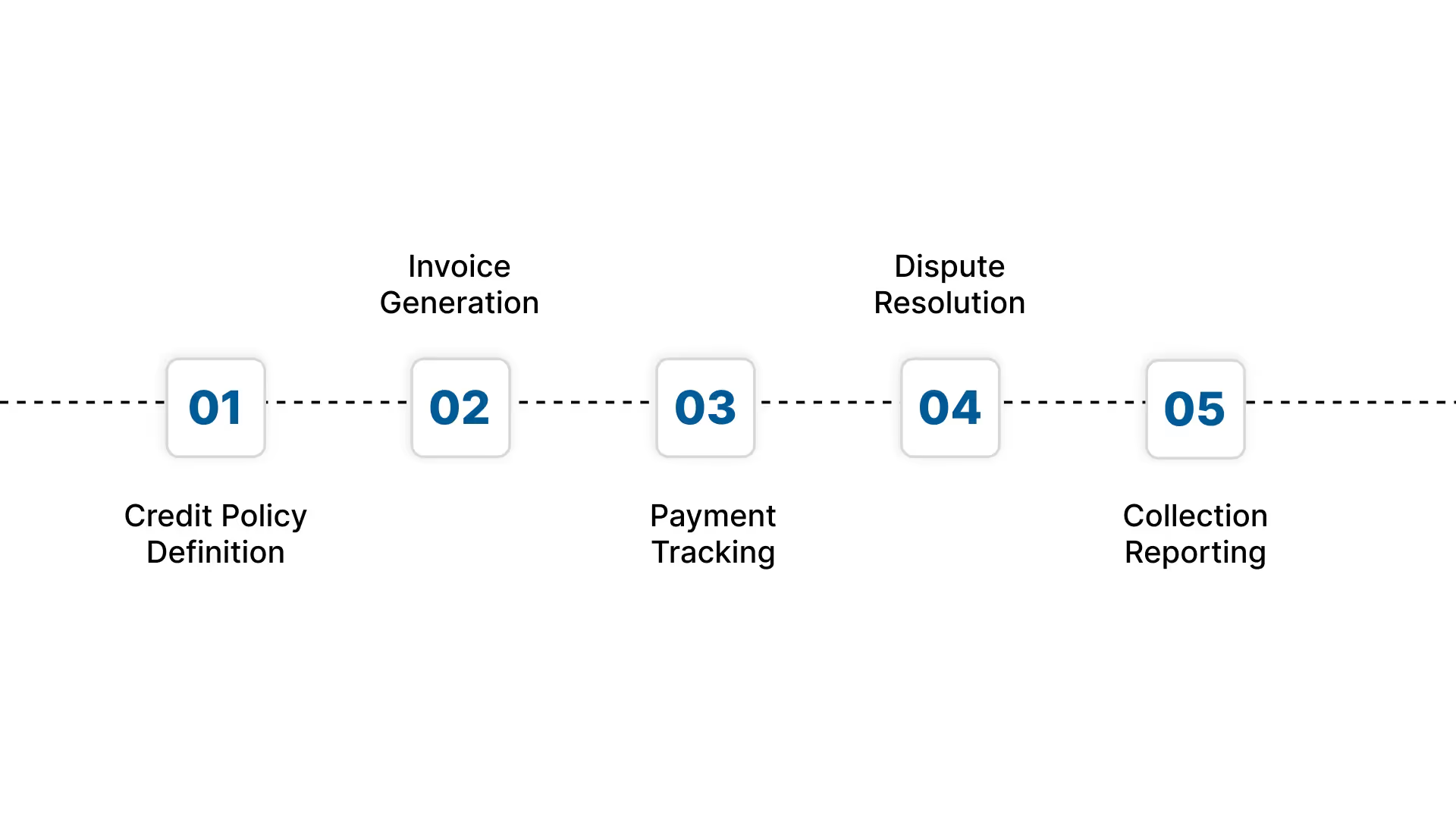
インドに進出する米国企業にとって、売掛金管理プロセスには正確性、自動化、そしてコンプライアンスへの適合が求められます。不可欠なステップを体系的に解説します。
リスク許容度と市場競争力のバランスを考慮し、インドのクライアントに合わせた与信ポリシーを策定します。支払い履歴や業界リスクに基づいた自動承認しきい値を統合することで、市場への対応力を維持しながら、規律ある与信供与を実現します。
請求書がインドのGST電子請求書基準を満たしていることを確認し、HSN/SACコード、請求書参照番号、供給地データを正確に記載します。米国の会計帳簿については、請求書を収益認識スケジュールおよび外貨評価仕訳と紐付けます。
クラウドダッシュボードを活用し、インドの複数の銀行チャネルを通じた入金を追跡します。売掛金管理ソフトウェアを統合し、期限を過ぎた請求書を自動的にフラグ立てし、インドの祝日や請求サイクルに合わせてリマインダーを送信します。
自動照合ツールを使用して、不一致を迅速に解決します。地域やアカウントマネージャーごとに責任を割り当て、解決までのサービスレベル目標(SLA)を設定します。監査時の透明性を確保するため、すべての解決プロセスを記録します。監査。
サイクルごとに、売掛金年齢調べ(エイジングレポート)、DSOレポート、入金消込明細を作成します。インドにおける売掛金の傾向を個別に分析することで、信用リスクや為替変動を可視化します。
あわせて読みたい:営業運転資本の計算方法
これらの手順に従うことで一貫性は保たれますが、適切なツールを活用すれば、米国とインドの事業間での業務遂行はさらに円滑になります。
現代のテクノロジーは、データの集約、コンプライアンスの自動化、そして両国間での即時可視化を実現することで、米国企業によるインドでの売掛金管理のあり方を変革しています。以下のツールを活用することで、売掛金業務の正確性、効率性、管理体制を強化できます。
あわせて読みたい:GAAPと非GAAPの売上総利益の理解:企業が米国からインドへアウトソーシングする理由
With VJM Global and their US–India receivables outsourcing, you gain precision tracking, variance reconciliations, and real-time visibility into cash flow. Our specialists ensure compliance with IRS and Indian regulatory standards, so every transaction remains transparent and timely.
次に、売掛金管理プロセスにおける一般的な課題と、その実践的な解決策について解説します。
どれほど規律ある米国企業であっても、インドへの進出時には売掛金管理の壁に直面します。以下の課題を早期に理解し対処することで、予測可能なキャッシュフローとコンプライアンスの安定を維持できます。
インド企業では、社内の承認プロセスが多段階にわたるため、支払いまでの期間が長くなる傾向があります。
解決策:マイルストーンベースの請求や早期支払い割引を導入し、入金を加速させましょう。明確なドキュメントと事前に合意したスケジュールにより、督促の手間を最小限に抑えられます。
米ドルとインドルピーの為替レートの変動により、最終的に売掛金の価値が目減りする可能性があります。
解決策:未決済の請求書を毎週再評価し、為替レートの更新を自動化しましょう。また、買掛金との相殺による自然なヘッジも検討してください。両方の帳簿で一貫した評価方針を維持することが重要です。
売掛金の仕訳を行う際、GST(物品サービス税)、TDS(源泉徴収税)、FEMA(外国為替管理法)の要件に対応することは非常に困難な場合があります。
解決策:GST準拠の請求書発行を自動化し、米国とインドの会計士が定期的に照合を確認できる二重帳簿体制を維持しましょう。
Manual reconciliations between bank receipts and ledger postings often lead to misapplied payments.
Solution: Use automated matching tools and unique invoice reference IDs to eliminate duplication errors. Daily reconciliation discipline keeps ledgers clean.
Disagreements can be resolved more slowly when time zones and business etiquette are different.
Solution: Set up dedicated AR liaisons or shared communication dashboards to ensure seamless collaboration and faster issue closures.
Also Read: Preparing a GAAP Cash Flow Statement? Outsource from the US to India
The next section outlines proven best practices that help U.S. businesses prevent issues before they arise in India.
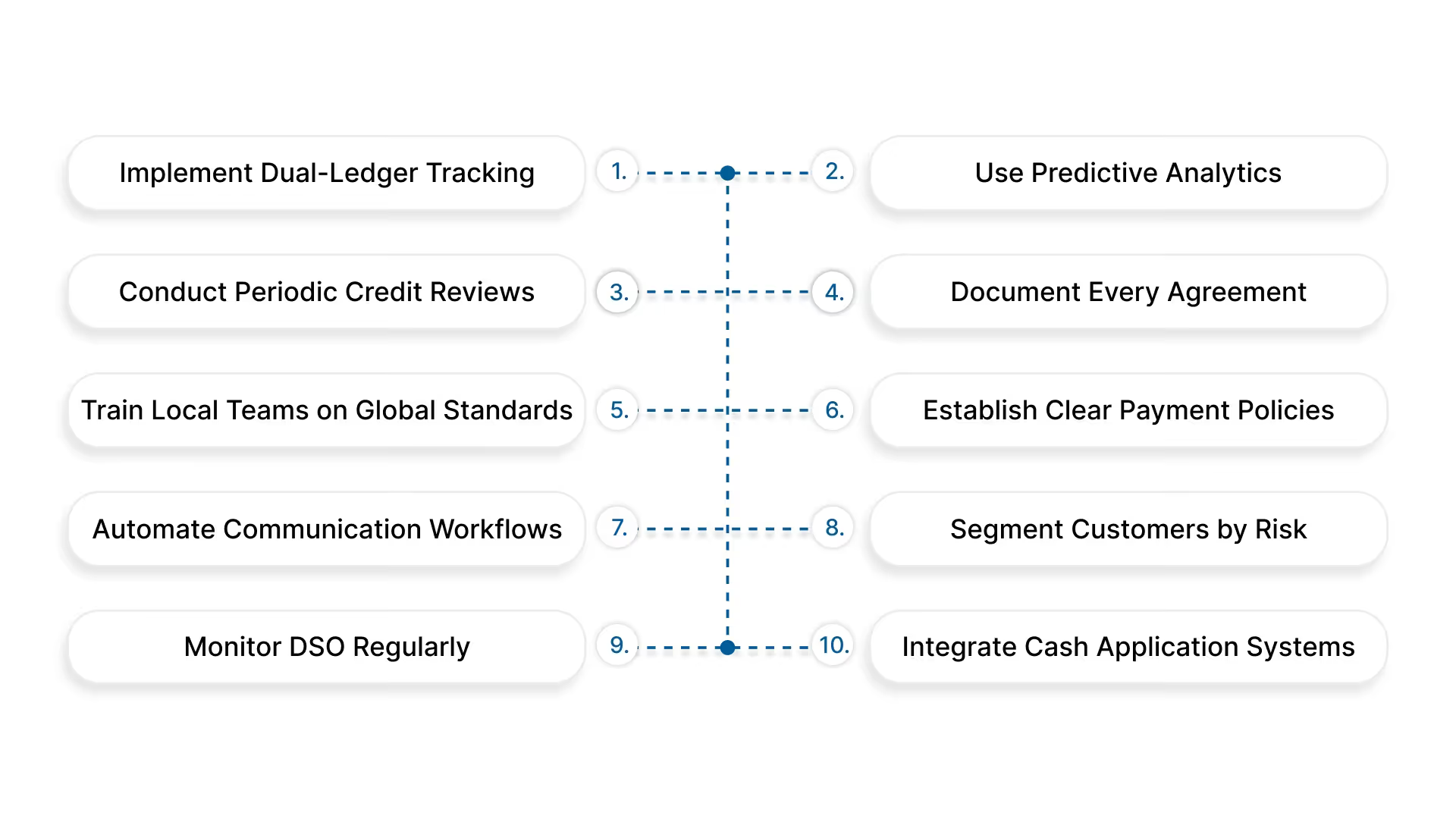
Building a mature receivables ecosystem for your India operations means focusing on preventive strategies rather than reacting to overdue invoices. The following best practices outline how U.S. businesses can enhance cash flow predictability and reduce payment delays.
Maintain synchronized accounting books under both U.S. GAAP and Indian GAAP to ensure consistency in your accounts receivable records. This alignment minimizes discrepancies during audits and facilitates seamless financial reporting across both jurisdictions.
Adopt AR management tools that use predictive analytics to identify potential payment delays based on customer payment behavior. These insights enable your U.S. finance team to proactively adjust cash flow forecasts and manage liquidity efficiently in India.
Assess the financial stability of your Indian clients quarterly to identify credit risks early. Revising credit limits and payment terms based on updated assessments helps reduce bad debt exposure and maintain a healthy receivables cycle.
Keep digital copies of purchase orders, invoices, and signed delivery proofs for every transaction in India. Such documentation ensures transparency and accelerates dispute resolution under Indian commercial laws.
Ensure your Indian accounting teams are trained to follow U.S. financial compliance standards. This alignment creates uniformity in AR data handling, ensuring your cross-border financial statements remain accurate and audit-ready.
Define net terms, discount structures, and penalties upfront in every sales contract. This eliminates ambiguity for Indian clients and strengthens your legal standing during disputes.
Automated reminders through platforms like QuickBooks or Zoho keep invoices top of mind without manual intervention. Consistent cadence prevents overdue accounts from slipping unnoticed.
Use data analytics to classify Indian buyers based on payment patterns and credit exposure. Tailor follow-up intensity for each group to preserve goodwill while improving efficiency.
Track Days Sales Outstanding at the entity level for both the U.S. and India. This helps you pinpoint regional bottlenecks and implement corrective measures before cash flow tightens.
Link your bank feeds directly with your AR modules to automate matching and reconciliation. This saves countless hours and ensures real-time visibility into open invoices.
Also Read: A Practical Guide to ASC 606 Revenue Recognition in 5 Steps
In order to avoid communication lapses or unpaid invoices, VJM Global manages GST submissions, foreign exchange adjustments, and payment follow-ups for cross-border AR workflows from the US to India.
Next, we’ll see how automation and digital systems revolutionize receivables management between the U.S. and India.
.avif)
Technology acts as the bridge between U.S. headquarters and Indian subsidiaries, driving accuracy, speed, and transparency in every transaction. The following points highlight how strategic automation ensures your receivables management remains compliant, audit-ready, and data-driven.
Also Read: Understanding ASC 810 for Financial Consolidation
With the power of technology defined, the next step is choosing a partner who can help you implement and manage these systems effectively, like VJM Global.
Managing accounts receivable while expanding your U.S. business to India requires precision, compliance, and continuous visibility across both entities. This is where VJM Global becomes your long-term accounting ally, ensuring your receivable cycles stay accurate, compliant, and profitable.
Our Accounting and Bookkeeping Services cover every aspect of your financial ecosystem, from daily bookkeeping to audit-ready reporting. Our U.S.-trained accountants and Indian Chartered Accountants work together to maintain consistency with U.S. GAAP, Indian GST, and FEMA regulations.
米国企業が売掛金・会計アウトソーシングにVJM Globalを選ぶ理由:
VJM Globalは、インドに進出する米国企業向けに、請求書処理、照合、長期未決済項目の分析を網羅したエンドツーエンドの売掛金管理を提供し、回収の迅速化とキャッシュフローの強化を支援します。当社のクロスボーダー会計専門家が、税務コンプライアンスを含む財務報告を米国GAAPおよびインドの規制の両面から管理し、市場全体で正確性、透明性、一貫したキャッシュパフォーマンスを保証します。
インドに進出する米国企業にとって、キャッシュフローの安定性を維持し、不良債権を最小限に抑え、米国とインド双方の基準に準拠するためには、強固な売掛金管理が不可欠です。適切なプロセス、ツール、専門家のガイダンスを活用することで、未払い請求書を安定したキャッシュフローへと変え、インド事業の拡大に集中できるようになります。
VJM Globalの会計サービスを活用すれば、請求書処理の効率化、照合の自動化、インドのGST(物品サービス税)および米国GAAPへの完全準拠が可能です。債務者レポートから海外送金書類の作成まで、すべての業務を専門家が管理するため、収益サイクルを予測可能かつ透明性の高い状態に保つことができます。
VJM Globalと提携し、売掛金を確実な収益へと変え、インドでの迅速かつコンプライアンスに準拠した成長を推進しましょう。
米国企業は、支払いサイクルの長期化や、GST、TDS(源泉徴収税)、FEMA(外国為替管理法)関連書類といった現地の複雑なコンプライアンス対応に苦慮することがよくあります。自動化された売掛金追跡システムを導入し、VJM Globalのような専門家と提携することで、回収の迅速化とミスのないコンプライアンス対応が可能になります。
自動化により、請求書発行、照合、年齢別債権レポートが簡素化され、両国間でのリアルタイムな可視化が実現します。QuickBooks GlobalやZoho Booksのようなツールを活用することで、人為的ミスを排除し、クロスボーダー回収の正確性を高めることができます。
効果的な売掛金管理は、キャッシュフローの維持、不良債権の削減、そして米国GAAPとインド規制という二重のコンプライアンス基準への対応を可能にします。また、透明性が高くタイムリーな請求業務を通じて、ベンダーやクライアントとの関係強化にもつながります。
VJM Globalは、請求書処理、照合、年齢別債権分析、長期未決済項目の解決を含む包括的な売掛金サービスを提供しています。当社の会計士が、貴社の売掛金プロセスを常にコンプライアンスに準拠させ、自動化された監査対応可能な状態に保ちます。

.avif)


