

.avif)
合併や買収後の会計処理に頭を悩ませていませんか?その苦労は決してあなただけではありません。2024年後半、世界のM&A取引額は発表ベースで約1兆ドルに達し、2022年初頭以来の高水準となりました。第4四半期の取引件数は約9,765件に上り、2023年第1四半期以来の活況を見せています。企業結合では、資産、負債、のれん、非支配持分をどのように記録すべきか判断に迷うケースが少なくありません。
ASC 805に基づく企業結合の会計処理は、取得法を用いて合併・買収を記録するための枠組みを提供します。取得企業を特定し、移転した対価を測定した上で、これまで把握していなかった無形資産を含むすべての取得資産および負債に公正価値を割り当てる必要があります。
取引の前後で財務管理を担当されている方に向けて、本ブログではASC 805の仕組みを解説し、何をいつ、どのように計上すべきかを管理する手助けをします。このプロセスはクロージングで終わりではありません。アーンアウト、偶発負債、測定期間の調整なども含まれます。
ASC 805は、ある事業体が他の事業に対する支配権を獲得する取引を規定するものです。この基準では、すべての企業結合において取得法を適用することが義務付けられています。本基準における「企業結合」とは、株式、資産購入、契約上の取り決め、その他の手段を問わず、支配権が移転するあらゆる事象を指します。
ASC 805に基づき、米国企業は、被取得企業の資産、負債、および非支配持分を認識・測定するための特定のルールを適用しなければなりません。ASC 805は、取得原価の配分やのれんの取り扱いを含め、米国企業がどのようにパーチェス法(取得法)による会計処理を行うべきかを定めています。
またASC 805では、偶発支払やサービス契約など、関連する取引を切り離し、必要に応じて個別に会計処理することも義務付けています。
すべての買収がASC 805の対象となるわけではありません。ここでは、適用範囲外となる取引の種類を見ていきましょう。
ASC 805では、企業結合を「取得企業が1つ以上の事業に対する支配権を獲得する取引」と定義しています。しかし、FASBは特定の取引を明示的に除外しており、ASC 805-10-15-4および関連ガイダンスに基づき、他のGAAP(一般に公正妥当と認められた会計原則)の下で処理されます。主な除外例は以下の通りです。
取引がASC 805の適用範囲内となると、いくつかの重要な要素が記録方法を決定づけます。本セクションでは、特に重要なポイントを解説します。
ASC 805は、企業結合に対して取得法を規定しています。このプロセスには、取得企業の特定、取得日の決定、移転した対価・識別可能な資産・負債・非支配持分の公正価値による測定といった複数の段階が含まれます。さらに、取引が「事業」の定義を満たさない場合には、のれんやバーゲン・パーチェス・ゲインの認識が必要です。資産の公正価値が支配的な場合は、資産取得としてASC 805-50が適用されます。
米国企業が企業結合に関与する場合、ASC 805の基本原則を理解することが不可欠です。この基準は、米国企業が他社の買収をどのように会計処理すべきかを規定しており、すべての財務的側面が正確に報告されることを保証します。
M&A取引の枠組みは、合併や買収を評価、実行、記録するための体系的なアプローチを提供します。これには、取引戦略、デューデリジェンス、取得原価の配分、クロージング後の会計コンプライアンスが含まれます。
スクリーニングテストを適用します。公正価値のほぼすべてが単一の資産または類似資産のグループに集中している場合は「資産取得」に分類し、そうでない場合は、アウトプットを生み出すインプットと実質的なプロセスが存在するかを確認してください。
法的な取得者を特定しますが、逆取得の事実がある場合は会計上の取得者の基準を適用します。取得日は、法的な完了日と異なる場合であっても、通常は支配権が移転した時点となります。
現金、持分証券、条件付対価、引き受けた負債など、あらゆる形態の対価を取得日の公正価値で測定します。
ASC 820を適用し、有形・無形資産および条件付負債を含む引き受けた負債を特定・測定します。残額をのれんに配分するか、または割安購入益を計上します。
旧所有者や関連会社との取引を評価し、それが企業結合の一部を構成するのか、あるいは個別の会計処理を要するのかを判断します。
アーンアウトは負債、資産、または資本として分類し、取得日以降に再測定を行い、純利益の変動を認識します。
取得者はASC 718基準に基づき株式報酬の価値を引き継ぎます。存続期間中の報酬については、多くの場合ラティスモデルが使用されます。
特定の取得契約資産/負債はASC 606の条件が維持されますが、リースについては配分時にASC 842に基づく公正価値認識を満たす必要があります。
取引が事業の定義を満たさない場合は、ASC 805-50を適用します:
ASC 805は、事業の判定から配分、分離取引の特定に至るまで、実務上の決定的なステップを指し示しています。
ASC 805を正しく適用するための最初のステップは、その取引が企業結合に該当するかどうかを判断することです。
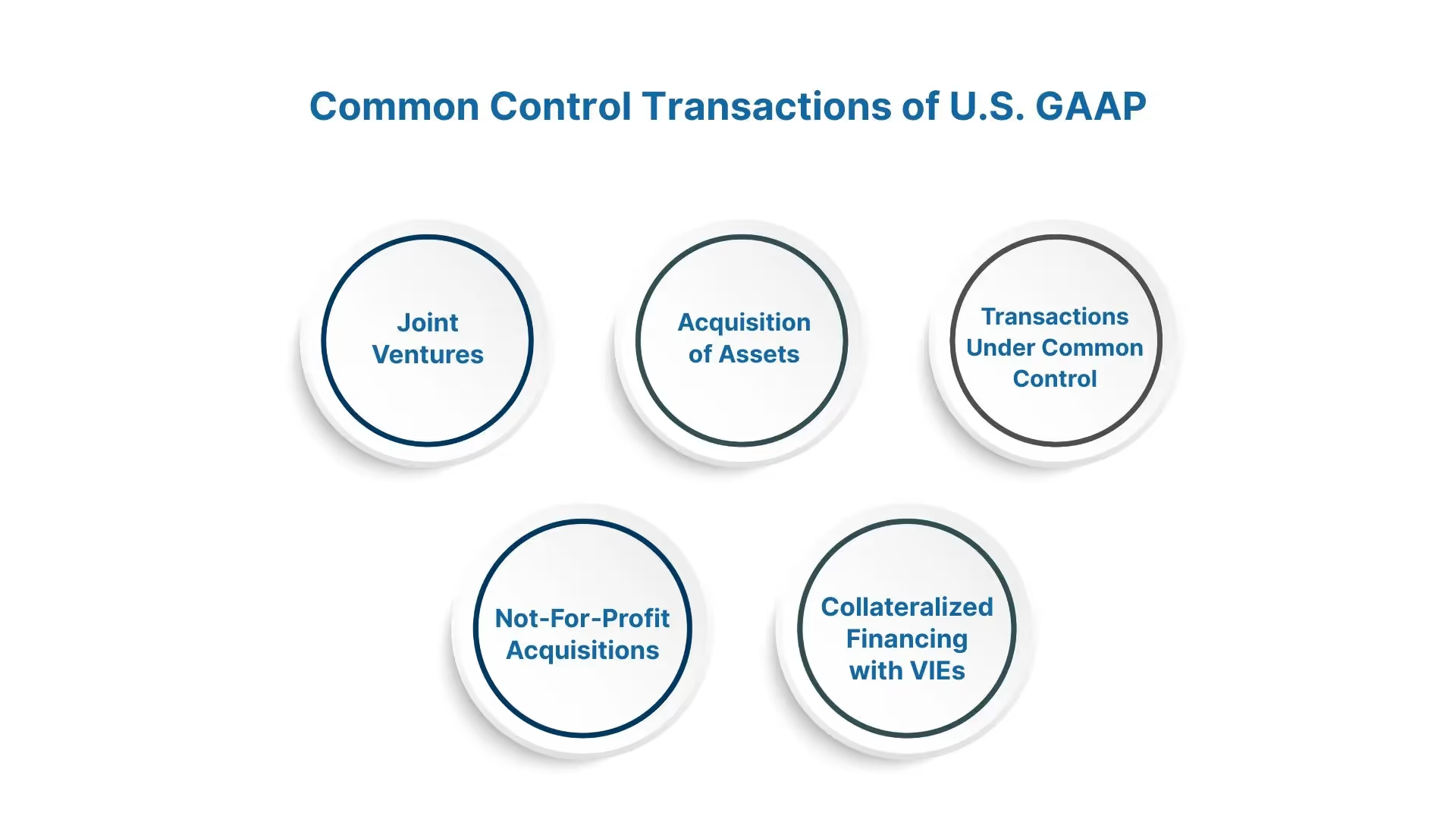
U.S. businesses must assess the acquired company’s assets, liabilities, and goodwill, often requiring detailed valuations and accounting expertise. ASC 805 excludes several types of transactions from its coverage, recognizing that not all transfers of control fit the business combination model:
Also Read: Transfer Pricing: Transactional Net Margin Method
Entities must first identify whether a transaction grants control over a business as defined in ASC 805. The standard does not apply if the transfer involves an asset collection, joint venture, common-control event, specified not-for-profit activity, or collateralized financing entity. In these cases, different accounting guidelines may be followed. Instead, they follow specialized accounting rules tailored to those transactions.
Distinguishing between a business and an asset acquisition matters; here’s how to make that call using ASC 805 guidelines.
Under ASC 805, you determine whether an acquisition qualifies as a business combination or an asset acquisition by using a two-step test:
Companies must apply ASC 805’s two-step test before choosing accounting treatment. If fair value concentrates on a single asset or similar group, treat it as an asset acquisition. If not, and if the set includes an input plus a substantive process that produces outputs, account for a business combination.
Once a transaction qualifies, the accounting begins. Here's how to apply the acquisition method under ASC 805.
Accounting for business combinations becomes important for accurate financial reporting when U.S. businesses engage in mergers or acquisitions. ASC 805 requires the acquirer to apply the acquisition method when it gains control over another business. Practitioners follow these steps:
For multi-stage acquisitions, the acquirer also remeasures earlier investments. Transactions that accompany the acquisition but serve separate goals receive distinct accounting. This method gives stakeholders a fair view of what was acquired and what it cost.
By deliberately applying each step, from valuation to separation of related contracts, organizations present transparent and compliant financial results under U.S. GAAP.
VJM Global simplifies ASC 805 compliance, supporting cross-border mergers and acquisitions from identifying the acquirer to recording goodwill. With decades of experience, we handle purchase price allocation, fair value assessments, and more, letting you focus on integration and growth.
ASC 805 directs companies to record identifiable assets, liabilities, NCI, and consideration transferred at fair value on the acquisition date. Under ASC 805‑20‑25‑1, acquirers must record the acquisition date:
Also Read: FLA Return- Foreign Liabilities and Assets Annual Return
Next, place the consideration transferred, including cash, equity, and contingent payments, at fair value as of the acquisition date.
Then, calculate the difference:
For step acquisitions (gaining control in stages), calculate the fair value of the acquiree as a whole on the control date, then remeasure existing holdings and reflect gains or losses.
ASC 805 also permits a measurement-period adjustment (up to 1 year) to refine provisional fair values; subsequent changes adjust goodwill or gain. The residual, goodwill, or gain results from the difference between the consideration value and net assets acquired.
Some estimates require time to finalize. The next section explains the window provided by ASC 805 for updating your figures.
ASC 805‑10‑25‑15 grants acquirers up to one year from the acquisition date to finalize accounting for a business combination. During this measurement period, companies may record provisional amounts for acquired assets, assumed liabilities, transferred consideration, non-controlling interests, and preexisting equity stakes. This can only be when information is incomplete. These provisional amounts can be adjusted as more information becomes available.
When the acquirer obtains accurate data, it becomes available or proves unattainable. The measurement period ends for that item or overall, whichever comes first. ASC 805-10-55-16 requires that the acquirer adjust provisional figures when new information surfaces as if the original measurements dated to the acquisition date. Goodwill or gain and related depreciation, amortization, or earnings figures may shift accordingly.
This period exists solely under ASC 805. Asset acquisitions don’t allow provisional values; they demand complete fair-value measurements before the first post-acquisition report. Once they access reliable inputs, they adjust those items retrospectively in the first reporting period after the new data emerges.
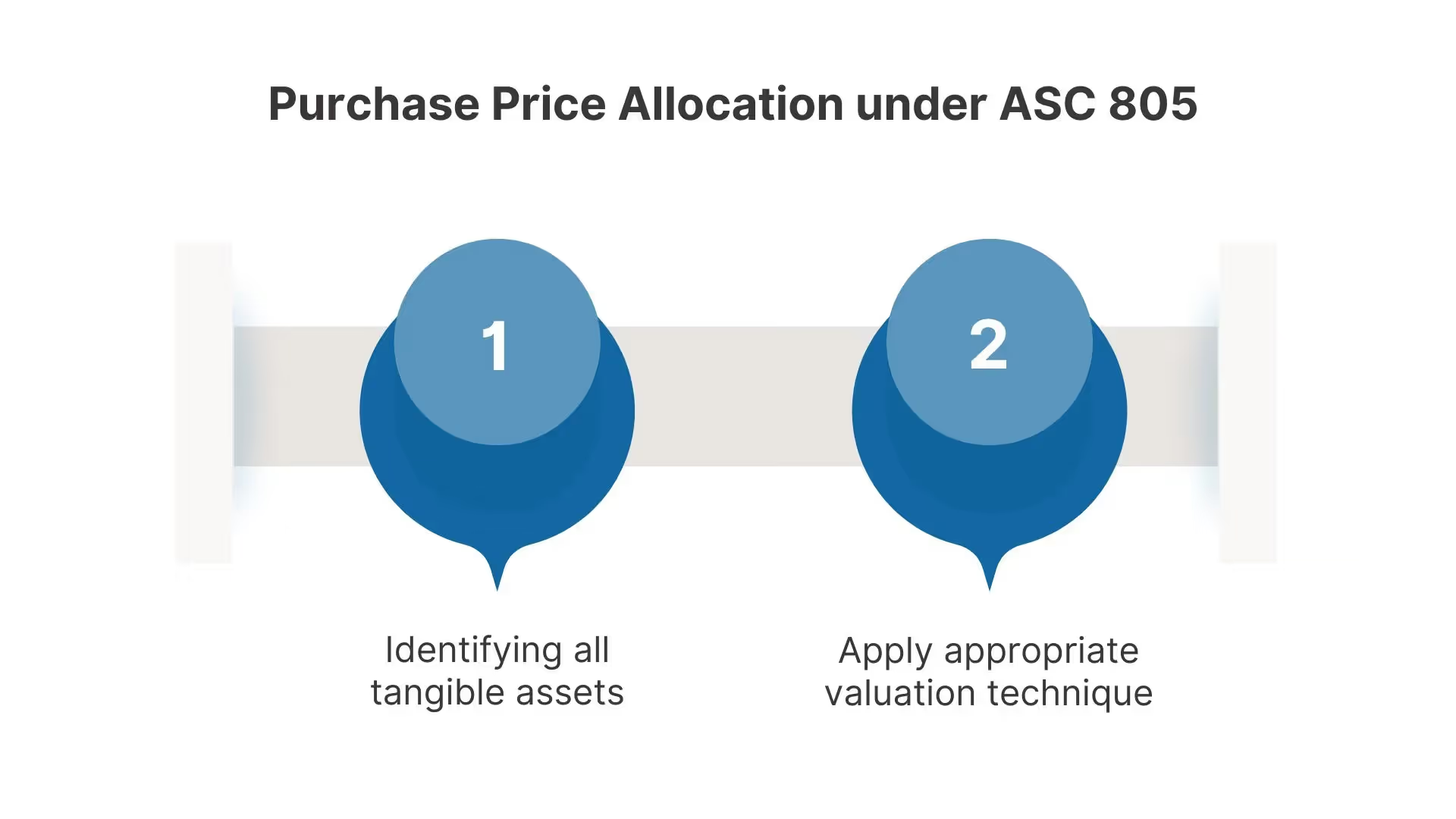
A purchase price allocation (PPA) under ASC 805 divides the total price paid in a business combination among acquired assets and assumed liabilities, using acquisition-date fair values under ASC 820.
U.S. businesses must allocate the purchase price to the identifiable assets acquired, liabilities assumed, and any non-controlling interests. Additionally, ASC 805 dictates the handling of goodwill, which may arise from acquiring another company.
PPA also affects future reporting. Finite-lived assets get classified and amortized based on their estimated useful lives; goodwill remains unchecked for impairment under ASC 350.
Not all costs tied to a deal can be capitalized. Here's how ASC 805 treats legal, advisory, and other acquisition expenses.
ASC 805 treats acquisition-related costs separately from business combination considerations. These costs include fees such as legal, advisory, accounting, valuation, internal acquisition department expenses, and any finder’s fees. Both direct and indirect costs fall outside the calculation of purchase consideration.
Whether it’s price allocation, goodwill valuation, or preparing financial statements, working with professionals familiar with U.S. regulations and international standards can prevent costly mistakes and ensure compliance.
Under ASC 805, companies must distinguish acquisition-related costs from acquisition considerations. They must expense most costs as they arise and separately account for issuance costs per applicable GAAP. Acquirers should avoid mistakenly capitalizing legal or advisory fees within purchase price allocation.
While the standard offers structure, implementing it can be difficult. Here are some common hurdles companies face.
U.S. businesses may encounter challenges when applying ASC 805, especially when determining the fair value of assets and liabilities during a business combination.
Accurate price allocation is critical to compliance, as any miscalculations can result in improper financial statements. Accounting under ASC 805 presents several judgment-intensive areas that practitioners often underemphasize:
Firms must consider transaction structures, engage specialists for contingent and intangible valuation, track remeasurement during measurement, and address NCI valuation nuances.
Every deal comes with its own set of nuances. The following section covers factors often shaping how a business combination is accounted for.
Providers of top ASC 805 guidance highlight several transaction-specific factors that shape accounting outcomes and often receive less attention in standard discussions:
An acquirer must review agreements, like leases, ongoing supply deals, or litigation, that existed before or were negotiated during the transaction. ASC 805 sets out criteria to determine if these items count toward purchase consideration or need separate accounting.
When gaining control in phases, the acquirer must remeasure previously held equity stakes to fair value upon control acquisition, recognizing any related gains or losses.
Those “earn‑out” provisions require judgment to classify and measure. ASC 805 requires initial fair-value estimation and subsequent adjustment through earnings if they are recognized as liabilities.
Firms often underestimate the effort required to identify and appraise intangible assets like IPR&D, customer relationships, and assumed liabilities like environmental obligations.
ASC 805 allows fair-value or proportionate method; the choice affects goodwill. Judgment about discounts or control premiums comes into play.
Deciding whether to apply pushdown accounting can influence the acquiree's standalone presentation and disclosures, though timing and conditions often confuse.
ASC 805 allows private companies to elect alternatives: amortize goodwill over 10 years, and simplify intangible-asset recognition under ASU 2014‑18.
Internal teams should involve valuation specialists early for earn‑outs and NCI measurement. Clear documentation and audit readiness build transparency and safeguard against misapplication of ASC 805 in complex transactions.
Beyond the basics, ASC 805 includes provisions that apply in special situations. Here’s how to approach those less common cases.
U.S. businesses that lack in-house resources for handling ASC 805 often turn to firms with expertise in U.S. accounting standards to ensure proper compliance. With the right accounting support, businesses can confidently manage the complexities of business combinations. Practitioners must address several additional factors that often create unexpected adjustments in a business combination:
Acquirers first identify whether the deal qualifies as taxable or non-taxable. In taxable deals, the acquirer steps up the tax basis in assets; deferred tax liabilities may arise if the book and tax bases differ. In non-taxable deals, historical tax attributes (like NOLs or tax credits) transfer with a carryover basis, and the acquirer must evaluate whether a valuation allowance applies.
ASC 805 excludes acquisition-related costs (e.g., legal, valuation, advisory) from the purchase price. However, debt or equity issuance costs follow U.S. GAAP requirements under ASC 320 or ASC 825.
Following the 2021 update (ASU 2021‑08), acquirers recognize and measure contract assets or liabilities under ASC 606 instead of fair value when the acquiree used those for revenue reporting.
Acquirers assign acquisition-date fair value to contingent payments. If classified as liabilities, they remeasure those each reporting period, with changes hitting the income statement.
Firms often use a multi-period excess earnings model (MEEM) to assess goodwill and confirm that the residual covers workforce-related intangibles.
ASC 805 requires detailed application of tax rules, careful treatment of transaction and issuance costs, accurate contract-accounting treatment, disciplined contingent consideration evaluation, and validation of goodwill. Company teams must collaborate with tax advisors, valuation specialists, and auditors early.
Under PCC guidance, private companies have some relief options. The next section explains those options and how they work.
PCC elections enable private entities to simplify ASC 805 accounting by omitting certain intangibles and simplifying goodwill amortization and impairment. Private companies can opt into two PCC accounting alternatives under ASC 805:
Companies using this option omit separately recognizing customer-related intangible assets and noncompetition agreements unless they qualify for separate sales or licensing. Companies must apply this treatment uniformly across all eligible intangible assets if elected.
This option allows companies to amortize goodwill straight-line and restricts impairment testing to triggering events only, eliminating the second step of annual impairment evaluation. Entities may opt for this goodwill treatment even if they don’t adopt the intangible asset alternative, but embracing the latter requires also taking the goodwill option.
Firms must evaluate whether customer-related intangibles (like customer lists or contract rights) qualify for separate recognition by determining if they meet the ability-to-sell-or-license test. Even when subsumed into goodwill, those intangibles may require high-level valuation inputs, such as contributory asset charges, within valuation models for other assets.
If you’re handling a business acquisition, here’s how VJM Global can support you with the accounting, analysis, and reporting.
Mergers and acquisitions can overwhelm even experienced finance teams. You might struggle to identify the acquirer, calculate goodwill, assign fair values to assets, or handle contingent liabilities. Mistakes can snowball into audit findings or misstated reports if you're unsure how to apply ASC 805 properly. VJM Global helps you get it right the first time.
If you’re a U.S. business handling a business combination, VJM Global provides expert support in ASC 805 compliance. Here’s how VJM Global supports you through the entire accounting process for business combinations:
We handle everything from setting up opening balances to recording purchase price allocations, goodwill, and acquisition-related costs. You don’t have to manage this internally or guess at compliance.
Our team prepares supporting documentation for valuations, helps reconcile financial statements post-acquisition, and assists with ASC 805 disclosure requirements, so you're ready for internal or external audits.
If your deal involves an Indian entity, we guide you through FEMA, RBI, GST, and MCA requirements. We also ensure that all local and international reporting standards are met, especially for group consolidation.
We help you track measurement period adjustments, deferred payments, and earn-outs so your financials reflect the most up-to-date information without last-minute scrambles at month-end.
Are you planning to acquire or set up a subsidiary in India? We register entities and provide ongoing accounting support so you can focus on growth instead of paperwork.
VJM Globalでは、単なる会計サポートにとどまらず、企業結合に伴う複雑な技術的詳細や現地の規制を熟知したチームが、お客様を強力にバックアップします。今すぐVJM Globalまでお問い合わせください。

.avif)


