


As a U.S.-based business planning to expand into India, managing payroll and wage garnishments can become more complicated due to the additional layer of international operations. One tool that can help streamline this process is QuickBooks Wage Garnishment, which simplifies the process of deducting and remitting garnishments in a compliant manner.
In this blog, we'll explore the process of setting up QuickBooks Wage Garnishment for U.S. companies looking to expand into India.
Wage garnishment is a legal process that allows creditors or government agencies to collect unpaid debts directly from an employee’s wages. When a business receives a garnishment order, it must comply by withholding a portion of the employee’s paycheck and sending it to the appropriate agency or creditor.
For U.S. companies planning to expand into India, it’s essential to understand how garnishments work and how to set them up efficiently, especially when dealing with both U.S. and Indian payroll systems.
米国拠点の企業がインドへ進出する際、QuickBooksの給与差押えを設定するには、米国とインド両方の規制を遵守する必要があります。VJM Globalが提供するGSTアドバイザリーおよび法定監査サービスは、貴社の給与計算システムが現地の税法および差押え規則に準拠していることを確認するのに役立ちます。
Now that we understand how wage garnishment works, let’s look at the various types of wage garnishments that U.S. companies expanding into India may encounter.
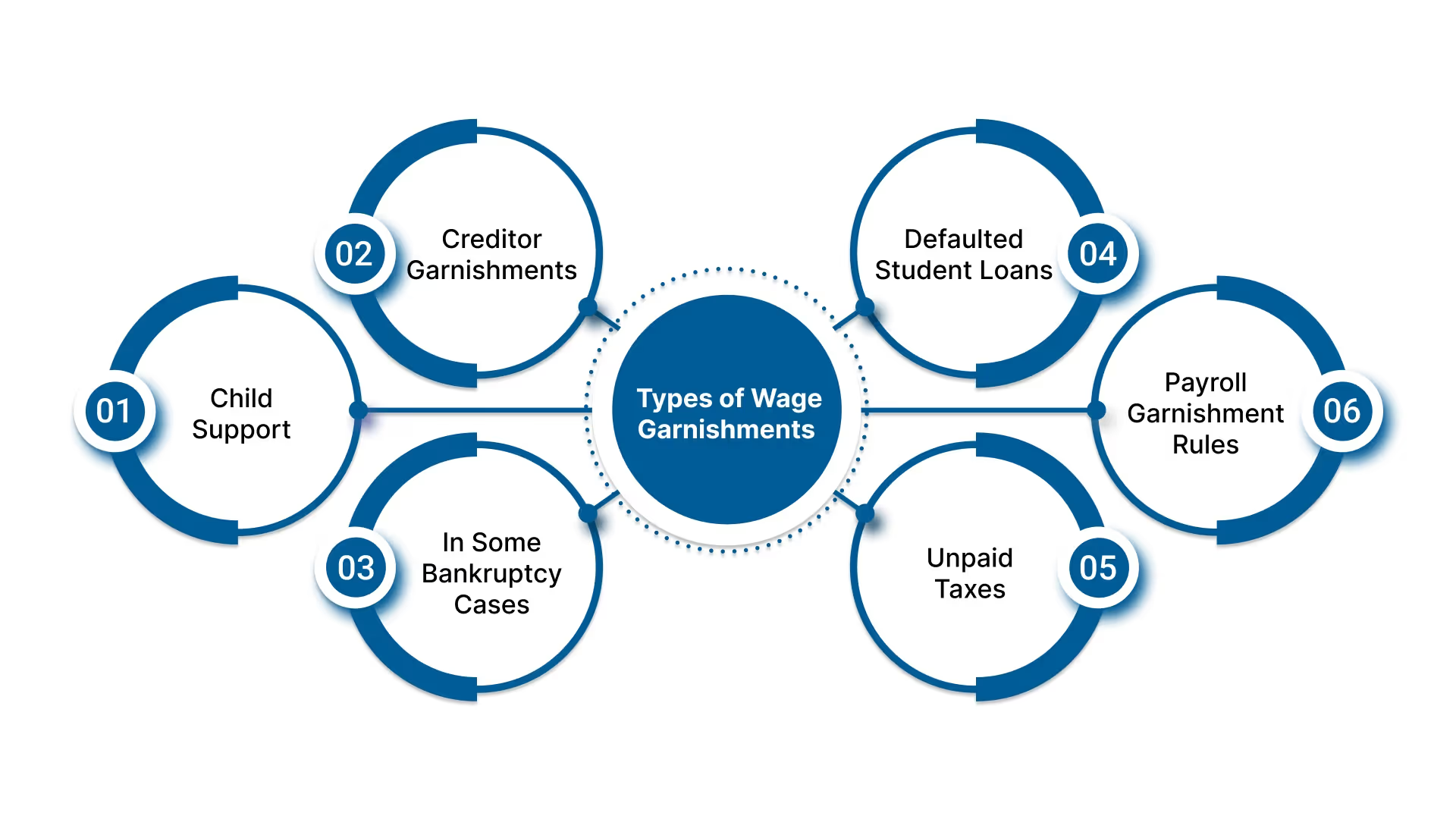
Understanding the different types of wage garnishments is crucial for managing them effectively, especially for U.S. companies with employees in multiple regions. Here are the most common types of garnishments and how they work:
Child support garnishments are issued by courts to enforce payment of child support obligations. For U.S. businesses expanding into India, child support garnishments must be handled according to the employee’s court order, with the proper withholding amount deducted from the employee’s paycheck.
If an employee has defaulted on a debt or loan, creditors can request wage garnishment to recover the owed amount. U.S. companies expanding into India must ensure the garnishment is processed promptly and correctly by verifying the creditor’s garnishment order and remitting payments accordingly.
In certain bankruptcy situations, employees may have a portion of their wages garnished to pay off their debts. Understanding bankruptcy-specific garnishment orders is important for ensuring compliance with the bankruptcy court’s instructions.
If an employee has defaulted on federal or private student loans, the government or lender can issue a garnishment order to collect the debt directly from the employee’s wages. For U.S. companies operating internationally, they must track and manage these garnishments accurately in QuickBooks Wage Garnishment.
Federal or state tax authorities can garnish wages to collect unpaid income taxes or other taxes owed. U.S. companies with employees in India need to manage these garnishments according to U.S. IRS regulations while ensuring compliance with Indian tax laws for their foreign operations.
米国の各州では、従業員の賃金から差し押さえ可能な金額について異なるルールが定められています。インドへ進出する米国企業は、QuickBooksで控除を管理する際、従業員の居住州の特定の法律に従って差し押さえが行われるよう徹底しなければなりません。
あわせて読みたい:経理のアウトソーシング:2025年のビジネス成長の鍵
差し押さえの種類を理解したら、次はQuickBooksのような効率的なシステムを構築し、これらの控除を適切に処理する段階に進みます。
.avif)
給与の差し押さえは複雑なプロセスに思えるかもしれません。特にインドへ進出する米国企業にとってはなおさらです。雇用主が従業員の給与差し押さえをどのように処理すべきか、ステップごとに解説します。
プロセスは、雇用主が裁判所、政府機関、または債権者から正式な差し押さえ命令を受け取ることから始まります。この命令には、従業員の賃金からいくら差し引くべきかが記載されています。
賃金を控除する前に、雇用主は差し押さえ命令が有効であり、法的要件を満たしていることを確認しなければなりません。これには、発行機関に対して従業員の債務や義務を確認する作業が含まれる場合があります。
差し押さえ命令の内容と控除額を従業員に通知することは法律で義務付けられています。このステップは、インドおよび米国の労働法を遵守する上で極めて重要です。
確認が完了したら、差し押さえ命令に従ってQuickBooksの給与差し押さえ設定を行います。各給与支払期間において、正しい金額が控除されるようにしてください。
雇用主は各給与支払期間に、従業員の賃金から差し押さえ額を控除します。この控除は、連邦法および州法に従い、正確かつ期限内に行う必要があります。
差し押さえ額を控除した後、雇用主は適切な機関(養育費徴収機関、IRS、債権者など)へ支払いを行う必要があります。QuickBooksはこれらの支払いを追跡し、コンプライアンスを確保します。
差し押さえ額が完済されたら、雇用主はQuickBooksで差し押さえを終了させ、従業員の給与からそれ以上の控除が行われないようにします。
インドでの給与差し押さえの複雑な対応を米国事業と並行して行うのは困難な場合がありますが、VJM GlobalはFEMAコンサルティングおよび移転価格税制サービスにおける専門知識を活かし、両国の規制に合わせた給与計算プロセスの構築を支援します。これにより、QuickBooksでの給与差し押さえ統合を円滑に進めることが可能になります。
Next, let’s explore an example of how wage garnishment would be applied in a real-world scenario.
Consider a U.S.-based firm expanding into India. One of their employees in the U.S. is facing a child support garnishment. The company receives a garnishment order, verifying that 15% of the employee’s disposable earnings must be withheld and remitted to the child support agency.
The company sets up the garnishment in QuickBooks Wage Garnishment, ensuring that the correct amount is deducted each pay period. Payments are tracked and sent to the appropriate agency, keeping the company compliant with both U.S. and Indian regulations.
Now, let’s look at some essential tips for managing wage garnishments effectively in your business operations.
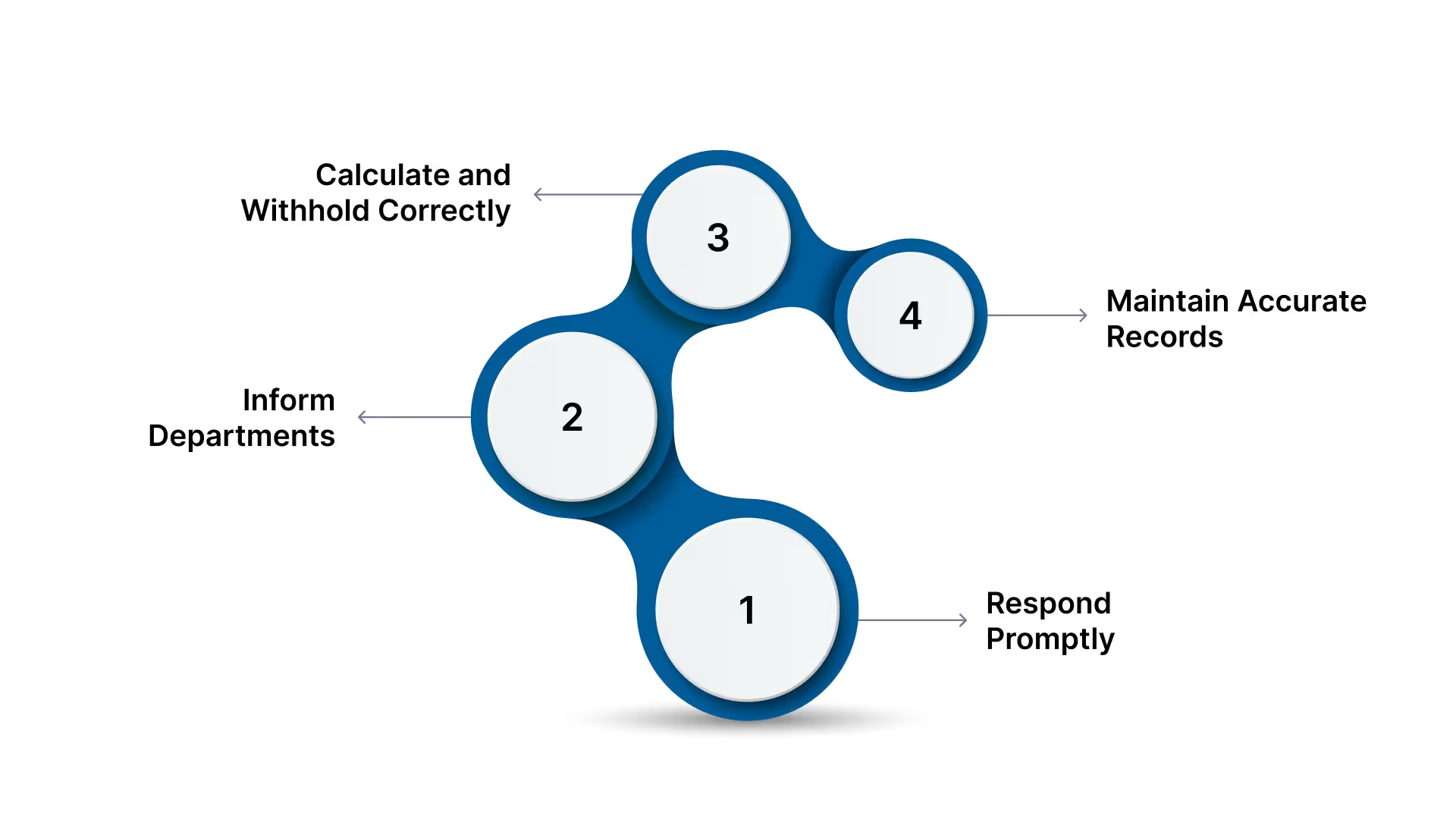
Managing wage garnishments efficiently is key to maintaining compliance and avoiding financial penalties. Here are a few tips to ensure smooth operation:
Always respond quickly to garnishment orders to avoid penalties. U.S. companies expanding to India should prioritize timely responses to legal requests for garnishments.
Ensure that payroll and HR departments are in sync to handle garnishments smoothly. This ensures that the correct amounts are withheld and remitted each pay period.
It’s important to follow the garnishment order precisely to avoid over- or under-withholding. QuickBooks simplifies this by calculating and tracking deductions automatically.
Keep detailed records of all garnishment orders, payments, and communications. This documentation will be crucial if any issues arise regarding the garnishment.
あわせて読みたい:米国における会計アウトソーシングサービス
With efficient accounting in place, utilizing VJM Global’s services can help you manage payroll compliance as you expand into India.
As a U.S.-based company looking to expand into India, setting up efficient QuickBooks wage garnishment systems is just one part of the puzzle. To succeed in India’s complex business environment, you need the right financial and regulatory guidance. Here’s how VJM Global can help streamline your wage garnishment processes and ensure your business is set up for success in India:
With VJM Global by your side, you can set up QuickBooks wage garnishment efficiently and ensure your U.S. firm meets all compliance requirements as you expand into India.
Setting up QuickBooks Wage Garnishment for your U.S.-based business, especially if you're planning to expand into India, can streamline the process of managing garnishments and ensure compliance with U.S. laws.
When dealing with child support, tax obligations, or creditor garnishments, QuickBooks Wage Garnishment offers a straightforward and effective way to manage deductions, track payments, and maintain proper records. By knowing the nuances of wage garnishments and utilizing QuickBooks to manage them efficiently, your company can avoid costly mistakes and focus on what matters most: growing your business internationally.
Expanding your U.S. company into India involves managing payroll across diverse legal environments. VJM Global provides business process re-engineering and internal audit services that help optimize your QuickBooks wage garnishment setup, ensuring accurate deductions and timely payments while staying compliant with both U.S. and Indian laws.
Contact VJM Global today, and let us help you deal with the challenges of payroll and U.S. business setup to make your India expansion a success!
U.S. companies expanding into India should align QuickBooks wage garnishment setups with GST rules and FEMA regulations, ensuring both tax and garnishment compliance.
State laws in India can affect garnishment limits and payment deadlines, requiring U.S. companies to configure QuickBooks wage garnishment to meet local rules.
QuickBooks wage garnishment requires synchronization with both the U.S. and Indian tax systems to ensure compliance with the Double Taxation Avoidance Agreement (DTAA) and garnishment laws.
Yes, QuickBooks can be set up for various garnishments, including child support and tax debts, but it must follow Indian garnishment law limits and payment deadlines.
U.S. companies must ensure QuickBooks wage garnishment payments are remitted timely to the correct Indian authorities, following FEMA rules for cross-border transactions.

.avif)


